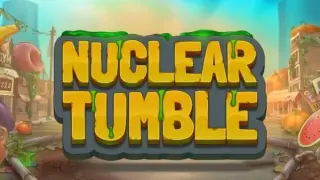
Nuclear Tumble Demo
Table of Contents
A quick paytable reality check before you touch Nuclear Tumble
Before getting drawn into the neon hazard symbols and the glowing reactor core, it is worth doing one dry, practical thing: open the paytable. For a cluster / tumble title like Nuclear Tumble, that screen tells you vastly more about how your sessions will feel than any splash art or trailer reel.
This review stays close to that reality. The focus here is:
- how the paytable and symbol ladder are structured,
- what the UX looks like on mobile versus desktop,
- how the game paces wins and tumbles,
- where the bet range usually lands at Canadian casinos,
- and what “good” or “average” outcomes realistically resemble.
Feature descriptions, lore, studio history, and deep math dissection are left for other articles. Here, the question is simpler: does Nuclear Tumble behave in a way that suits how you like to play?
On the info panel, start with four things:
-
Top symbol cluster values.
Scroll straight to the highest cluster size listed for the best-paying symbol. Note both the largest number and the step-down values below it. That gap between the “poster win” and the more reachable cluster sizes sets expectations very quickly. -
Mid and low symbol spread.
Look at how tightly packed the payouts are for the middle symbols, then compare them with the cheap icons. In Nuclear Tumble the mid-tier has a noticeable step up from the low ones, so medium clusters actually move the meter a bit rather than just recycling a fraction of the spin. -
Special symbols and any multipliers.
Identify which icons substitute, which trigger extras, and whether multipliers are baked into the regular paytable or handled as separate effects. The paytable labels them fairly cleanly with small icon callouts rather than lengthy text blocks. -
Max win cap.
There is a hard cap advertised in the info section (usually phrased as a multiple of your bet). You will rarely encounter anything close to that, but knowing the ceiling helps you mentally file the rest of the numbers beneath it.
Those numbers give you a sense of what short, medium, and long sessions might look like. In a brief 50–100 spin sample, you are mostly living in the realm of small clusters on lower and middle symbols, with an occasional spike when several tumbles chain into each other. In longer 300–500 spin sessions, the structure of the mid-tier symbols becomes more important, because those are what will either support or drain your balance while you wait for something more dramatic.
On desktop, the paytable in Nuclear Tumble typically sits behind an “i” icon or a menu button in the lower corner of the screen. When you open it, you get a multi-page layout: first the symbol values, then any rules or special symbol explanations, then the max win note. The paytable grid uses large, readable tiles and you can click arrow chevrons to flip between pages.
On mobile, the same content is compressed into stacked panels. The icons are smaller, and you often need to swipe vertically to reach the bottom of the paytable. One detail worth noting: cluster size rows sometimes wrap, so high-cluster payouts for the top symbols may be on a second line or page. Scroll until you actually see the largest clusters; do not assume the first line is the whole story.
A quick scan here, before any real-money spins, helps avoid the classic cluster-game trap of expecting miracles from tiny groups of low symbols.
Reading Nuclear Tumble’s symbol ladder at a glance
Spend half a minute with the symbol sheet and Nuclear Tumble’s hierarchy becomes fairly transparent. The set falls into three functional bands, even if the art dresses them up as a range of glowing isotopes and hazard-marked containers.
- Premiums: typically brighter, more detailed icons (often the “core” or highest-energy materials).
- Mid-range symbols: less ornate but still colourful containers or crystals.
- Fillers: simpler shapes or generic warning markers sitting at the bottom of the grid.
The difference between these groups matters for how each hit feels. A small cluster of a premium symbol can look and sound exciting, while the equivalent cluster of a filler icon barely nudges the balance. The paytable quietly confirms this, with the premium row values often being several times higher for the same cluster size.
It is easy to fall into a “trap” expectation when you see a very large number tagged to the maximum cluster of the top symbol. On paper, a 25‑symbol or 30‑symbol group of the best icon looks like a life-changing event. In reality, those massive clusters require a near-perfect grid cascade and usually a supporting feature effect. What you are more likely to see are:
- frequent small clusters of low symbols that mainly recycle part of the stake,
- intermittent medium clusters of mid-tier icons that give you a few bets worth of breathing room,
- and occasional, rarer medium-to-large clusters of a premium that stand out as session highlights.
A practical rule of thumb: look at the minimum cluster size listed for each symbol, then the payouts for clusters that are only a little larger than that. If a 5‑symbol cluster of a low icon pays a tiny fraction of your bet, consider anything up to, say, 7 or 8 of that symbol as background noise. By contrast, if a 7‑symbol cluster of a mid-tier symbol already pays several times the minimum, that line has teeth.
Nuclear Tumble lands somewhere in the middle. Small clusters of the cheapest symbols rarely feel consequential. Mid and premium icons, even in modest groups, can be meaningfully positive once tumbles are factored in, because they often lead into a second or third win on the same paid spin.
Understanding the tumbling structure before you spin
Underneath the radioactive dressing, the mechanical core is straightforward: you pay for a spin, symbols drop into a grid, any clustered group meeting the minimum size is removed, and fresh symbols fall into the gaps. That fall can create new clusters, which are then paid and cleared in turn. This chain continues until no new groups form.
Where this plugs straight back into the paytable is in how you evaluate “small” wins. A quick example makes the point clearer.
Imagine you stake $1:
- The first fall lands a 6‑symbol cluster of a low-tier radioactive sign. It pays, say, $0.30.
- Those six symbols vanish in a flash, the columns above them drop, and two mid-tier containers now line up as part of an 8‑symbol cluster. That hit pays $1.20.
- As those are removed, a premium “core” symbol drops into the centre of a cluster of matching icons that just reaches the minimum cluster size, paying another $0.80.
The paytable shows each of these payouts as separate rows, but in the actual spin they blend into one animated sequence. On the UI, you might see “Total Win: $2.30” for that spin. The first low-symbol hit on its own would have been poor, but as the trigger for the subsequent tumbles it becomes part of something much more interesting.
This is why scanning only the smallest clusters in the paytable can be misleading. In a tumble slot, the real question is: how often do several modest paytable entries stack together in one spin? Nuclear Tumble is tuned so that one unimpressive cluster often clears room for a better one. The visual pacing reinforces this, as the camera holds the grid steady while symbols blink out and reappear, so you feel the sequence as one expanding moment rather than three disconnected wins.
Once you have that mental model, reading the paytable becomes less about “Is this 5‑symbol cluster good or bad?” and more about “How does this 5‑symbol cluster behave when tumbles are in play?”
Symbol hierarchy in Nuclear Tumble and how the paytable is actually built
Nuclear Tumble is a cluster / tumble slot, not a classic payline machine. That means:
- there are no fixed lines from left to right,
- winning groups are formed by touching symbols in clusters, often horizontally and vertically connected,
- and the size of each cluster is just as important as the symbol type.
The paytable presents this by listing each symbol with a table of cluster sizes rather than line wins. For example, you might see columns labelled 5, 6–8, 9–11, 12–14, and so on, with corresponding payouts in coins or bet multipliers.
Symbols fall into three functional types in the info section:
- Regular symbols – these are the radioactive materials and markers that actually pay when grouped.
- Special icons – such as wilds or symbol modifiers, usually tagged with a short line of text explaining that they substitute or trigger extra behaviour.
- Any listed multipliers or enhancement symbols – sometimes presented as an overlay or a distinct symbol that affects wins rather than paying like a regular cluster.
The paytable does not fully unpack the behaviour of every special effect, but it does show how those icons are valued: either they have no direct payout and simply assist other symbols, or they have both a substitution role and their own cluster values.
Nuclear Tumble leans more toward the former: the special icons are primarily there to shape the grid and bolster other wins, not act as standalone jackpots. As you scroll, you will notice that the highest raw payouts are reserved for the core premium symbol row, not any feature icon.
Premiums vs the rest: which Nuclear Tumble symbols actually matter
Look more closely at the top of the paytable and one symbol usually stands out: a luminous, almost reactor-like core, often with sharper glow and more complex animation than the others. That is your premium anchor. Its cluster values climb quickly, and the top row for it is where the largest headline numbers sit.
Below that, you will find a tier of solid mid-range symbols – perhaps drums of waste, higher-grade isotopes, or more sharply edged hazard containers. Their numbers are respectable but significantly below the top symbol’s peak clusters. This spacing is intentional. It makes the true max clusters of the premium feel aspirational, almost mythic, while the mid-tier values are where most decent outcomes live.
A rough hierarchy emerges:
- Top premium: true dream-hit potential at its maximum cluster size, with mid clusters still very strong.
- Secondary premiums / high mids: capable of producing 10–50x type hits when clusters get large or chain through several tumbles.
- Core mids: the symbols that keep the session ticking. A repeated run of 6–10 symbol clusters can either soften losses or gently push your balance upward.
- Fillers: the cheap warning signs and generic icons. Even in bigger clusters they often return only a percentage of your bet.
Nuclear Tumble’s mid band is particularly important. The spread between low and medium values is big enough that you notice when a grid leans toward mid-tier hits during a sequence of tumbles. A screen where the bulk of the clusters are made of loud-yellow hazard signs feels very different from one where glowing barrels and denser icons are lining up.
Low-value symbols, by contrast, are everywhere. On many tumbles, they form the first cluster to go. You will see these icons explode and vanish repeatedly without much emotional impact. They are essentially the scaffolding the game uses to create room for mid and premium clusters to fall into.
How cluster size thresholds reshape the paytable
Cluster games live and die on their size breakpoints. Nuclear Tumble follows a familiar but still impactful pattern where payouts jump at certain cluster thresholds rather than increasing linearly.
You will usually see:
- a minimum cluster size (for example, 5 of a kind) with a modest reward,
- a mid-range band (perhaps 9–12 or 10–15 symbols) where payouts start to feel meaningful,
- and near-max clusters where the numbers spike sharply, often doubling or tripling with only a few extra symbols added.
The interesting part is that the jump from a medium cluster to a large one often feels much bigger than the jump from a large cluster to an almost-perfect one. For instance, going from 8 to 12 of a premium might be the difference between a small and a standout win, whereas going from 22 to 25 symbols, while numerically significant, does not feel quite as massive in relative terms. The paytable reflects that uneven slope.
In play, the grid rarely serves you one perfect mega-cluster at a time. Nuclear Tumble tends to create several clusters in one sequence, especially when special symbols assist in clearing paths. So a single spin might include:
- one medium cluster of mid-tier icons,
- two or three small clusters of low symbols,
- and, if you are lucky, one slightly larger-than-average premium group.
The paytable feels “alive” when those different rows light up in quick succession. You are not just hoping for the single, almost unattainable top cluster size; many medium thresholds can combine into a strong total spin. Watching the numbers on the paytable with these thresholds in mind helps you understand why some spins suddenly jump in value even if no single cluster looked spectacular.
Win potential in Nuclear Tumble: headline numbers vs lived outcomes
Most Canadian-facing casinos will show an advertised max win for Nuclear Tumble, usually framed as a multiple of your bet (for example, several thousand times stake). That number is technically possible when you intersect very large premium clusters, strong tumble chains, and any built-in multipliers exactly the right way.
Those events are statistical outliers, closer to lottery tickets than everyday experiences.
In regular play, you will see a completely different distribution. The bulk of your notable hits will come from:
- mid-sized clusters of mid or premium symbols, sometimes amplified by a couple of tumbles,
- sequences where three or four separate clusters add up to 10–30x stake on a single paid spin,
- and, rarely, an extended tumble where the grid feels like it empties and refills multiple times before stopping.
A healthy mindset is to treat the advertised max as a design boundary, not an expectation. When a spin lands in the low double-digit multiples of your bet, that is already in the “strong highlight” bracket for this game.
What “good” looks like in a regular session
To anchor expectations, it helps to picture two common ways Canadian players might approach Nuclear Tumble: a quick try-out and a more methodical run.
For a short 50–100 spin session, say you set a moderate stake that fits your budget. In that window, realistic outcomes often look like:
- quite a few spins where you either miss entirely or land tiny clusters of low symbols that return part of your bet,
- several small but visually busy tumble sequences where the total win ends up between 1x and 5x stake,
- and, if the session goes reasonably well, one or two more memorable spins in the 10–20x range.
A “good” short session in that sense might see you finish close to level, buoyed by those mid-range highlights and constant visual activity. A weaker run could see your balance trend downward even while the grid keeps throwing you modest, noisy tumble chains that do not quite keep up with the overall cost of spins.
For a longer 300–500 spin grind, the picture changes slightly. Over that many spins:
- you are more likely to see at least one strong outlier in the 30–80x region, usually from a premium-heavy tumble chain,
- the mid-tier symbols’ behaviour matters more, as they dictate how often you get 5–15x spikes that “reset the mood”,
- and losing stretches, where you are slowly eroded by small non-recovering hits, can become more noticeable.
In such a marathon, a single 50x win feels like a highlight but not a miracle. True multi-hundred–times stake results remain rare and should be treated as very fortunate exceptions.
Most players will experience Nuclear Tumble as a string of modest uplift moments: spins where a mediocre starting grid unexpectedly blooms into a surprisingly busy sequence, even if the final win does not radically change the session outcome. Those little surges are what define the feel of the game more than the distant max win number.
The Nuclear Tumble rhythm: how sessions tend to flow
One of the subtler strengths of Nuclear Tumble is how often something happens on the grid, visually, even when your balance hardly moves. Symbols pulse when they are part of a cluster, disappear in quick flashes of radioactive light, and new tiles drop in with a slight stagger rather than an instant refill. It creates a sense of constant motion.
Compared with a traditional 5‑reel stop, where a losing spin is just: spin… stop… nothing, a Nuclear Tumble miss can still feel busy. You might see a near-cluster of premiums that almost connect, or a single low-symbol group that triggers a couple of extra cascades before ending with only a small win. The result may be neutral, but the path there feels longer and more layered.
The pace per spin is slightly slower than a pure one-stop reel game, because those tumbles take a moment to play out. On desktop, with a larger grid visible, that rhythm feels quite deliberate: your eye follows the falling symbols down each column. On mobile, where the grid occupies most of the screen, the same sequence can feel more compressed and immediate, as the symbols are closer to your thumb and the animations read more like one continuous flicker.
Streaks, stalls, and the feel of momentum
Even though every spin has the same underlying odds, the way Nuclear Tumble presents results makes some stretches feel “hot” and others feel sleepy.
During lively passages, you might notice:
- multiple spins in a row that trigger at least one tumble,
- several sequences where symbols explode two or three times before coming to rest,
- grids that clear large sections in the centre, causing deep columns of new icons to drop.
Visually, this looks like momentum. Symbols flash out rapidly, the light effects layer over each other, and the win counter animates in quick increments instead of one flat number. On both mobile and desktop, the UI reinforces these streaks with more pronounced highlight glows around the affected clusters.
By contrast, in sluggish periods you may experience:
- several consecutive spins that land no clusters at all,
- one-tumble results where a single low-value group clears and nothing meaningful follows,
- grids that feel static, with higher-paying symbols scattered but never quite touching.
The interesting nuance with Nuclear Tumble is that even the “stalls” often include just enough visual noise to keep you watching. A handful of near-miss patterns, where premiums land diagonally adjacent or separated by one tile, can unhelpfully suggest that the game is “building toward something” when in fact the reels have no memory.
A useful way to read momentum without attributing intent is to watch your actual net change over 20–30 spins, not just how busy the tumbles look. If you are seeing frequent chains but your balance is steadily slipping, that patch is more spectacle than substance. When both the tumble frequency and your balance are lifting, you are in one of those enjoyable, if temporary, upswings.
Betting range in Nuclear Tumble and bankroll comfort
Bet settings for Nuclear Tumble vary by Canadian-facing casino, but a common configuration allows for:
- low-end stakes starting around $0.10–$0.20 per spin,
- standard “casual” bets in the $0.40–$1.00 band,
- and higher options that can climb into the tens of dollars per spin where operators permit it.
The bet control is usually a plus / minus panel or a slider located near the spin button. On desktop, you get a clear numeric readout and sometimes quick-select buttons for popular amounts. On mobile, the selector may expand into a full-screen overlay with large tappable values, which is convenient but easy to mis-tap if you are in a hurry.
For a cluster / tumble game like Nuclear Tumble, a simple approach to bankroll sizing is to think in spin blocks. Because a single paid spin can contain several tumbles, you experience more “events” per unit of bankroll than in a bare-bones reel slot, but each event can be modest in value.
As a rough guideline:
- treating 100 spins as a minimal “test drive” often gives you a sense of the game’s rhythm,
- a more committed 300–500 spin budget lets you see both lean stretches and highlight runs.
Choose a stake that allows the number of spins you have in mind to fit comfortably within what you are prepared to risk, knowing that variance can still swing results either way. It helps to adjust stakes gradually rather than reacting sharply to a single good or bad streak, simply because the tumble structure can compress several big moments into a short window.
Mobile Nuclear Tumble vs desktop Nuclear Tumble: how it actually feels
On a practical level, Nuclear Tumble is fully playable on both mobile and desktop, but the experience is not identical. The layout, control density, and how your eyes track tumbles all shift subtly between the two.
On desktop, the grid usually sits centred with generous margins. The symbols are slightly larger relative to your field of view, and the surrounding UI (bet controls, balance, menu icons) has space to breathe. The paytable opens in a panel or overlay that rarely covers the entire screen, letting you keep a sense of the grid even while reading.
This layout has a few concrete consequences:
- It is easier to scan the whole grid at once, especially during extended tumbles. You can spot secondary clusters forming near the edges quickly.
- Paytable browsing is more comfortable; rows and cluster size columns are wide enough that numbers do not feel cramped.
- Precision in adjusting bets or opening sub-menus is higher, because each button is well-separated.
On mobile, the game understandably prioritizes vertical space for the grid. The radioactive tiles feel closer together, and the animation timing can seem slightly snappier simply because you are holding the screen nearer to your face. Controls are tucked into corners or hidden behind small icons to save space.
Two very specific UX quirks stand out on phones and tablets:
-
Paytable navigation requires more scrolling.
When you open the info panel, symbol rows stack in a single column, and it is surprisingly easy to stop scrolling just before the highest cluster values of the premium symbol. If you are scanning for the max win per symbol, keep swiping until you reach the absolute bottom of that page, then tap across if there are multiple tabs. -
Thumb reach vs tumble visibility.
The spin button tends to sit in the lower right, directly under where cascades are happening above. If you like to quick-tap to skip the tail end of tumble sequences, your thumb can partially block the lowest rows of symbols. That slightly changes how you perceive patterns forming; you may find yourself watching a narrower band of the grid.
One pleasant detail on mobile: when a cluster pays, the affected symbols emit a sharp glow and the win amount briefly floats near them before sliding to the total. On a smaller screen this micro-feedback feels more intimate, almost tactile. The game communicates which part of the grid “mattered” in that moment without needing your eye to travel far.
For many players, desktop suits deliberate, longer sessions, where you are more likely to open the paytable repeatedly, adjust stakes, and watch tumble sequences in full. Mobile leans toward snack-length play, where ease of tapping and the immediacy of the animations carry more weight than meticulous grid reading.
Interface clarity: small touches that affect comfort
Several design choices around Nuclear Tumble’s interface subtly shape how relaxed or tense a session feels.
On desktop, contrast is generally strong: bet buttons sit on darker panels, the spin control has a clear outline, and the balance / win readouts use legible fonts with enough spacing that you do not misread numbers mid-spin. When a tumble sequence is running, the win counter updates in small hops rather than one blur of digits, which makes it easier to track how much each cluster is adding.
On mobile, the same information is compressed, so the clarity of those fonts and icons matters more. The game usually handles this sensibly: the current bet and remaining balance remain anchored near the bottom edge, away from the most intense visual action. That placement keeps the radioactive light show from obscuring the numbers you actually care about.
Menu access also differs slightly. Desktop players often get a row of small icons (settings, paytable, sound) along one side, while mobile users tap a single stacked-menu symbol to fan those options out. Neither approach is inherently better, but if you like to tweak sound, speed, or bet size frequently, the desktop layout feels more “open” and less nested.
Where this slot quietly shines
Several aspects of Nuclear Tumble’s design feel more considered than the average grid slot.
- The mid-tier symbol spacing is thoughtfully tuned. Mid-value clusters actually register as meaningful wins rather than just slightly-better fillers, which gives everyday spins a bit more narrative weight.
- Tumble animation timing strikes a nice balance between speed and legibility. Symbols do not vanish so fast that you lose track of what just hit, but they also do not linger long enough to drag the pace.
- Paytable layout on desktop is clean and readable, with clear cluster thresholds and logical grouping of special symbols, so you can decode the hierarchy without wading through dense text.
- Mobile hit feedback – the momentary glow and floating win labels – makes it easy to tell which area of the grid drove the payout, even in chaotic cascades.
- Session rhythm leans into visual activity, so even modest wins often feel like “little stories” of one symbol clearing space for another, rather than flat one-and-done spins.
None of this screams for attention, but together these details make Nuclear Tumble feel like it was tuned by people who actually watch how players’ eyes move across a grid.
Where it falls a little short
Nuclear Tumble is not without its irritations, especially if you are coming from more stripped-back reel games.
- Low-symbol clutter can feel relentless. Many sequences start and end with small, low-paying clusters that look busy yet barely register on your balance, which may leave some players feeling teased.
- Paytable compression on mobile is a weak spot. Important numbers, especially top cluster values for premiums, are easy to miss if you do not scroll with almost deliberate care.
- Per-spin duration can feel slightly drawn out during lean runs. When several spins in a row produce only one short tumble, the repeated mini-animations risk blurring together.
- Button density on smaller phones occasionally works against precision. The proximity between spin, bet adjust, and menu icons can lead to the odd mis-tap if you play one-handed on the commute.
- Visual near-misses with premiums appear often enough that some players may read “patterns” into them, even though they are just part of the random grid churn.
For those who enjoy a very direct, hit-or-miss reel stop, that combination of spectacle and modest returns might feel slightly overproduced.
Common questions about Nuclear Tumble, answered
How many spins should I budget to get a feel for Nuclear Tumble?
For most players, 100 spins at a comfortable stake is the minimum where the game’s personality starts to show. In that span, you will usually see a mix of:
- complete misses,
- small tumbles that barely move the balance,
- and one or two mid-sized wins that highlight how cluster thresholds work.
If you are genuinely trying to understand how Nuclear Tumble behaves – how often mid-tier symbols matter, how the balance swings, how the rhythm feels – a 300–500 spin window gives a clearer sample. That does not guarantee you will see a big win, but it does expose you to both lean and lively passages, which is what you are really testing.
Is Nuclear Tumble better on mobile or desktop for real-money play?
“Better” depends on what you value.
On desktop, you gain:
- easier paytable reading with full-width columns and visible max clusters,
- a wider view of the grid, which helps you spot secondary clusters forming during tumbles,
- and more precise click targets for adjusting bets or opening menus.
On **
More Slots from Relax Gaming







| Provider | Relax Gaming |
|---|---|
| Layout | N/A |
| Betways | N/A |
| Max win | N/A |
| Min bet | N/A |
| Max bet | N/A |
| Hit frequency | N/A |
| Volatility | Med-High |
| Release Date | 2026-10-27 |