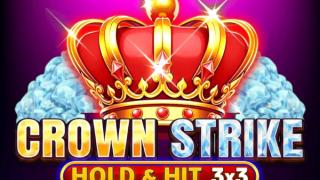
Crown Strike - Hold & Hit 3x3 Demo
Table of Contents
If you liked classic 3x3 hold-and-spin slots, where does Crown Strike – Hold & Hit 3x3 land?
Fans of compact grid “fire coin” games like Hot & Win–style 3x3s or the stripped-back fruit-and-7s hold-and-win titles will read Crown Strike – Hold & Hit 3x3 almost instantly. The structure feels very familiar: tight reel window, coins that lock, and a feature that turns into a mini pressure cooker. This release trims away most side distractions and leans hard into the core hold & hit loop.
Compared with the more ornamental variants some studios push out (extra rows, stacked symbols, multi-tier wheels), Crown Strike stays disciplined. Nine positions, straightforward coin values, and a very direct route into the feature. The mood is closer to an old-school cabinet reinterpreted for a modern lobby than a sprawling “multi-bonus” spectacle.
The personality shows up in small details. The way the crown symbols flare when coins land. The slightly harsher, metallic hit sounds during the feature. The clean, almost retro UI that leaves a lot of empty space around the 3x3 grid so your eyes sit right on the action.
This review stays close to that core: how the Hold & Hit bonus actually behaves, how the sound design nudges your attention, how mobile and desktop layouts change the experience, and what win potential feels like in day-to-day sessions. The usual deep dive into symbol ladders or math specs takes a back seat.
The compact board, the hold-and-hit core, and what that means for flow
Crown Strike – Hold & Hit 3x3 revolves around a very simple idea: land enough special coin symbols on the 3×3 board to trigger a locked-grid feature, then chase a full screen of values. The grid never grows, and there’s no extra reel set tucked off to the side. Every meaningful event plays out inside those nine squares.
That small canvas concentrates your attention in a way 5×3 games rarely do. Every empty space is obvious. When you have two coins locked and seven blanks, there’s no scanning; you know exactly where a third one could land. During the feature, watching that last empty corner becomes the entire story of the round.
Because the layout is so compact, the game can afford to animate a touch more aggressively on the key spots. Coins don’t simply appear; they drop with a tiny bounce, and their numeric values “tick” into place, giving a half-second of anticipation even on modest hits. Once the board starts to fill, those bounces and value ticks stack into a denser visual rhythm that feels distinct from the base game’s standard spins.
One short session is enough to see how tightly framed focus affects the way you read audio cues later. With just nine positions, a slightly louder blip on the centre reel or a sharper whoosh when the third coin symbol rolls in is instantly decoded as “this might be something”. You’re not scanning a wide grid trying to connect scattered features; you’re listening for emphasis around a handful of squares.
Bonus pressure cooker – how Hold & Hit powers Crown Strike’s feature game
Crown Strike – Hold & Hit 3x3 is unapologetically built around its namesake feature. The Hold & Hit round is not a side dish; it is the main course. There’s no separate free spins set with different reels and no second-screen pick game. The base game’s primary job is to toss you into that locked-coin mode and sprinkle in the occasional line win between attempts.
The identity is very stripped. Coin symbols are the stars, both as regular instant-win icons and as the key to the feature. Once you enter Hold & Hit, the 3×3 board clears of everything else. Only coins and special bonus icons remain, which gives the round a clean, almost mechanical feel.
Because the feature sits so central, a lot of the emotional swings in a session happen there. Base pulls often feel like short preludes: a handful of spins, a few small wins, then a coin cluster that either turns into a bonus or disappears just shy of it. That structure suits a compact layout where you can see the entire arc of a near-trigger in one glance.
Trigger conditions and how the base game feeds the feature
The path into the Hold & Hit bonus stays very clear: land a certain number of special coin symbols on the 3×3 grid in a single spin. In many versions that means three or more designated bonus coins, though exact requirements can vary by casino implementation, so it’s safer to confirm the trigger condition in the information panel where you play.
During regular spins, these coins share reel space with the usual high and low symbols. When two appear, the game lingers on them for a fraction longer, letting the third reel or remaining positions settle in with a slightly delayed stop. There’s a small sound lift and a shimmering halo around the existing coins to flag that you’re one symbol away.
Teases occur often enough that you start to recognize the pattern: two coins landing adjacent, a pause, then either a third coin snapping into place with a brighter chime or a regular symbol dropping in and the board falling quiet again. Sessions tend to chain these near-events without stacking them on every spin, so the bonus doesn’t feel either omnipresent or vanishingly rare.
You also run into pockets of spins where coins seem to arrive in twos more often than singles for a short stretch. That streak can create a sense of hovering near a feature without implying that a trigger is guaranteed. The base game is tuned to make Hold & Hit feel like a recurring, reachable event rather than a once-per-evening rarity.
Inside the Hold & Hit round – structure, resets, and tension points
Once the Hold & Hit feature triggers, the grid snaps into a different mode. The coins that activated the round lock in place, their values frozen. Everything else disappears, and you’re given a set number of respins, commonly three, to try to land additional coins in the remaining empty cells.
Each new coin that drops does two things: it locks and it resets the respin counter back to its starting number. On a 3×3 layout, that reset behaviour is brutally transparent. Early in the round, when six or seven spaces are open, new coins often land quickly and you spend less mental energy counting spins. Later, when only one or two gaps remain, every miss stands out.
The tension curve follows the visual density of the board. With half the grid filled, your eye starts running along the remaining cracks, watching them like pressure points. One spin with no new coin and the respin counter ticks down, accompanied by a duller, lower-pitched tone. Land a coin on the next try and the sound brightens, the counter flicks back up, and the newly filled position pulses once before settling.
Subtle animation tweaks heighten that sense of “this spin matters”. On the last available respin, there’s a slightly slower reveal, and the background behind the grid darkens by a shade, making the coins’ glow more pronounced. If you manage to land something on that final chance, the snap back to the initial respin number, plus the ambient soundtrack swelling for a beat, creates a clear surge of relief.
If you manage to fill all nine positions, the grid holds for a second longer, then triggers any applicable top-level reward sequence. On such a small board, a full screen feels particularly decisive. There’s no hidden extra reel or secondary panel; every coin’s role in that final outcome is visible.
Special modifiers within the feature (multipliers, jackpots, or enhancers)
Crown Strike – Hold & Hit 3x3 seasons its bonus with a set of enhanced coin symbols that matter primarily during the feature round. They’re easy to pick out: crowns and special frames around certain coins, sometimes with small letters or labels hinting at their function (for example, “MINI” or “MAJOR” markers for fixed jackpots where those are offered).
You’ll usually encounter three broad types of special coins:
- Fixed jackpot coins that award a predetermined prize when they land and lock
- Multiplier coins that boost the values of existing coins on the grid
- Enhancer coins that add extra respins or tweak more subtle aspects of the round
The rarest ones are the jackpot coins. When they hit, they don’t alter anything else about the grid; they simply drop in with a larger number and a longer, rising chime. The psychological effect is neat: you might be having an otherwise average feature, maybe only half the board filled, and a single jackpot coin landing in a corner suddenly reframes the round.
Multiplier coins behave differently. When one lands, the game pauses briefly, and you see a glow ripple across the existing coins as their values jump. The count-up animation lingers on this step, letting you watch each icon tick higher before the total is calculated. That makes multiplier drops feel more interactive than static high-value coins, even when the end result is numerically similar.
A simple scenario illustrates it: imagine you’ve locked five modest coins worth, say, a combined 12x your stake. The feature feels unremarkable so far. Then a multiplier coin arrives with a 3x tag. The game triggers a short flourish as each of your existing coins triples, lifting the combined value to 36x before any new icons arrive. You still have respins left, and suddenly an otherwise forgettable round has some weight.
Those spikes, sparked by a single special symbol, are where the feature earns its “pressure cooker” reputation. You’re never far from one coin reshaping the tone of the round.
Feature outcomes – from flat to memorable
Results from the Hold & Hit round swing quite widely, which is part of both the charm and the irritation of this structure. On the low side, you can trigger with the minimum number of coins and then watch three respins go by with nothing else landing. Those rounds end quickly and often sit under 10x bet, leaving you with the sense that the promise of the feature outran the reality.
Most bonus entries hover in the middle: a handful of coins, maybe one modest enhancer or a higher-value icon, finishing somewhere in the low-to-mid double digits relative to stake. For many sessions, those medium bonuses act as the bread and butter. They’re not banner moments, but they replenish enough to keep you orbiting the feature.
The standout rounds usually involve one of two broad patterns:
- You steadily fill the grid to seven or eight coins with at least one decent value or multiplier in the mix
- You hit an early jackpot-style coin that anchors the payout, even if the remaining positions don’t fully cooperate
Because the grid is only 3×3, a near-full board looks dramatic even when the total isn’t huge. Visually, there’s almost no difference between eight filled cells and nine, but emotionally that final gap can feel like the whole battle. When you do land the last coin, the jump from “almost” to “maxed” is magnified by the compact interface.
Feature duration stays modest in raw spin count. Many rounds end within 5–10 respins, especially on more modest outcomes. Longer ones, where the respin counter keeps resetting on the brink, create a distinct stop-start tempo: long pauses on near-fails, then a burst of animation and audio when the grid earns another breath. That pacing keeps even brief features from blending together, as each one carries a slightly different arc of hope and letdown.
Secondary flourishes orbiting the Hold & Hit core
The core game loop is so direct that any secondary mechanic stands out clearly. Crown Strike – Hold & Hit 3x3 doesn’t try to build a complex web of side rules. Instead, it introduces a couple of modest touches that soften the jump between standard spins and full-on feature mode.
One small detail is the way certain base-game spins can mimic the visual language of the feature without fully committing. For instance, a spin might lock a particular coin symbol in place for a respin, giving you one extra roll at upgrading a near-miss into a trigger. These short moments lean into the same “one more chance” rhythm you see in the bonus but on a tighter leash.
Base game nudges, respins, or small side features
The main lightweight mechanic you’ll notice in the base game is a simple respin-style nudge tied to coin symbols. Land a specific configuration of coins, and the game can choose to hold them and respin the remaining positions once. It doesn’t occur constantly, which helps; if every almost-trigger turned into a respin, the effect would lose its edge quickly.
Visually, these nudges are easy to read. The held coins dim slightly but remain outlined, while the rest of the grid flickers before spinning again. When they work, upgrading a two-coin layout into a full trigger, they feel like small victories. When they miss, they still preview the feature mood without overpromising. Think of them as short bridges between the calm of the base game and the intensity of Hold & Hit.
Sound of the crown – how Crown Strike’s audio pulls your focus
Crown Strike – Hold & Hit 3x3 leans into a slightly more polished soundscape than many comparable hold-and-win titles. Where some competitors rely on bombastic brass and never-ending fanfares, this one prefers a leaner, metallic palette that suits the crown-and-coin motif.
Idle spins run over a fairly restrained background loop: a soft percussive line with faint synth pads rather than a full melody. That restraint gives the foreground effects room to breathe. The clink of landing coins, the sharper clack of high-value icons, and the muted thud of non-events all sit on top of that bed, so your ear can separate “nothing much” from “pay attention” quickly.
During the bonus, the tempo lifts a notch. A discreet ticking sound underlines the respin counter, and each spin’s outcome triggers a distinct chime: lower and shorter on misses, longer and rising on successful coin drops. The audio never quite tips into arcade chaos, yet it does become denser, signalling that you’re in the main event.
Sound cues that matter when you are actually spinning
Several cues do a lot of work when you’re in the middle of a session. Near-feature spins are marked by an audible shift: the first coin lands with a clean, almost glassy ping; the second adds a quick echo; then the reels pause before resolving. If the third coin hits, the game plays a broader flourish that carries into the transition screen for Hold & Hit.
Wins use a tiered audio system. Small line hits trigger short, two-note stingers that resolve quickly. Bigger wins add extra layers, including a subtle choir-like swell when you cross certain payout thresholds. That scaling helps you recognize at a glance (and by ear) whether a hit is worth watching count up or just tapping through.
Foreground effects are kept intentionally crisp on mobile, where external noise often competes with game audio. The mix ensures that key sounds — coins, feature triggers, jackpot hits — cut through even at lower volume, while the ambient loop recedes into a background hum. That hierarchy makes it easier to skim your session by ear without staring at the screen every second.
Crown Strike in the studio’s line-up – a focused 3x3 refinement
The studio behind Crown Strike – Hold & Hit 3x3 has a track record of building compact, mechanically focused games alongside more elaborate, feature-stacked titles. If you’ve seen their other 3×3 or 3×4 releases, the shared DNA is obvious: tight grids, prominent coins, and a preference for single, clearly defined bonuses over sprawling feature menus.
Crown Strike feels like a refinement of that house style rather than a sharp turn. The interface is cleaner than some of the earlier entries, with less clutter around the reels and a more restrained use of banners and labels. The Hold & Hit mechanic echoes the studio’s previous hold-and-win formats but trims out side elements like random multipliers in the base game or overlapping free spin modes.
Where it diverges slightly is in presentation. The crown motif, the darker, velvety background behind the grid, and the more grown-up audio all hint at an attempt to appeal to players who like classic structures but prefer a more refined aesthetic than the cartoonish fire-and-gold look a lot of competitors use. It still sits firmly in the studio’s compact-grid family, just with a sharper, less noisy finish.
Neighbouring slots – where Crown Strike sits among other hold-and-hit titles
If you map Crown Strike – Hold & Hit 3x3 against other hold-and-spin games, it lands somewhere between the ultra-minimal fruit machines and the busy, feature-layered grids with expanding reels. The fixed 3×3 layout and single dominant bonus place it closer to the “pure” side of the spectrum.
Compared with heavily branded hold-and-win games that bolt on free spins, side jackpots, and expanding rows, Crown Strike feels leaner. There’s less to learn, fewer side rules to remember, and more emphasis on that one loop of “collect coins, lock grid, chase full screen”. For players who enjoyed older 3×3 fire-coin titles but found newer releases cluttered, this one reads as a cleaned-up, modernized take.
Mobile crowns vs desktop play – UX details that actually change the feel
The way Crown Strike – Hold & Hit 3x3 occupies the screen differs noticeably between phone and full-size monitor, and that matters more than usual because the game relies so heavily on reading a tiny 3×3 board and a handful of buttons.
On desktop, the grid sits comfortably in the centre with generous margins. The balance, bet controls, and spin button live in a low, wide bar, with the information and settings tucked into small icons at the corners. There’s enough room that nothing feels cramped, and you can easily follow coin values and jackpot labels without squinting. The trade-off is a bit of visual “air” around the grid; some players may feel the screen under-filled compared with more panoramic 5×4 slots.
Mobile, especially in portrait orientation, compresses those choices. Here the 3×3 grid becomes surprisingly tall, often occupying the upper two-thirds of the display. Buttons slide underneath, with the spin control larger and more thumb-friendly on the right. The info and menu icons shift to the top corners of the reel area.
On a typical Canadian LTE connection, the interface loads quickly and transitions feel fluid, so the main UX differences come from touch targets and eye movement rather than performance.
Touch targets, readability, and gesture habits
One noticeable design decision on phones is the size of the spin button compared with the bet controls. The spin key is large, with a broad activation area, making it comfortable for repeated tapping. Bet plus/minus icons, by contrast, are smaller and closer together. That makes casual bet adjustments safer from accidental fat-finger changes but does require a bit more precision if you like tweaking your stake frequently.
Coin values and small jackpot labels scale decently even on modest screens, though smaller devices in portrait can push them close to the threshold of comfortable reading. The font choice helps: clean, sans serif numbers with high contrast against the coin colours. If you primarily play on a small phone, landscape mode gives the values more horizontal room, but you’ll trade some thumb reach comfort for that clarity.
Gesture-wise, the game supports basic tap-to-skip win count-ups and returns quickly to motion, which keeps mobile sessions brisk. There’s no elaborate swipe mechanic; the emphasis stays on a single tap rhythm. That pairs well with the Hold & Hit format, where you often want to move quickly through uneventful spins to chase the next coin cluster.
Portrait vs landscape – two slightly different moods
Portrait mode on mobile feels more intimate. The grid is dominant, vertically framed, and the background art fades into suggestion more than decoration. This orientation suits quick, one-handed sessions where your thumb rests naturally on the spin key and your eyes rarely leave the centre of the screen. Hold & Hit rounds in portrait feel intense because the grid fills almost your entire field of view, and the respin counter sits very close to your gaze.
Landscape mode, by contrast, opens up lateral space. The 3×3 board feels smaller relative to the overall canvas, but UI elements breathe more. Balance, bet, and menu icons are spaced out, and coin or jackpot text becomes easier to read without zooming. For players who like to sit back with a tablet or larger phone, landscape can be the more relaxed, legible option.
There’s a subtle pacing effect too. In portrait, the compressed vertical layout makes transitions seem snappier, because symbols travel less physical distance on-screen. In landscape, the same animation path occupies more perceived space, which can make the game feel a fraction slower, even if the timings are identical. That slight difference might sway you depending on whether you favour punchy sessions or a more leisurely cadence.
Information access and friction points
On both mobile and desktop, the information panel and settings sit one layer deep, behind a small “i” or menu icon. The feature explanation screens use large icons and relatively succinct text, which suits the game’s simplicity. On a phone, these panels are fully scrollable with a thumb, and the back arrow is big enough that mis-taps are rare.
One small friction point is that the sound controls live in the general settings rather than as a quick toggle on the main screen. If you’re playing in a shared space and need to mute quickly, that extra tap can feel a bit clumsy. Once set, though, the game usually remembers your choice between sessions on most casino platforms.
Auto-play, where it’s offered by Canadian-facing operators, typically sits behind a small button next to spin. On mobile, its icon can be fairly close to the main spin key, but a confirmation panel appears before it starts, so you’re unlikely to trigger it by mistake with a stray tap.
Win potential in Crown Strike – Hold & Hit 3x3: what feels realistic
Win potential in a compact hold-and-hit title usually lives somewhere between quick-hit entertainment and occasional spike territory. Crown Strike – Hold & Hit 3x3 fits neatly into that space. It isn’t built like a high-volatility, 6×5 multiway beast, but it does leave room for satisfying peaks when the feature co-operates.
Base-game wins mostly serve as light support. You’ll see plenty of results that return small fractions or modest multiples of your stake, enough to slow the net cost of chasing bonuses but rarely noteworthy on their own. The real potential blooms in the Hold & Hit rounds, especially when multiplier or jackpot coins drop onto a nearly full grid.
Realistically, a good share of your bonuses will cluster in the low double-digit range of your bet size. Less common, but far from mythical, are rounds that climb into more significant multiples when special coins land early and the board fills efficiently. The absolute top-end outcomes, where you both fill the grid and catch strong enhancers, sit in “memorable session story” territory rather than anything you’d plan around.
From a lived perspective, that means you’re usually navigating a blend of:
- Quick, lower-paying features that feel like extended base wins
- Solid middle rounds that keep you hovering near session parity
- Occasional strong spikes that shape how you remember the game that day
How often each bucket appears will depend heavily on your bet size, session length, and the specific configuration at your casino, so it’s safest to treat any big hit as a pleasant surprise rather than a baseline expectation.
Bankroll micro-plan
These are three broad ways to structure a short session on Crown Strike – Hold & Hit 3x3, assuming you’re treating the game as entertainment rather than chasing a particular return. Adjust numbers to match your own comfort level and local limits.
1. Tight: feature-scouting with a small outlay
Keep bets on the lower side and aim for a compact session. A sensible target is a stake that allows roughly 150–200 spins within your planned budget. The goal is to see a few Hold & Hit rounds, get a sense of how the feature behaves for you, and be comfortable stepping away if they land on the weaker side. This approach softens the impact of a streak of modest bonuses.
2. Balanced: staying long enough to feel the swings
Choose a bet size that gives you in the region of 300–400 spins if things go neutrally. You’re likely to encounter a mix of small base wins, several modest features, and perhaps a stronger outlier. Keeping your stake steady helps you read how the game’s rhythm sits with you and whether the hold-and-hit cycle feels satisfying over time.
3. Aggressive: chasing a feature run with fewer spins
Some players prefer higher stakes and shorter outings. In that case, structure your budget so you still have room for at least 80–120 spins, knowing that a couple of weak features will bite more sharply. This style leans harder on variance, so it suits those who are comfortable with faster swings and prepared for the session to end quickly if the Hold & Hit rounds don’t line up.
Whatever style you lean toward, it helps to decide in advance how many features or how much time you want to give Crown Strike – Hold & Hit 3x3 before switching games or calling it a day.
Pacing map – how Crown Strike feels over a session
Crown Strike – Hold & Hit 3x3 tends to move in small waves rather than long, flat lines. A typical stretch might see a run of regular spins with scattered low wins, punctuated by a few near-feature moments where two coins land and the audio leans in. Then a Hold & Hit trigger arrives, gives you its short arc of tension, and you drop back into that quieter base rhythm.
Warmer sessions usually have a couple of tells. Coin symbols appear a bit more frequently in clusters, nudges or single respins show up often enough to feel relevant, and bonuses land close enough together that you don’t feel like you’re endlessly treading water between them. You may still see weaker features in that mix, but the overall tempo feels busy.
Colder spells often look like extended periods of single coins and small base hits that don’t quite bridge to a trigger. The game still throws the occasional tease, yet they’re spaced further apart, and the Hold & Hit screen can feel distant for a while.
Nothing in that rhythm guarantees what will happen next, of course. It does, however, shape how the slot feels to sit with for half an hour, and whether the hold-and-hit loop comes across as sharp and punchy or more of a slow burn on a given day.
More Slots from Spinomenal







| Provider | Spinomenal |
|---|---|
| Layout | 3-3 |
| Betways | N/A |
| Max win | N/A |
| Min bet | N/A |
| Max bet | N/A |
| Hit frequency | N/A |
| Volatility | N/A |
| Release Date | 2026-09-24 |