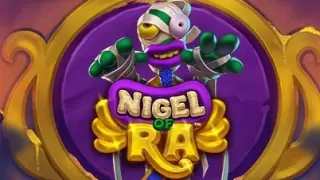
Nigel of Ra Demo
Table of Contents
A hundred spins with Nigel of Ra: a quick session story
Picture a quiet evening in a Toronto condo, laptop open, Nigel of Ra loaded, bet nudged to $0.90 per spin. A hundred spins feels like a neat, self-contained run, long enough to sense the game’s rhythm without turning it into a project.
The first ten spins barely move the balance. Mostly small wins built from the stone-cut royals, with the odd shimmer from a scarab or ankh stepping in. One early moment stands out: two Nigel symbols land on the left with a wild in the middle, the rest of the row just missing the matching explorer. It pays something respectable, yet your eyes instinctively expected more. That first near-miss lingers in the back of your mind.
By spin twenty, you have seen most of the symbol set at least once. The reels feel readable now. You notice that the low symbols tend to carpet entire columns, while the more ornate relics sit on their own, framed in gold. The balance is gently sliding down, but not in a way that feels alarming. A few spins pay roughly half your stake, a couple cover the bet almost exactly, and the odd better line win nudges you back up by three or four dollars.
The middle of the session is where Nigel of Ra starts to reveal its personality. Somewhere around spin forty, a cluster of higher-value symbols lines up across four reels, propped up by a wild that drops almost casually on reel three. It is not a huge hit, but it is the first one that makes you sit up. The win banner lingers slightly longer, the background highlight brightens, and for a moment you are back within a handful of dollars of your starting stack.
Then the energy dips. You go ten spins with almost nothing, just scattered single-line wins that do not cover the bet. It feels less like a crash and more like a slow drawdown. When the next respectable connection appears, it is built around a premium mask symbol stretching across a couple of lines. That one lands with a small sense of relief, mostly because it breaks the lull.
By the time you reach spin eighty, your balance is sitting at roughly 70% of where it started. Not a disaster, not a miracle. The last twenty spins turn into a kind of controlled glide. A couple of medium wins keep you from freefall, but nothing truly explosive arrives. You wrap the hundred spins down about a third of your initial balance, with the impression that the game kept hinting at bigger teeth without quite baring them in that window.
That single-session snapshot says a lot about Nigel of Ra’s temperament. To see why it behaves like that, it helps to look at how it feels on different screens and how the symbol ladder quietly shapes those outcomes.
Touchscreen tombs vs big-screen reels: Nigel of Ra on mobile and desktop
Load Nigel of Ra on two different devices and the math stays the same, yet the way you read each spin changes. The layout choices and interface details do more work than you might expect.
On a phone, the game feels more intimate. The reels dominate the screen, and the background tomb wall shrinks to a narrow frame. On a desktop monitor, there is more air around the grid, with extra hieroglyphs and softer lighting that give the scene a bit more depth. That extra breathing room affects how quickly your eyes can scan from left to right.
The core reel setup remains consistent, but the way it stretches and compresses across screen sizes has a real impact on ease of play, especially over those longer, hundred-spin stretches.
Layout choices that change how you read the reels
Nigel of Ra uses a familiar reel grid, yet the framing shifts with resolution. On a laptop or desktop monitor, the reels sit slightly lower than centre, leaving space for a detailed title panel and a slim band of decorative stone above. It feels a bit like looking into a recessed niche.
Hold a phone vertically and the reels run almost from top to bottom. The logo compresses and some of the top ornamentation is trimmed away. That leaves less visual clutter and more pure reel area. Following symbol drops on a smaller device can be surprisingly straightforward because your eyes do not have to work around as many interface elements.
Control placement follows a modern, fairly standard pattern:
- Spin button anchored on the right on both desktop and mobile
- Bet adjustors tucked just below or beside the spin control
- Menu and settings pushed into corners so they do not sit on top of the reels
On desktop, the spin button is slightly raised and set into a stone disc, hovering over the panel. On mobile, it hugs the right side more closely to preserve space. That subtle shift means that on a phone, your gaze travels a shorter distance between the spin button and the first two reels.
Win lines and cluster outlines (depending on the exact payline configuration your casino’s version uses) are easiest to follow in higher resolution. On a monitor, they appear crisp, with glowing paths that clearly trace through the symbols. On smaller screens, the highlight effect thins out, and when several wins trigger at once, the lines can blur into each other. You can still read them, but sometimes it is simpler to wait for the win summary panel to tell you what just connected.
Balance and win readouts live in a stone bar at the bottom on both formats. On desktop, there is enough width to show balance, current win, and total bet with comfortable spacing. On mobile, those numbers sit closer together, which can lead to a brief “which one moved?” moment when a spin resolves, especially if you are half-watching while doing something else.
Mobile ergonomics: thumbs, reach, and mis-tap prevention
On a modern handset, Nigel of Ra feels tuned for one-handed play. The spin button falls within easy reach of the right thumb if you are holding the phone loosely. Left-handed players can still manage with one hand, but may feel a bit more stretch if they do not switch grip.
Hitboxes for spin and bet adjustment are generous. Tapping slightly inside the surrounding stone ring will still trigger the button. That forgiveness is helpful when you are on a streetcar or bus, where small bumps throw off precision. It does introduce one small risk: a thumb that drifts toward the plus icon can nudge the bet up by a step when you meant to hit spin.
Slide-out menus matter more on a small screen. Nigel of Ra uses a compact “three-line” icon in one corner to open settings, paytable, and rules. The menu pulls from the side, covering the reels with a parchment-style overlay. Font sizes land in a comfortable zone for mobile, and the paytable scroll length is moderate. You can move through the whole thing in under a minute without feeling you are dragging for ages.
Autoplay, when your casino offers it, sits in a separate icon near the spin button. It is slightly smaller than spin but still reachable. Starting or stopping autoplay with a thumb tap is simple enough, though it pays to glance at the highlighted border or icon glow. Spin and autoplay share a similar colour palette, and on a dimmed screen they can blur together. It is easy to think you are single-tapping when you actually have a block of automated spins queued.
Adjusting your bet while half-focused on a hockey game or a show on another device is possible, but there is a small pause built in. The bet adjustors usually open a panel with clear denominations or a slider, and that panel takes you away from the reels for a moment. Some players will appreciate that extra half-second as a natural checkpoint before changing stakes; others may see it as one more tap in the way.
Desktop comforts: information density and long-session usability
On a desktop or laptop, Nigel of Ra settles into a calmer, more spacious presence. With extra real estate, the interface spreads out and the decorative side columns come fully into view. For someone who likes to read the game while it runs, that format has real appeal.
The paytable and rules open in layered panels that dim the background tomb scene without erasing it. You can still faintly see the reels behind the parchment. That faint outline acts as a quiet reminder of where you left off in the session. Navigation inside those panels uses tabs along the top, making it easy to jump between symbol values, feature summaries, and rule pages without closing the overlay.
Mouse or trackpad control suits this slot nicely. Hovering over small icons reveals simple tooltips, especially around settings and information buttons. The spin button sometimes responds with a subtle glow on hover, a small reassurance that your click will land where intended.
For players who like to keep multiple games open, Nigel of Ra behaves politely in background tabs. Reels freeze visually when the tab is inactive, and most browsers pause heavier animations, which helps with CPU load. When you return, the game quickly resyncs, often with a short reconnect message depending on the casino platform. Shrinking the window too far does make the finer details of the premium symbols harder to appreciate, though. The artwork benefits from at least a modest slice of screen.
In multi-slot evenings, Nigel of Ra often becomes the steady second screen rather than the noisy headliner. It is quite comfortable to let it tick along on a secondary monitor while you experiment with flashier releases on the main one. The interface copes well with that low-attention role, which suits relaxed, extended sessions.
Performance, loading, and data use across Canadian conditions
From a Canadian network standpoint, Nigel of Ra behaves like a mid-weight modern video slot. Over home broadband, it usually loads within a few seconds after the casino wrapper finishes. On LTE or 5G, the first load may take a touch longer, especially if your signal is bouncing between bands in dense urban pockets, but it does not feel sluggish.
Reel animations stay smooth on mid-range Android and iOS devices from the last several years. Spin cycles are relatively short without feeling abrupt, with a slight pause before wins are counted that gives your brain time to register premium clusters. On older laptops with integrated graphics and a few heavy tabs open, you might notice the occasional stutter when large wins trigger multiple overlapping highlight effects. Input responsiveness usually remains fine; it is mainly a cosmetic hitch.
When the connection hiccups, Nigel of Ra typically pauses with a clear overlay indicating it is reconnecting through the casino platform. The current spin result is preserved, and once the line stabilizes, the balance snaps to where it should be. If the interruption happens mid-spin, the game tends to replay the outcome rather than skipping straight to the updated balance, which is reassuring if you like to see every result.
There is little practical difference between playing in a mobile browser and through a native casino app, though individual operators may optimize one slightly better. Apps often cache art assets locally, shaving a second or two off reloads. Browser play feels a bit more flexible if you enjoy flicking between tabs, but the core Nigel of Ra experience remains intact in both options.
Quality-of-life settings that quietly matter
Nigel of Ra includes a set of everyday toggles that subtly shape whether the slot feels relaxing or mildly grating over time.
On desktop, spacebar-to-spin is usually supported, which becomes oddly satisfying once you settle into a rhythm. Sound and quick-spin controls sit within one or two clicks, either directly on the main bar or in a compact settings wheel. On mobile, sound is often controllable from a small speaker icon on the main screen, while quick spin may live one layer deeper to reduce accidental activation.
Autoplay controls, where allowed in your province or by your operator, are fairly straightforward. You can typically choose a number of spins and a few simple stop conditions, such as halting on a single win above a chosen amount or on certain balance changes. The interface tends to present these as clear numbers or sliders rather than cryptic icons. That transparency makes it easier to understand what you have actually set in motion.
Win notifications follow a gentle hierarchy. Smaller wins appear as a quick label near the reels with a modest highlight on the winning lines. Larger outcomes prompt a broader banner, sometimes with a tier description. On a larger screen, both the balance and last-win values are easy to track as they count up. On compact phones, it can take a couple of spins to train your eyes to the right corner, since the font in the lower bar is fairly tight.
These small UX decisions play a larger role than they first appear. When the controls behave predictably and the information is easy to parse, your attention is freed up to notice symbol patterns and session flow rather than wrestling with menus.
Reading the relics: Nigel of Ra’s symbol ladder and payouts
Nigel of Ra leans into a very clear symbol hierarchy. Within a few minutes, even before looking at numbers, you can sense which icons are there for colour and which are actually carrying the weight.
There is a tidy split between the carved-stone card ranks at the base and a set of gleaming relics and character symbols above. The paytable wastes no time in showing you which group really matters.
Low symbols: the quiet backbone of the paytable
The lowest tier in Nigel of Ra is made up of stylized 10, J, Q, K, and A symbols, carved into worn stone blocks. They carry light colour washes, but they are easily the most restrained graphics on the reels. You will see them constantly. Entire columns sometimes land as a patchwork of these blocks, giving the game a steady, low-paying undercurrent.
Their role is to keep spins from feeling empty. A typical five-of-a-kind line of these royals barely nudges your balance, usually returning only a small slice of your stake. Even when stacked across multiple lines, they rarely produce anything that changes the session’s story. Instead, they soften the drop between the more meaningful hits.
Things become a little more interesting when wilds get involved. Because these card ranks are so common, a single wild landing among them often turns a scattered grid into one or two half-decent lines. You end up with plenty of spins where you get 40–70% of your bet back thanks to two or three low-symbol lines sharing a lone wild. It does not feel thrilling, but it changes the emotional tone of the session. The balance drains more slowly, and you spend more time hovering around familiar territory.
Across a 100-spin sample, most of your recorded “wins” are likely to include these stone royals in some fashion. They are the scaffolding that holds up the experience. The trade-off is simple: the ceiling on this tier is modest by design.
Premium icons: when Nigel actually pays attention
Once you climb above the card ranks, Nigel of Ra introduces a compact cast of relics and characters that carry the real promise. A golden scarab, an ankh, a mask or statue, and Nigel himself usually occupy this premium group. Each has its own glow or framing, which helps them stand out even in a quick glance.
The paytable steps up noticeably as you move from the first relic to the main character symbol. Mid-tier premiums such as the scarab and ankh pay clearly more than the royals, yet still feel like a supporting cast. Land a five-symbol line of one of these and you see a satisfying improvement in your balance, but it is rarely a session-defining event. They are the icons that make you nod and exhale, rather than reach for a screenshot.
Top-tier symbols tell a different story. Nigel’s own icon tends to sit on the peak, sometimes sharing that position with a radiant Ra emblem or similar mythic marker. A full line of these top symbols can be worth several times more than an equivalent line of the first relic tier. That gap creates the sense that you are always chasing something a little out of reach.
In that earlier 100-spin example, the moments that felt genuinely significant almost always involved at least one of these high premiums. Even a partial line that strings together three or four of them with a wild can reverse several spins’ worth of losses in one go. After a while, you start to recognize that when Nigel appears on the first two reels with the right supporting symbols, the spin suddenly carries more weight.
Of course, you do not see those full connections often. Scattered top symbols show up frequently enough to tease, but fully connected lines are rarer, and that scarcity is a big part of how the game keeps its longer-term balance.
Wilds, special icons, and their practical role in line-building
Wild symbols in Nigel of Ra are hard to miss visually, usually arriving as a distinct emblem with a clear “WILD” label or a highlighted artefact called out in the paytable. They substitute for regular paying icons, whether low card ranks or mid and top-tier relics and characters.
On many spins, wilds feel like quiet helpers, nudging a mediocre outcome into something a little more respectable. You might see a line of three ankhs bridged into four by a wild, or a cluster of card ranks transformed from a miss into two modest lines. Those are the spins that turn a potential blank into a partial return.
Wilds become much more noticeable when they land in the central reels alongside scattered top symbols on the edges. A single wild on reel three, for instance, can complete multiple lines if you have Nigel or the Ra icon on reels two and four. These interactions give the slot a sense that the middle of the grid always holds some latent promise, even when the edges look forgettable.
During some sessions, it can feel as though certain reels are more active with wilds than others. One evening, reel three might seem to attract them; on another, it is the fourth. There is no published rule that favours a particular lane, and over a long run it should balance out, but those short-term patterns are hard not to notice. They subtly influence where your eyes linger as the reels slow.
Paytable structure: from small steps to sudden jumps
Nigel of Ra’s paytable does not climb in a straight line. Instead, it feels like a staircase with a few low risers followed by a couple of steeper jumps.
The difference between your lowest and second-lowest symbols is modest. From there through the first set of relics, increases are incremental. You feel like you are edging upward, one small step at a time.
Then, somewhere around the second or third premium symbol, the payouts rise more sharply. A full line of the higher relic might pay double or triple what the first relic tier offers. Move from that to Nigel or the Ra-themed top icon and you encounter another jump. A five-of-a-kind of the very top symbol can be several times more valuable again.
This stepped structure explains a lot of what you feel during that 100-spin session. The game spends most of its time paying in the lower half of the table, which steadies your balance but rarely sends it soaring. When you finally connect a strong premium line, especially with help from a wild, it feels like the session has suddenly shifted gears.
For Canadian players used to video slots with flatter payout ladders, Nigel of Ra’s approach can feel a bit like walking across terraces. You spend long stretches on the broad, low plateaus of small and medium returns, occasionally climbing to a higher ledge when the right combination lands. Knowing that shape in advance makes it easier to match your expectations and your stake size.
Pacing map: quiet spells, sparks, and warmer runs
Nigel of Ra’s rhythm leans more toward subtle shifts than constant spectacle. The game spends a fair amount of time in a gentle hum, then throws in a few brighter sparks when premiums cooperate.
Many spins resolve with nothing or a small line of low symbols. Those are the periods where you see the same stone royals dropping in familiar stacks, with the occasional wild turning a complete miss into a token return. The pace is brisk enough that those muted results do not drag, but you can clearly tell when you are in a cooler phase.
The mood begins to change when premiums start landing together more often. A run of spins with scarabs or ankhs connecting across a couple of reels, even for moderate amounts, hints that the game is drifting into a more generous patch. It is a subtle shift, but you feel the difference when more spins are returning a meaningful chunk of your stake instead of thin slivers.
A “warmer” stretch in Nigel of Ra usually looks less like a single huge spike and more like a cluster of encouraging signs over 10–20 spins, such as:
- Premium symbols showing up on the first reel in consecutive spins
- Wilds landing in central positions where they can bridge multiple lines
- Several spins in a row paying back at least half of your bet
During those windows, your balance graph tends to flatten or even edge upward. You may chain together a series of medium hits that, when viewed as a group, have the same impact as one big standout spin. Recognizing that pattern does not guarantee anything, but it does help frame how you interpret the next few minutes of play.
Cooler spells feel different. Premiums appear but fall just out of alignment, and wilds drop into corners where they complete nothing important. The reels are technically doing the same things, yet the positioning of symbols tells another story. After a while, you almost read Nigel of Ra’s mood like a changeable forecast: a run of grey, a few brighter breaks, and now and then a stronger beam of light across the tomb wall.
Betting range and bankroll sizing in Nigel of Ra
Most Canadian-facing casinos tend to host Nigel of Ra with a fairly flexible stake ladder. Minimum bets per spin are usually accessible enough for short, low-pressure sessions, while the upper limits leave room for those who prefer higher stakes. Exact ranges vary by operator, so it is worth glancing at the stake selector before settling in.
Because of the stepped paytable and the way low symbols often chip back part of your stake without transforming into big wins, Nigel of Ra generally suits moderate bet sizes over longer stretches more than “all-or-nothing” bursts. Many players find it comfortable to sit somewhere around 0.5–1% of their planned session bankroll per spin. That sort of range allows the game to breathe through quieter spells while still letting a solid premium connection feel meaningful when it lands.
Nothing in the mechanics appears to favour larger bets in terms of how outcomes are structured. Features and symbol behaviour do not change when you move the stake up or down. That leaves you free to nudge the bet in either direction based on how the session feels and what your budget allows, rather than worrying that the game is reacting to those adjustments.
How Nigel of Ra stacks up against neighbouring tomb-raiders
Nigel of Ra lives in a busy corner of the lobby, surrounded by other Egyptian and explorer-style slots. Some of those neighbours lean heavily on elaborate feature rounds, cascading reels, or stacked modifiers; this game feels more comfortable with a clear symbol ladder and a relatively open reel window.
Compared to blockbuster titles that constantly trigger side features, respins, or extra bet options, Nigel of Ra comes across as more restrained. There is a quiet appeal in being able to read each spin at a glance without a dozen meters and counters vying for attention. The flip side is straightforward: anyone who thrives on constant on-screen events and layered mechanics may find it a little understated.
Stacked against other line-based Egyptian games, Nigel of Ra tends to sit somewhere in the middle. It does not lean as hard into dramatic boom-or-bust swings as some high-volatility releases that revolve around a single rare super-feature, yet it feels livelier than older, very low-potential titles that mostly recycle small, similar wins. The emphasis on premium symbols and stepped payouts gives individual line hits a bit more narrative weight.
Provider context: where Nigel of Ra fits in the studio’s line-up
Within its studio’s catalogue, Nigel of Ra feels like a link between the older, straight-ahead line slots and the newer, more cinematic adventure games. It keeps traditional elements such as a clearly ordered symbol ladder and a familiar reel layout, while borrowing some of the smoother animations and interface touches from later releases.
Players who associate this provider with experimental grid formats or multi-layered bonus systems may find Nigel of Ra pleasantly conservative. It behaves like a quieter cousin, more interested in clean symbol behaviour and readable payouts than in building a stack of side mechanics. That can be a relief if you enjoyed the studio’s early Egypt-themed titles but found some of the sequels a bit too busy.
Coming from the most stripped-down legacy games in the portfolio, Nigel of Ra feels like a gentle step forward. There is more motion, more character, and a bit more nuance in how wins appear, yet the core experience still revolves around simple line-building rather than complex meta-systems.
Win potential and what realistic outcomes look like
On paper, Nigel of Ra usually advertises a maximum win that sounds dramatic, with a top cap that only a tiny fraction of sessions will ever approach. Those headline numbers are part of the usual marketing picture rather than a realistic expectation for an evening’s play.
In practical terms, most Canadian players are more likely to see sessions shaped by clusters of medium wins tied to premium symbols than by a single screen-filling hit. A strong connection of top-tier icons, especially when helped by one or two well-placed wilds, can still multiply your stake in a way that you will remember. It just tends to land at a scale that feels like a good story for the night rather than a once-in-a-lifetime event.
Shorter runs of 100–200 spins often resolve into three broad patterns: a gradual drift downward softened by low-symbol returns, a mostly flat line with a couple of medium peaks, or, less often, a session where one sizeable premium hit pushes you clearly ahead. Longer sessions naturally bring more variation, but the stepped paytable means the shape of your graph usually reflects when, and how often, those premium tiers decided to link up.
Where it falls a little short
Nigel of Ra has a quiet charm, but a few aspects may not land for everyone:
- The visual hierarchy is clear, yet low-symbol wins can start to blur together during longer stretches, making some spins feel samey.
- Paytable jumps between mid-tier and top-tier premiums are steep, so anything short of a strong premium line can feel underwhelming once you have seen what the upper tier can do.
- On smaller phones, the similarity between some control icons and the tight spacing of balance and win readouts can cause brief confusion until you adapt.
- Players who prefer frequent modifiers, side bets, or constantly evolving mechanics may find Nigel of Ra’s more straightforward structure a bit too restrained for longer marathons.
For those who appreciate a readable reel set and a clear symbol ladder, these quirks are easy enough to live with. For others, they will be the reasons to treat Nigel of Ra as an occasional stop rather than a mainstay.
More Slots from Quickspin








| Provider | Quickspin |
|---|---|
| Layout | 5-3 |
| Betways | 30 |
| Max win | N/A |
| Min bet | 0.1 |
| Max bet | 100 |
| Hit frequency | N/A |
| Volatility | Med |
| Release Date | 2026-10-30 |