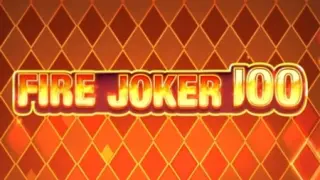
Fire Joker 100 Demo
Table of Contents
Introduction to Fire Joker 100
What Fire Joker 100 is and who it’s for
Fire Joker 100 is a modernized “classic” slot that keeps the feel of a three-reel fruit machine but layers in more paylines, bigger potential, and a sharper presentation. It is clearly aimed at players who like straightforward gameplay without complex bonus maps or lengthy free spin rounds, but still want a bit of suspense and punch when a good spin lands.
At its core, Fire Joker 100 is a compact 3×3 grid with a fixed line setup and a heavy focus on stacked symbols, re-spins, and a multiplier wheel. It sits in that space between old-school pub slot and modern video slot, which suits players who:
- Prefer simple rules and quick sessions
- Enjoy frequent small to medium hits with the chance of bigger spikes
- Like the classic Joker / fruit theme but want more volatility than a traditional “stepper”
This is not a feature-stuffed adventure slot with storylines and progress bars. It plays more like a distilled, high-tempo experience where most of the action comes from lining up premium symbols and triggering multipliers at the right moment.
How it relates to the original Fire Joker slot
Fire Joker 100 is essentially an expanded, more charged-up evolution of the original Fire Joker. The first game built a strong following by combining:
- A 3×3 reel layout
- Stacked symbols
- A re-spin feature when two reels match
- A multiplier wheel on full-screen wins
The newer version keeps that familiar structure but increases the intensity. The “100” in the name is usually a nod to boosted pay potential, a higher win cap, or generally more explosive outcomes compared to the base version. You still get the Joker as the centrepiece symbol, the re-spin mechanic, and the multiplier wheel, but with tuning that feels more aggressive.
Anyone who has spent time with the original will recognize the rhythm almost instantly: small wins peppered throughout, re-spins that feel like second chances, and the genuine thrill when a full screen lines up and the wheel spins. Fire Joker 100 tweaks that recipe for players who want more edge and a slightly more modern look and feel.
Quick snapshot: core stats and key features at a glance
Exact numbers can vary a bit between casinos and provinces, but Fire Joker 100 typically offers:
- Reels / rows: 3 reels, 3 rows
- Win structure: Fixed paylines (not ways-to-win)
- RTP (Return to Player): Usually around the mid 96% mark, with some casinos using lower configurations
- Volatility: Medium-high, leaning towards high for a 3×3 slot
- Top potential: A win cap that is significantly higher than the original, achieved mainly through full-screen wins and multipliers
- Core features:
- Stacked symbols on all reels
- Re-spin on non-winning spins with stacked reels (or near misses)
- Multiplier wheel on full-screen symbol wins
- Joker acting as a premium symbol, often with special roles in features
In short, it’s a compact game with a surprisingly punchy math model, aimed at players who enjoy a stripped-down format but still want a shot at “big moment” spins.
First Impressions: Theme, Atmosphere, and Visual Style
Overall theme: modern twist on a classic fruit machine
The theme lands squarely in the “fire and fruit” category. Picture a classic Vegas fruit machine set against a glowing, ember-like background where subtle flames flicker behind the reels. The Joker character is the star of the show, grinning mischievously and hinting at volatility and sudden swings.
There is no deep storyline here, and that feels deliberate rather than lazy. The atmosphere is all about energy and heat, framed by recognizable symbols like cherries, lemons, BARs, and sevens. The modern twist comes from the polished UI, HD graphics, and the way the fire visuals flare up during wins and feature triggers. It feels familiar, but not stuck in the past.
Visual design: layout, colour palette, and reel presentation
The layout is clean and compact. The 3×3 grid sits in the centre of the screen, framed by a metallic border with glowing edges. Warm reds, oranges, and golds dominate the palette, with deep purples or dark blues in the background to make the reels stand out.
Symbols are crisp and easy to read at a glance:
- Fruits (cherries, lemons, plums, grapes) use bold, saturated colours with simple shading.
- Mid-tier icons like BARs and stars are metallic and slightly glossy.
- The red sevens and Joker symbols stand out with brighter highlights and more detail.
Interface elements such as the bet selector and spin button sit neatly below the reels. Clear typography and simple icons keep the focus on the 3×3 action rather than cluttering the screen. On larger monitors, the game stays centred and tight, without that stretched, empty look some classic-style slots can suffer from.
Animations and pacing: how the game feels spin to spin
Spin to spin, Fire Joker 100 feels snappy. The reels drop with a short, sharp motion instead of a long float, and symbols come to rest quickly, which suits players who favour fast play or auto-spin.
Winning combinations trigger subtle but satisfying animations:
- Matching symbols may pulse or glow briefly.
- Flames lick around the frame of the reels during stronger hits.
- When features trigger, transitions are quick and clear rather than dragged out.
The re-spin feature in particular changes the pacing. A spin that looks like a miss can suddenly “lock” certain reels and re-spin the others, creating a small pause and a sense of second-chance tension. The multiplier wheel also shifts the tempo, zooming in on the wheel with a short, punchy animation that feels like a mini-game without turning into a lengthy bonus sequence.
Overall, the tempo sits on the faster side of average, which works well for shorter, more intense sessions or for players who dislike long waits between outcomes.
Sound design and music: what you hear when you spin and win
Audio plays a big role in how “hot” the slot feels. The background sound is usually a low, ambient hum with faint crackles of fire, punctuated by short musical stingers when you spin. It never really turns into a full song, so it doesn’t overpower the experience or become grating during longer play.
During spins, you hear:
- A classic reel-stop “tick” as each reel locks in place
- A subtle swoosh as the reels begin to move
Wins trigger short, upbeat jingles that scale with the size of the payout. Small wins might be accompanied by a light chime, while bigger hits bring a richer chord progression and more intense sound effects. The multiplier wheel is highlighted by a more dramatic build-up and a satisfying “clack-clack” as the pointer moves across the segments.
The overall sound mix leans into retro influences without sounding cheap or overly synthetic. It adds feedback and excitement, but can be muted easily if you prefer a quieter session or are playing with other audio in the background.
Mobile and desktop experience: performance, orientation, and responsiveness
On desktop, Fire Joker 100 fits neatly into the centre of the screen, with clear controls and space for the paytable and menu overlays. The game loads quickly on most modern browsers and does not demand heavy resources compared to 3D or branded titles.
On mobile, the game has clearly been designed with portrait play in mind, though landscape also works. In portrait mode:
- The reels sit higher on the screen, with the spin button near the bottom thumb area.
- Bet controls and menu icons are spaced for one-handed use.
- Symbols remain clear even on smaller displays because of the simple 3×3 grid.
Responsiveness is generally solid, as long as your connection is stable. Tap response feels immediate, and there is no obvious input lag when adjusting bets or stopping auto-spin.
The compact nature of the 3×3 layout means little is lost when moving to smaller screens. On a mid-range phone, it still feels crisp and readable, making it comfortable for quick on-the-go sessions.
Symbols and Payout Structure in Fire Joker 100
Overview of the paytable layout
The paytable follows a straightforward, top-down format. Symbols are sorted by payout value, starting from the lowest-paying fruits at the bottom and moving up to bars, stars, sevens, and finally the Joker at the top.
Because this is a 3×3 slot, the vast majority of wins come from three-of-a-kind combinations on fixed lines. You won’t see long lists of 4, 5, or 6-symbol combos like in larger grid games, which keeps the paytable compact and readable.
Each symbol entry typically shows:
- A visual of the symbol
- The payout for 3 matching symbols on a line (expressed as a multiple of your bet)
- Any special notes if the symbol has extra behaviour (mainly the Joker)
Navigation between paytable pages is handled via small arrows or dots at the bottom, with additional tabs for features, paylines, and rules.
Low-paying symbols: classic fruits and their typical values
The low-paying symbols are the familiar fruit set. Exact values can vary slightly depending on game configuration, but the relative hierarchy is consistent:
- Cherries
- Lemons
- Grapes
- Plums
These symbols form the bulk of your hits, especially in the base game. A full line of the lowest fruit might pay just a few times your stake, while the higher fruit in the low tier pays slightly more.
You will often see stacked blocks of the same fruit covering a reel. When these align across multiple reels, several lines can pay at once, turning what looks like a “small symbols” spin into a decent multi-line win. Over time, these low-tier symbols quietly support your balance, even if they don’t deliver the headline payouts.
Mid- and high-paying symbols: bars, stars, sevens, and premium icons
Above the fruits sit the mid-tier and high-tier symbols, usually:
- Single BAR icons
- Star symbols
- Red sevens
The BAR and star act as a bridge between fruit payouts and the serious premiums. Lines of these can be worth a meaningful chunk of your bet, and when they land as stacked symbols across the grid, they become particularly impactful.
The red seven is typically the highest-paying regular symbol (excluding the Joker). Three sevens on a line can deliver a strong payout, and a full screen of sevens across all lines can be a standout moment even before multipliers are involved.
Visual clarity is a plus here. BARs tend to be rectangular with bold text, stars are bright and five-pointed, and sevens are deep red with gold trim. That clarity helps you quickly spot “good” hits without constantly checking the paytable.
The Joker symbol: role, payouts, and any special behaviour
The Joker is the star of the slot and usually carries the highest symbol payout. Three Jokers on a line can pay significantly more than any other combination, and a full screen of Jokers is often where the game’s top potential sits, especially when combined with the multiplier wheel.
Depending on the exact implementation at your casino, the Joker may:
- Act as a premium symbol only (no wild function), or
- Double as a wild, substituting for other symbols to complete lines
In Fire Joker 100, the Joker is generally treated as the premium icon with special importance during features and high-end wins. Stacked Jokers are particularly valuable: a reel or two covered in Jokers can set up powerful re-spin scenarios or full-screen outcomes.
Visually, the Joker symbol is hard to miss: a jester with a red and gold cap, expressive eyes, and a slightly smug grin. When it lands in strong combinations, the animation is often more pronounced, with hotter colour flares or a subtle zoom that makes the hit feel weightier.
Winning combinations: paylines, ways, or fixed line structure
Fire Joker 100 uses a fixed line structure. On a 3×3 layout, this usually means a set of horizontal lines and sometimes diagonal or V-shaped patterns, depending on the specific version. You do not adjust the number of active lines; all lines are always in play when you spin.
A few key points of the line system:
- Wins are usually paid for three matching symbols on a line, from left to right.
- Each line has a specific path across the grid, illustrated in the payline section of the paytable.
- Multiple line wins in a single spin are added together for a total payout.
Because the grid is small, it’s fairly easy to visually track lines after a bit of play. You quickly get a feel for which patterns are most common and what a “good” layout of stacked symbols looks like.
How to view and interpret the paytable inside the game
Accessing the paytable is simple:
- Tap or click the “i” (information) button or a small menu icon near the spin button.
- The game opens an overlay with several pages or tabs:
- Symbol payouts
- Feature descriptions
- Payline diagrams
- Game rules and RTP/volatility notes
When reading the paytable, pay attention to:
- Whether payouts are listed as “x bet” (multiples of your total stake) or “x line bet”. Fire Joker 100 usually uses total bet multipliers, which simplifies mental math.
- Notes under symbols or at the bottom that clarify feature triggers or special rules.
- The maximum win cap mentioned in the rules tab, which gives you a sense of the ceiling.
Taking a minute to scan these pages before playing can prevent misunderstandings about how the Joker behaves, how re-spins work, and what the multiplier wheel can realistically deliver.
Math Model: RTP, Volatility, and Hit Frequency
Return to Player (RTP) in Fire Joker 100
Typical default RTP setting
The default theoretical RTP for Fire Joker 100 usually sits around the mid 96% range, in line with many modern online slots that aim for a fair but house-favourable long-term balance. Over a very large sample of spins, the game is designed to return around 96% of wagered money to players collectively, with the remaining portion representing the house edge.
Possible alternative RTP versions and why they matter
Many providers release multiple RTP configurations for the same slot, and casinos can choose which version to offer. With Fire Joker 100, you may find:
- A standard setting around 96%
- Lower configurations, often stepping down in small increments (for example, around 94% or 92%)
From a player perspective, this matters because a lower RTP means slightly less favourable long-term returns, all else being equal. The gameplay feel (volatility, features) stays the same, but the average value of each spin is marginally lower. Over short sessions, you might not notice the difference, but for regular play it can add up.
How to check the actual RTP at your chosen casino
To see which RTP version your casino is using:
- Open the game and tap the information or help icon.
- Look for a “Game rules” or “Help” page within the menu.
- Scroll to the section that references RTP or “theoretical return to player”.
Some Canadian online casinos also list RTP values on the game thumbnail or in a separate info page in the lobby. If you do not see a clear number, it is usually safest to assume it is using one of the standard configurations, but confirming inside the game itself is better.
Volatility profile
What “volatility” means in practical terms
Volatility describes how uneven or “swingy” the payouts are. A high-volatility slot tends to produce:
- Longer stretches of small or no wins
- Occasional large spikes when features hit or big combinations land
A low-volatility slot, by contrast, provides more frequent, smaller wins and fewer dramatic swings.
How Fire Joker 100’s variance affects streaks and bankroll swings
Fire Joker 100 leans towards the medium-high to high-volatility side, especially for a 3×3 game. In practical play, that means:
- You may encounter streaks of modest fruit wins that barely cover or slightly exceed your bet.
- The real excitement comes from stacked premiums and Joker-heavy screens, particularly when they feed into the multiplier wheel.
- Bankrolls can move quickly in either direction, with short downswings followed by sudden recoveries when a strong sequence hits.
Because of the tight reel set, outcomes can feel very “binary” at times: either the grid lines up and pays well, or it doesn’t connect and the spin is a loss. The re-spin feature softens this a bit, but the core volatility remains noticeable.
Who might enjoy this volatility level and who might not
Fire Joker 100 tends to suit:
- Players who like riskier sessions with the possibility of substantial hits
- Fans of the original Fire Joker who wanted more punch
- Slot enthusiasts who enjoy watching for full-screen setups and multiplier wheel triggers
It may be less appealing for:
- Very cautious players who prefer constant small top-ups
- Those on tight budgets who dislike extended periods of break-even or slightly negative spins
If you are new to higher volatility, starting with smaller bets can help you get a feel for the rhythm without putting too much pressure on your balance.
Hit frequency and game rhythm
How often wins tend to drop compared to many other slots
Exact hit frequency values are not always advertised, but Fire Joker 100 generally sits in the moderate range. Wins appear relatively often compared to very high-volatility 6-reel slots, though not as frequently as in low-volatility, “novice-friendly” games.
The majority of wins are small: a line or two of fruit, occasionally a BAR or star line. These hits slow down the rate at which your balance moves, even when nothing spectacular is happening.
Small, medium, and larger win distribution over time
Over a typical session, the distribution tends to feel roughly like this:
- Small wins: Frequent, typically less than 5× your bet. Often fruit lines or partial premium setups.
- Medium wins: Occasional, landing in the 5×–30× range. Usually stacked BARs, stars, sevens, or Joker lines without multipliers.
- Larger wins: Less common, often above 30× and potentially climbing much higher. Usually involve full or near-full screens, often combined with the multiplier wheel.
Because the game is structured around three-of-a-kind lines, the step from small to medium to large wins is quite noticeable. Strong spins are obvious the moment the reels stop.
What to expect from short sessions vs longer sessions
In a short session (say, 50–100 spins), outcomes can feel quite polarized:
- You might see mostly small fruit wins and re-spins that never quite connect.
- Or you might hit one or two strong sequences that define the entire session.
Over longer sessions, the math model tends to reveal more of its character:
- Several medium wins may appear, spaced out across the session.
- A larger hit or full-screen event is more likely to show up, though never guaranteed.
Managing expectations is important. Fire Joker 100 is not built as a steady “drip feed” game, but as a higher-pressure 3×3 slot where timing and luck can suddenly transform your balance.
Long-term behaviour vs short-term luck
The slot’s long-term behaviour is guided by its RTP and volatility, but each individual session is heavily influenced by short-term randomness. That is why:
- Some sessions will feel brutally cold, with re-spins that never connect.
- Others will feel like the game is “on fire”, with repeated premium hits and frequent wheel triggers.
This streakiness is a natural consequence of the math model. Full-screen outcomes and multipliers concentrate a lot of value into relatively rare events, which means regular spins have to pay less often to “fund” those big moments.
For steadier play, it helps to:
- Choose a bet size that allows for a reasonable number of spins.
- Accept that the session could go either way, especially in the short term.
- Treat big wins as pleasant surprises, not as something “due” after a losing run.
Core Gameplay: Base Game Mechanics
Reel setup, rows, and line structure
Fire Joker 100 uses a classic 3×3 setup:
- 3 reels spinning vertically
- 3 rows visible at all times
- Fixed lines that pay for three-of-a-kind combinations across specific patterns
The fixed line structure means every spin covers all available lines. You do not choose how many to activate, which simplifies betting decisions. After each spin, the game calculates wins across all lines and adds them together.
Because of the small grid, the focus is on symbol stacking and alignment rather than complex line geometry. Once you are familiar with the diagonal and horizontal lines, you can often read the outcome in a fraction of a second.
Spin speed, turbo/autoplay options, and manual control
The default spin speed is brisk, with each spin finishing in a couple of seconds, including win celebrations. Many Canadian-facing casinos provide:
- Auto-play controls where you can set a number of automatic spins (for example, 10, 25, 50, or more)
- Optional quick spin or turbo mode, reducing the spin animation duration
- Stop conditions, such as halting auto-play when a single win exceeds a chosen amount or when your balance drops or rises by a set value
If you prefer a more hands-on approach, manual clicking or tapping the spin button gives you clear control over the pace. The game does not rely on long, unskippable animations, so you can keep things moving quickly if that suits your style.
Stacked symbols and their impact on base game wins
Stacked symbols are one of the main drivers of excitement in Fire Joker 100. Many symbols can appear in vertical stacks, sometimes covering an entire reel. This has several important effects:
- Multi-line wins: A single spin can generate payouts on several lines if stacked symbols land across multiple reels.
- Setup for features: Stacked reels often trigger the re-spin feature when they come close to forming a full screen.
- High potential: Full-screen outcomes become realistically achievable because entire reels can be taken over by a single symbol.
In practice, this means that even simple fruit symbols can become valuable when they fill the grid. A full screen of any symbol, especially premiums, is a key moment where the game’s top-end potential unlocks via the multiplier wheel.
Re-spins or nudges in the base game (if present)
Fire Joker 100 continues the tradition of giving you a second chance when the first spin doesn’t quite land. The re-spin feature generally works like this:
- If no full win or certain conditions are met, but one or more reels are stacked with the same symbol (or near a strong setup), the game can trigger a re-spin.
- The stacked reel(s) remain locked in place.
- The remaining reels spin again, giving you another shot at lining up a full screen or stronger combinations.
The exact behaviour may vary slightly depending on the specific version offered by your casino, but the underlying idea is the same: near misses with stacked reels are turned into suspenseful second attempts.
These re-spins do not guarantee a win, which can be both thrilling and frustrating. When they do connect, though, they are often the bridge between a modest base game hit and one of those memorable, grid-filling outcomes that define Fire Joker 100’s appeal.
More Slots from Play'n GO






| Provider | Play'n GO |
|---|---|
| RTP | 94.21% [ i ] |
| Layout | 3-3 |
| Betways | 5 |
| Max win | x5000.00 |
| Min bet | 0.05 |
| Max bet | 100 |
| Hit frequency | N/A |
| Volatility | Med |