Book of Dead Demo
Table of Contents
Overview of the Book of Dead Online Slot
What Book of Dead Is and Why It’s So Well Known
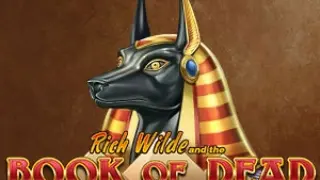
Book of Dead is a 5-reel, 10-payline online slot from Play’n GO built around a very simple but very punchy mechanic: a book symbol that acts both as wild and scatter, and a free spins round where one symbol expands to cover whole reels. That expanding symbol idea is the heart of the game. When it lines up, the entire screen can flip from quiet to explosive in a single spin.
It shows up constantly in casino lobbies because it has become one of those “default” high-volatility slots. Operators know it converts well, regulars know exactly what to expect, and streamers like it because it can create huge, dramatic wins in a short window. It is easy to understand, loads quickly, and runs on pretty much any device. That combination keeps it pinned near the top of “popular” and “featured” sections, even years after release.
From a player’s perspective, Book of Dead is not a gentle, low-risk time killer. It is built much more for risk-takers who accept long patches of small or empty spins in exchange for the possibility of big, punchy free spin rounds. Casual spinners can still enjoy it, especially at very low stakes, but those looking for constant small hits and lots of side features might find it a little harsh. This is a game where the math model wants you to chase that one good bonus, not coast on frequent trickles of wins.
Quick Snapshot for Impatient Readers
Here is the fast version before digging into the detail:
- Provider: Play’n GO
- Release: 2016 (and still one of their flagships)
- Structure: 5 reels, 3 rows, 10 adjustable paylines
- RTP: Commonly around 96.21%, but lower settings exist
- Volatility: High
- Core feature: Free spins with one randomly chosen expanding symbol
- Special symbol: The book, acting as both wild and scatter
The core selling point of Book of Dead is the combination of high volatility and that expanding symbol free spins round, where it is possible to cover all 5 reels with a single symbol. The overall playing experience is fairly stripped back: quick spins, a lot of dead or tiny hits, and then occasional bursts of drama when the books land or the chosen symbol starts expanding across the screen.
Theme, Atmosphere, and Visual Presentation
Ancient Egypt Done the “Classic Slot” Way
The theme is familiar: ancient Egypt, dusty tombs, hidden treasure, and a brave explorer called Rich Wilde. The reels are set inside a grand stone chamber lit by warm, flickering torchlight. Columns frame the grid, and gold trim is used heavily around the panel and symbols. It feels more like an old-school adventure comic than a modern, cinematic slot.
There are countless Egyptian-themed games now, many with 3D characters walking around the screen or fully animated story intros. Compared with those, Book of Dead looks relatively straightforward. There are no complex cutscenes or layered animations. The style is closer to a classic video slot cabinet: static background, bold symbols, clean lines, and quick spins.
That “classic slot” approach is part of its appeal. The theme is just strong enough to give it identity, but it never crowds out the core gameplay. You get the sense of creeping into a temple and rifling through treasure, but the game never slows down to show it off. It keeps the focus on the reels.
Graphics, Animation, and Screen Layout
Visually, everything is clear and easy to read. Symbols have thick outlines and bright gold edging, with the premium icons (Rich Wilde, Anubis, Horus, Pharaoh, and the book) standing out sharply from the more muted card ranks. On a dark background, the bright colors pop without being too glossy. The reels spin in a quick, almost mechanical motion, and wins are highlighted with a short shimmer on the symbols and small movement rather than sprawling animations.
When you land a win, you get a simple glow and subtle symbol bounce, and your winning line is traced with a line of light. There is no clutter, no giant symbols flying at the screen. The animations are crisp but restrained, which keeps the game feeling quick and responsive. It is especially noticeable on mobile: even on smaller screens, the reels are instantly readable and symbols do not blur into each other.
The layout itself is straightforward:
- Balance, bet size, and win display sit neatly along the bottom (or under a menu on smaller devices).
- Spin, autoplay, and max bet buttons are grouped together, big enough to hit with a thumb on mobile.
- The paytable and settings are reached via simple icons, usually tucked to one side.
On desktop, the paytable opens in a clear overlay with multiple pages and big images of each symbol. On mobile, the same information is condensed but still legible, with swipeable sections. There is no hunting through multiple stacked menus to find basic information, which helps if you like to check symbol values mid-session.
Sound Design and Pace of Play
The audio is quite understated at first. During the base game, a low, atmospheric loop plays in the background with a faint Egyptian flavour: soft drums, a touch of flute, and a sense of echo, as if the sound is bouncing off stone walls. It is not intrusive and many players just let it blend into the background.
Spin sounds are short and mechanical: a soft rush as the reels stop, a light click as each reel locks into place. Small wins trigger brief, higher-pitched chimes, while bigger hits cue a longer, more triumphant tune layered over the base music. The jump in audio energy when you land a substantial win is noticeable without being overwhelming. It is more of a “you should pay attention to this spin” cue than a carnival.
During free spins, the soundtrack lifts slightly, adding more percussion and a sense of momentum. When the expanding symbol animation kicks in, there is a distinct “whoosh” and a heavier sound as the symbol fills the reel. Big full-screen expansions are punctuated by louder, more celebratory music, which, combined with the coin count animation, slows the perceived pace for a moment and makes you watch the total climb.
Overall, the tempo of spins is fast. With the turbo setting on, spins resolve in about a second or two, and even at normal speed the game moves briskly. That fast pace can make dry spells feel more intense, because you see a lot of losing spins in a short period. It also means bonuses and big hits arrive suddenly, with little build-up. Sessions can feel streaky, and the sound design leans into that feeling by sharply shifting tone on wins.
Symbols and Paytable Breakdown
High-Value Character and Themed Symbols
The main character, Rich Wilde, is the top-paying symbol. On the reels, he is drawn like a classic adventurer: brown hair, scarf, and a confident expression, framed in gold. In most bet setups, a full line of him pays extremely well, and a full-screen of Rich as an expanding symbol in the bonus is the kind of hit that people screenshot and share.
Below him are three other premium symbols themed around ancient Egypt:
- A golden Pharaoh mask.
- The god Anubis (jackal-headed).
- The god Horus (falcon-headed).
These premium icons all pay significantly more than the card ranks, but they do not land in strong combinations very often. In practice, a “good” line hit for premiums usually means:
- 4 Rich Wilde symbols on a payline.
- 5 of one of the other gods on a line.
- Multiple lines of 3–4 premiums landing at once.
Those kinds of hits are the ones that actually move your balance in the base game, rather than just topping it up. A single line of three premiums will usually be modest, but when you get two or three lines of them crossing the grid, the payout starts to feel meaningful. As with most high-volatility slots, full 5-of-a-kind lines of Rich Wilde or the top gods are rare. When they do appear, even once, they tend to stand out in the session.
Low-Paying Card Symbols
The lower-paying symbols are stylized 10, J, Q, K, and A. They are colored and edged in gold to match the theme, but functionally they are there to fill the reels and provide small, frequent hits. Lines of these symbols appear relatively often compared with the premiums.
They keep the game ticking over in two ways:
- They boost hit frequency, so not every spin feels entirely dead.
- They sometimes stack into multiple small line wins in a single spin.
However, even a full line of the lowest card symbols is unlikely to cover much more than a fraction of your bet, unless you hit several lines at once. This is where the balance swings come from: you see many small wins that barely dent the cost of spinning, punctuated by occasional medium or large hits from the better symbols.
For many players, the card symbols are simply “noise” unless they appear in bulk during free spins or as the chosen expanding symbol. But they do have a meaningful impact on how frequently you see coins added to your balance, which affects how the game feels emotionally across a session.
The Book Symbol: Wild and Scatter in One
The book symbol itself is both wild and scatter. Visually, it is a golden, jewel-studded book with a distinctive glow, easy to spot even in a fast spin. As a wild, it substitutes for all other symbols, helping complete or upgrade line wins. A premium line missing one symbol can be rescued by a book landing in the right place, which is crucial in a 10-line structure.
As a scatter, the book is even more important:
- 3 or more books anywhere on the screen trigger the free spins feature.
- 3, 4, or 5 books also pay a scatter win of their own, irrespective of paylines.
Even just three books can award a decent payout before the bonus round starts, which helps offset the cost of reaching it. Four or five books are rare and come with stronger scatter wins, making those triggering spins feel especially satisfying. There is a nice visual and audio emphasis when the third book lands: the final reel often slows a little, and the sound intensifies, giving a tangible “will it / won’t it” moment.
Reading the Paytable Like a Player
The paytable is accessible via an “i” or menu button near the bottom or side of the screen. It opens into pages showing each symbol with its payouts listed by number of matches (typically 2–5 for premiums and 3–5 for lower symbols). It also outlines the book’s dual role and the rules of the free spins round.
When looking at it from a player’s standpoint, the most important points are:
- How much a full line of Rich Wilde pays compared with your bet.
- The value of 4-of-a-kind premiums (these are the realistic “nice hits”).
- The scatter payout for 3 books, since that is the most common trigger.
For example, in a typical setup at 1.00 per spin:
- A 5-of-a-kind line of Rich Wilde can be a very big win relative to stake.
- Four Rich or four of the top gods usually count as a solid medium hit.
- Three of a premium symbol tends to be small, more of a balance nudge.
Small hits are mostly combinations of card symbols or 3-of-a-kind premiums. They keep the session from feeling empty but rarely change your stake size decisions. Medium hits are often made of 4-of-a-kind premiums, multiple lines of the same lower symbols, or a scatter win from 3 books. Strong hits are:
- 5-of-a-kind premiums.
- Several premium lines at once.
- Expanding symbol wins in free spins that cover 3+ reels.
Understanding that structure helps set realistic expectations. The paytable makes it clear that the game’s real punch is in the upper tiers of those payouts, not in constant moderate line hits.
Math Model: RTP, Volatility, and Hit Frequency
Official RTP and What It Means for Your Balance
Book of Dead’s default theoretical RTP (Return to Player) is widely quoted around 96.21%. That means that over a gigantic number of spins, the game is designed to pay back 96.21% of all wagers in aggregate, keeping 3.79% as the house edge. It is a long-term average, not a promise for any individual session.
In practice, for a single player over a few hundred spins, actual results will deviate wildly from that number, especially because the slot is highly volatile. A short, unlucky run can see a much steeper loss than 3–4% of stakes, while a lucky streak with a strong bonus or two can easily put you ahead of theoretical expectations.
One important modern detail: many casinos now offer multiple RTP configurations of the same slot. Book of Dead is no exception. You may find it at 94%, 92%, or even lower in some jurisdictions, depending on regulations and operator choices. This matters:
- A lower RTP setting means, on average, more of the money wagered is kept by the casino.
- Over time, the difference between 96% and 94% is significant.
It is worth checking the game info in your chosen casino to see the exact percentage. It is usually displayed in the help or information section, sometimes in small print. If you have the choice between sites, playing the higher RTP version improves your long-term expectation.
High Volatility Explained in Everyday Terms
High volatility in Book of Dead means two things in day-to-day play: long dry spells and the potential for big spikes. The game is heavily weighted towards infrequent, high-value outcomes (especially in the free spins round) rather than frequent, moderate line wins.
In a real session, that translates to behavior like:
- Many base game spins where you either get a tiny win or nothing at all.
- The feeling that “nothing is happening” for stretches of 20, 30, or more spins.
- Occasional bursts where you get a free spins trigger and the expanding symbol hits well, wiping out earlier losses or pushing you significantly into profit.
It is a bit like fishing in deep water. Most of the time, you are casting and waiting. Every now and then, you hook something big. If you are used to low-variance games with constant small wins, that rhythm can feel jarring.
This math profile is usually better suited to:
- Longer sessions with a carefully sized bankroll.
- Players who are mentally comfortable seeing their balance dip while chasing a bonus.
Short, quick visits can work, but they are very swingy. You might hit a good bonus quickly and walk away ahead, or you might burn through a chunk of funds with no feature at all.
Hit Frequency and Average Spin Outcomes
The overall hit frequency in Book of Dead is moderate, but a large portion of those hits are very small. You do see winning spins fairly often, largely thanks to the card symbols. The issue is that many of those wins are below or around your total bet, which means your balance continues to slide during typical base game stretches.
It is not unusual to encounter:
- Series of 10–20 “dead spins” (no wins) scattered through a session.
- Clusters where you get several small hits in a row, but none that meaningfully change your overall result.
- Occasional base game spikes from 4- or 5-of-a-kind premiums or wild-assisted lines.
The free spins feature is where the average value per spin jumps. The expanding symbol mechanic can create multiple lines of wins at once, especially if your chosen symbol is a premium and it appears across many reels. Those rare but powerful outcomes are what balance the many low-paying or losing base game spins in the long run.
The result is a very streaky feel. You can go 100 spins with little of note, then in the span of ten spins see a bonus, a retrigger, and a few strong expansions that dramatically swing your session.
Bankroll Implications of the Math
Because of the volatility, bankroll management matters more than in many simpler slots. The math model is designed so that when the game really pays, it often does so in chunks rather than via gentle, steady returns.
Practical implications:
- If you are spinning at 1.00 per spin, a bankroll of 50–100 units is more comfortable than 20.
- At 0.10 or 0.20 stakes, a smaller budget stretches much further, giving you more time to chase bonuses.
- Betting a large portion of your balance per spin (say, 10–20%) leaves you very exposed to a quick, painful downswing.
People who enjoy carefully budgeting and playing for a while, accepting swings in exchange for the chance at a memorable hit, often appreciate Book of Dead. Those who prefer slow, steady play where the balance barely moves and the focus is on long, relaxed sessions might find it frustrating.
Emotionally, it is worth expecting:
- Significant downswings before a good bonus.
- Occasional sessions where the game never really “wakes up”.
- Rare but satisfying sessions where one or two big bonuses carry you.
Core Gameplay and Features in Book of Dead
Base Game Flow: Simple 10-Line Action
The base game is built around 5 reels and up to 10 paylines, usually running from left to right. In many versions, you can adjust the number of active lines, though most players tend to keep all 10 active and adjust the coin value or bet per line instead. Reducing lines usually just increases variance even further, since fewer lines means fewer ways to connect symbols.
Lines are straightforward: they run mostly horizontally, with a few slight zig-zags. There are no cluster mechanics, no “ways” system, and no cascading reels. Wins are paid for 3 or more symbols in order from the leftmost reel on an active payline (2 or more for some premiums). The book symbol acts as both wild and scatter, as discussed earlier.
A typical base game experience looks like this:
- Lots of quick spins where card symbols provide occasional small top-ups.
- Scattered mid-range hits when 4-of-a-kind premiums or a couple of wild-assisted lines appear.
- Periods of watching for books, with real tension when two land and the third reel slows visibly.
The lack of side features (no random bonuses, no mini-games) keeps the flow clean. This is a classic “spin and wait for free spins” structure, which some players appreciate for its simplicity and others find too plain.
Free Spins Feature with Expanding Symbol
The main feature is the free spins round triggered by 3 or more book symbols landing anywhere on the reels. When it triggers, you receive:
- 10 free spins to start.
- A scatter payout based on how many books landed (3, 4, or 5).
Before the free spins begin, one symbol is randomly chosen from the paytable to act as the special expanding symbol for the duration of that bonus. This can be any symbol, from the low-paying 10 through to Rich Wilde himself.
During free spins:
- The reels spin as usual.
- When at least a certain number of the chosen symbol land (usually 3 for low symbols, 2 or 3 for premiums), they expand to cover their entire reel.
- Wins from the expansions are calculated as if the expanded symbols formed lines across the reels, even if they are not adjacent in the normal way.
The feature can retrigger if 3 or more books land again during free spins. Each retrigger adds another set of 10 spins, and the same symbol remains as the expander. In rare cases, you can chain multiple retriggers, turning a modest bonus into a much longer and more lucrative one.
This is where the game’s reputation is made. A good expanding symbol with a couple of retriggers can create enormous total wins relative to your stake. A weak symbol and no retrigger, on the other hand, can leave you with a very underwhelming result, which feeds into the high-volatility profile.
Expanding Symbol Mechanics in Practice
The special expanding symbol behaves a little differently from normal line wins. Once the reels stop, the game checks whether enough of that symbol have landed anywhere on the grid:
- For most card symbols, 3 or more are needed.
- For the top symbols (like Rich Wilde), even 2 can be enough to trigger expansions.
If the requirement is met, those symbols expand vertically to fill all three positions on their respective reels. The key detail is that, for the expanded win calculation, the symbols do not need to be adjacent in the usual sense. If you have expanded symbols on reels 1, 3, and 5, the game still counts that as 3-of-a-kind across a line for payout purposes.
This is why certain symbols as expanders are considered “dream hits”:
- Rich Wilde as the expanding symbol is the most coveted outcome. Even 3 reels of him expanding can result in a large win, and 4 or 5 reels are huge.
- The gods (Anubis, Horus, Pharaoh) are also strong, especially when expanded across 3–4 reels.
- Card symbols are more common and hit more often, but their payouts per line are much lower.
In many sessions, you will see bonuses where the chosen symbol is a low card rank and you end up with lots of 3-of-a-kind expansions for relatively modest returns. Every now and then, you get a premium symbol with good coverage; that is when the screen can fill with a single icon and the win counter ticks up for much longer.
Visually, when expanding, the chosen symbol stretches smoothly to fill the reel, with a short highlight animation. When several reels expand at once, the effect is dramatic: the entire grid can suddenly be taken over by the same image, with the sound ramping up to match.
Gamble Feature: Doubling and Quadrupling Wins
After most wins, Book of Dead offers a gamble option. It is a simple card-guessing feature:
- You can choose to gamble your entire win or sometimes a portion of it.
- You are then shown the back of a playing card.
- Guessing the color (red or black) correctly doubles your win.
- Guessing the suit (hearts, diamonds, clubs, spades) correctly quadruples it.
If your guess is wrong, the gambled amount is lost. You can usually repeat this gamble multiple times in a row, up to a maximum limit, or until you decide to collect.
From a pure math standpoint, the gamble game does not improve your overall return; it just redistributes outcomes into bigger highs and harsher lows. For some players, though, it adds an extra layer of excitement, especially on smaller base game wins that feel disposable. It is not recommended for those trying to preserve bankroll or regulate volatility, but it is part of the classic appeal for people who enjoy risk-on decision points.
The animation is quick: the card flips over with a short sound, and the game immediately offers the next gamble or the collect option. This keeps the pacing tight, though it can also tempt impulsive players into chasing bigger multiples on medium wins.
Playing Book of Dead: Practical Tips and Session Strategy
Choosing Your Bet and Managing Swings
Given the volatility, stake selection is more important than with many low-risk titles. If you want a decent shot at seeing at least one free spins round, it helps to give yourself a buffer of spins.
Some rough, experience-based guidelines:
- Try to have at least 100–200 spins worth of budget at your chosen stake.
- If your bankroll is small, consider dropping to the lowest coin values and keeping all 10 lines active.
- Avoid letting individual spins represent a large chunk of your total funds.
A common approach is to start at a conservative level, see how the first 50–100 spins feel, and only then decide whether to nudge the bet up or down. The game can run cold for a while, and moving to higher stakes too early can turn a dry patch into a quick bust-out. On the other hand, if you hit a strong bonus and are comfortably ahead, some players like to raise the stake for a short “high-risk” phase, accepting that the balance might swing sharply again.
More Slots from Play'n GO






| Provider | Play'n GO |
|---|---|
| RTP | 94.25% [ i ] |
| Layout | 5-3 |
| Betways | 10 |
| Max win | x5000.00 |
| Min bet | 0.01 |
| Max bet | 100 |
| Hit frequency | N/A |
| Volatility | High |