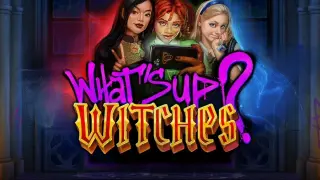
What's Up? Witches Demo
Table of Contents
Before the broomstick ride: paytable sanity-check for What’s Up? Witches
Before a single reel spins, What’s Up? Witches benefits from a one‑minute pause on the info screens. The game leans into a bright, slightly mischievous Halloween vibe, but the numbers behind the cartoon cauldrons matter more than the glowing pumpkins.
That first glance at the rules and paytable is less about memorizing every symbol and more about confirming that the slot behaves roughly the way you expect. Especially in Canada, where different casinos sometimes host tweaked configurations of the same title, that opening check avoids a lot of confusion later.
The slot’s interface usually tucks the paytable and rules behind a small “i” icon or a menu button beside the spin key. It’s a quiet little step that can save a lot of second‑guessing once real money is involved.
The first 60 seconds: which numbers actually matter
Once you’re in the info screens for What’s Up? Witches, four details deserve priority:
- Any RTP range or “theoretical return” text
- A volatility label (if the casino version shows one)
- Maximum win statement
- Feature overview line or page
The RTP line is sometimes a single percentage, but many Canadian‑facing casinos now host multiple versions of the same slot. If you see wording like “this game may be configured to different return settings,” that’s your clue that your exact percentage depends on the operator. You do not need to chase the number down to two decimal places, but it helps to know whether you’re dealing with a relatively forgiving setting or a leaner one.
Volatility labels such as “medium” or “high” are, frankly, broad strokes, yet they set expectations for session feel. In What’s Up? Witches, that label hints at whether to expect more frequent smaller hits or a more stretched‑out pattern where you’re waiting for the witches to sync up in a bigger moment.
The max win statement is usually expressed as “up to X times your bet.” You’re not trying to hit that ceiling in a normal evening; you’re checking that the number feels plausible for the theme, the feature set, and the bet levels you’re considering. When a game shows fairly gentle bonus mechanics but claims a huge max win, it usually means the real upper‑end outcomes sit in the “lottery ticket” category.
Finally, skim the feature overview. What’s Up? Witches highlights its main bonus spell clearly: free spins with a twist, plus one or two witchy modifiers in the base game. That quick summary gives you a mental map of what you’re waiting for during the session, and which animations actually signal something different from a regular spin.
Line structure, ways to win, and what a “normal” hit looks like
It helps to understand how the slot handles wins before you lean on instinct. What’s Up? Witches normally runs on fixed paylines rather than an “all ways” system. That means you’re paid when matching symbols land on specific lines, usually from the leftmost reel to the right, in order.
The paytable will indicate:
- How many lines are active
- Whether those lines are fixed or adjustable
- Whether any special rules apply (like wins counted from both sides)
Fixed lines mean your bet per spin is your line bet multiplied by the number of lines. That multiplier affects how many individual hits you see on‑screen, even if the total payout is small. You might land a combination of low‑paying potion bottles on two or three different lines in the same spin, resulting in a handful of small line wins that keep the reels feeling lively.
Spend ten seconds looking at the lowest‑paying symbol and compare the jump from 3‑of‑a‑kind to 4‑of‑a‑kind and then 5‑of‑a‑kind. If, for example, three pumpkin symbols pay less than your total bet but five pay a meaningful multiple, you know that many base game spins will slightly nick your balance while occasional full lines genuinely move the needle.
You should also confirm:
- If wins only pay left to right, or left and right
- Whether stacked symbols are mentioned
- If wilds can substitute for all regular symbols or if they’re blocked from certain roles
In What’s Up? Witches, stacked character symbols show up quite often, and the witch icons frequently land in vertical groups. That creates visually busy screens where it looks like a lot is happening, but actual payout changes hinge on whether those stacks line up on consecutive reels across active lines.
Bonus round fine print most people skip
The most detailed part of the rules is usually the feature section, and it is the least read. For What’s Up? Witches, that’s where the real texture of the game hides.
Start with the trigger conditions. Does the free spins round require three scatter symbols on any reels, or must they land on specific ones? If the text says “3 or more cauldron scatters anywhere award free spins,” that is straightforward. If it says “up to X free spins,” you’re dealing with a range that can vary depending on how many scatters land, or a pick feature that determines your starting count.
Check for:
- Whether free spins come with multipliers on all wins or on specific symbol combinations
- Any mention of “increasing” multipliers or special reels during the feature
- The exact re‑trigger rules
What’s Up? Witches often uses language like “free spins can be retriggered” or “additional spins can be won,” but the fine print sometimes caps how many times that can happen or sets a maximum number of total spins. If you see “up to 150 free spins per bonus round,” you know there’s an upper ceiling no matter how many extra scatter hits you manage.
Random features, if present, will be described with phrases like “may be triggered on any spin” or “can be activated at random.” That doesn’t imply any guaranteed cadence or pattern. It just means there’s no explicit trigger you can plan around.
Quick red flags and green lights
A quick mental checklist helps you decide whether you’re comfortable moving from demo to real money:
- Are the rules clearly written, with concrete numbers instead of vague marketing copy?
- Is the max win reasonable relative to the feature set, or does it feel disconnected from what you see?
- Do the bonus descriptions specify triggers, multipliers, and limits in plain language?
- Is there mention of adjustable RTP ranges without identifying which one you are actually on?
If anything feels fuzzy, slow down. When wording leans on phrases like “huge wins possible” with no supporting details, it’s a sign to either stay in demo mode or back out and try a different version of the game at another casino where the information is more transparent.
How What’s Up? Witches actually flows from spin to spin
On the surface, What’s Up? Witches looks like a lively, almost playful Halloween slot. The reels are filled with neon outlines of hats, black cats, and grinning jack‑o’‑lanterns against a dark blue backdrop. Under that lighthearted surface, the pace of the game can change quite noticeably depending on how your session develops.
The first few minutes often feel quicker than they really are, simply because the witch characters animate frequently and the stacked symbols land in chunky blocks that grab the eye even when they don’t pay.
Base game tempo: stop‑start or steady trickle?
Base game rhythm in What’s Up? Witches sits somewhere between a pure grind and a stop‑start ride. Spins resolve at a moderate speed, with just enough animation as the witches cackle and cauldrons bubble to keep each round distinct. If you leave standard spin speed on, each round has a moment to breathe before the next one.
Low‑paying symbols hit fairly often. You’ll see potion bottles, spell books, and pumpkins landing in frequent short combos, many of which pay small amounts that cover part of your bet. These half‑recoveries soften the sense of sharp loss from spin to spin, but they also mean you sometimes need several “winning” rounds in a row to actually climb back toward your starting balance.
Stacked premium symbols, especially the witches themselves, introduce a more lurching feel. A reel filled with the same character symbol looks promising the instant it lands, then either connects in satisfying lines across the grid or fizzles when the same stack doesn’t appear on the next reels. That creates a rhythm where several quick, modest spins are punctuated by moments of anticipation when half the screen is covered in the same glowing icon.
The game avoids the kind of heavy, drawn‑out animations that can drag on some modern slots. Most short hits pay and clear quickly, which helps the session feel like a relatively steady stream rather than a series of long pauses.
Micro‑swings and how they feel on a short session
On a 10–15 minute test run, What’s Up? Witches often plays out as a series of micro‑swings rather than a single clear trend. You might see five or six spins with small wins that almost balance your bet out, followed by a cluster of blanks and near‑misses where the bonus scatter shows up twice on screen and then disappears.
Visually, the slot is good at hinting that “something might happen.” Cauldrons flicker, witches lean in from the side of the reels, and glowing orbs pulse on stacked symbols. Those embellishments keep your attention even during phases where your balance is gently declining.
In short bursts, the emotional rhythm goes a bit like this:
- A few quick spins with modest line hits, balance dips slightly
- One or two promising spins packed with stacked symbols that miss a key reel
- A bonus scatter lands on reel 1 and 3, reel 5 rolls by without delivering the third
- Another pocket of minor recoveries, often driven by wilds filling in low‑paying combos
Those short‑lived “almost” moments can be entertaining when you’re just trying the game out. The risk is that they can also nudge you into wanting “just one more spin” to see the cauldrons line up properly.
Longer sessions: when the witches start to show their true temperament
Stretch a session to 200–300 spins and the personality of What’s Up? Witches comes into sharper focus. The base game alone isn’t really built to carry you upward for long stretches; it tends instead to hover around a band where small wins and medium line hits repeatedly pull you back from deeper drops but rarely push you well ahead.
The big shifts arrive when the main bonus triggers or when several stacked witch symbols land in sync across multiple reels. Those moments can spike your graph noticeably, turning a downward slope into a step back upward or converting a flat session into something that suddenly feels more dramatic.
Two broad patterns tend to emerge:
- A “grind mode,” where line hits appear regularly but are mostly modest, with the occasional slightly larger combination of mid‑tier symbols
- A “spike mode,” where a bonus round or rare cluster of stacked premiums drops, producing one or two stand‑out wins that define the whole evening
How often you see each pattern depends largely on how frequently the free spins trigger for you. It is entirely possible to go a few hundred spins with only one bonus, or occasionally none at all, which leaves you leaning heavily on the base game to manage your bankroll.
Some sessions will feel surprisingly gentle, with many half‑sized recoveries and fewer long gaps. Others will feel more swingy, especially if your bigger wins are bunched up early or late. Both experiences sit comfortably within what the game is designed to do, even if they feel very different from the player’s side of the screen.
Tilt points and natural break moments
Like many feature‑driven slots, What’s Up? Witches has very specific points where frustration tends to creep in. The most obvious is when you’ve had several spins with two scatters showing and the third keeps missing. The cauldron symbol’s animation is just eye‑catching enough that repeated non‑triggers can start to feel personal.
Another common tilt moment is a near‑miss on stacked premiums. When you see three reels with full‑height witches and one middle reel stubbornly refusing to cooperate, it’s tempting to chase that pattern, assuming it “must” line up soon. The reality is that each spin is independent, so that kind of thinking quietly pulls you away from your original plan.
Natural pause points help keep that from spiralling:
- Right after a bonus round finishes, whether it paid well or not
- After a single large line hit that puts you clearly ahead of where you started
- When you notice you’re speeding through spins just to “get back” what you just lost
What’s Up? Witches gives you some built‑in cues. The end‑of‑bonus summary screen, the slight slowdown before a noticeably big win is counted, or even a run of completely uneventful spins where nothing special lands can all be used as gentle prompts to stop, check your balance, and decide whether you’re still playing for fun or just chasing a feeling.
Autoplay, turbo modes, and how they change the rhythm
Many Canadian versions of What’s Up? Witches include some form of autoplay. You usually choose a fixed number of spins and, in some cases, optional loss or win thresholds. Quick spin or turbo toggles, if available, trim the reel animation and shorten result screens.
Shortening each spin changes the emotional texture quite a bit. The little visual cues—the witch leaning in, the cauldron glow, the stacked symbols sliding into place—get compressed. That can make sessions feel more mechanical, where your eyes are mostly fixed on the balance rather than the reels.
The real risk is that faster spins make it easier to disconnect time spent from money spent. Fifty quick spins at a modest bet size might feel inconsequential in the moment but add up faster than expected.
If you’re using autoplay in What’s Up? Witches, it can help to:
- Run smaller batches (for example, 20–30 spins) instead of 100+
- Stop whenever a bonus finishes or a noticeably big hit lands, rather than letting autoplay plow straight through
- Avoid stacking autoplay on top of turbo; one speed‑up is usually enough
Keeping some friction in the experience actually supports the game’s pacing, allowing those witchy animations and bonus triggers to stand out rather than merging into an indistinct blur.
Cauldrons, charms, and feature spells: bonus mechanics in focus
What’s Up? Witches leans on a familiar foundation: a primary free spins feature supported by smaller, more frequent modifiers. The charm lies in how it dresses those mechanics up with wand swirls and bubbling cauldrons.
Main bonus round: what happens when the witches finally cooperate
The main event is a free spins feature triggered by scatter symbols, usually the cauldron. When three or more land anywhere on the reels, the screen darkens slightly and the witches gather around the cauldron in a short transition animation. It’s a nice tonal shift from the base game’s regular glow.
Once inside the bonus, reels often shift to a slightly richer symbol set or improved odds for stacked premiums and wilds. You might notice more witch symbols appearing, or wilds showing up in taller stacks than usual. Some versions of the feature attach a fixed multiplier to all wins, while others sprinkle in special icons that boost individual payouts when they participate in a combination.
One design quirk many players appreciate is the sense of build‑up. The first few free spins often feel very similar to the base game, then the screen starts to “heat up” as stacked witches and wilds fall into place more aggressively. The real drama arrives when several high‑value stacks align across multiple reels, turning a single free spin into the highlight of the feature.
Across a casual evening, you might see the bonus a handful of times, or not at all if your timing is unlucky. When it does appear, it usually defines your memory of the session, either as a welcome boost or as one of those “that should have paid more” moments when the setup looks perfect but the wins remain modest.
If your version includes a pick‑style pre‑bonus (for example, choosing between more spins with lower multipliers or fewer spins with higher ones), the choice tends to be intuitive. One option leans into more stable, medium‑sized outcomes; the other concentrates the potential into a smaller number of high‑risk spins.
Smaller features and random events
Beneath the main free spins round, What’s Up? Witches usually sprinkles in a couple of smaller spell effects. These are the short moments where a witch might fly across the screen and convert random symbols into wilds, or a wand flash might transform one low‑paying symbol type into another, helping lines connect.
These micro‑features serve two purposes. They inject variety into stretches where the bonus isn’t triggering, and they occasionally create medium‑sized wins out of otherwise dull layouts. A random wild reel appearing in the middle of a screen full of pumpkins, for example, can suddenly produce several overlapping line hits.
They also affect pacing. A surprise modifier on a non‑paying spin extends the moment, turning what would have been a simple loss into a point of attention. Even when these small spells only cover a fraction of your bet, they break up sequences of blank results and keep the reels from feeling static.
Night‑time charm: how What’s Up? Witches looks and feels
Visually, What’s Up? Witches leans into a candy‑coated, late‑October night rather than a horror angle. The backdrop shows a twilight sky with softly glowing stars, and the reels float in front of crooked rooftops and silhouetted trees. It feels more like a neighbourhood trick‑or‑treat scene than a haunted forest.
The character work is surprisingly specific. Each witch has a distinct silhouette and colour palette: one with bright green hair and a narrow hat, another with a more classic purple theme and a wide brim. When they land stacked, your eye immediately catches the vertical band of colour, which is part of why near‑misses with premiums stand out so strongly.
Small details help the game feel cohesive:
- Jack‑o’‑lantern symbols flicker with a slight pulse rather than a static glow
- Potion bottles tilt and slosh when part of a win, as if reacting to the magic
- Wilds often have a faint aura that grows brighter when they substitute in a line
The UI wraps around the theme without cluttering it. Bet and spin controls usually sit in understated frames that mirror the crooked wood or wrought‑iron motif, rather than bright plastic buttons that clash with the art.
It’s a slot that manages to be busy without becoming visually noisy. There’s enough motion to feel alive, but the reels remain readable even in fast sequences.
Betting range and bankroll sizing in the witching hour
From a Canadian player’s perspective, What’s Up? Witches tends to cover a fairly typical bet range, but specifics can vary by casino. You’ll often see minimum bets low enough to make casual test sessions accessible, with maximum stakes geared toward more committed bankrolls rather than ultra‑high‑roller territory.
Because the game leans on feature spikes to deliver memorable outcomes, sizing your bet relative to your bankroll matters more than usual. If you’re spinning at $1 per spin and want a reasonable shot at seeing a bonus or two, you’d ideally want enough in your balance to handle the swing of 150–300 spins without discomfort. That doesn’t guarantee features within that window; it just keeps you from feeling pressured if they arrive late.
A simple way to think about it:
- Treat 100 spins as a bare minimum test block
- Expect your balance to move up and down more sharply if you pick higher stakes
- Adjust downward if you find yourself reacting emotionally to each individual spin result
Smaller bets work perfectly well if you’re more interested in the animations and theme than in large swings. The witches behave the same way at $0.20 as they do at $2.00; only the size of each outcome changes.
Win potential and what realistic outcomes look like
On paper, What’s Up? Witches usually advertises a respectable maximum win multiplier. It’s the kind of number that fits a feature‑heavy slot with stacked premiums, free spins, and random modifiers. In day‑to‑day play, though, your session is defined less by that theoretical ceiling and more by how your bonus rounds cluster.
Common outcomes on an average‑length session tend to fall into a few categories:
- Modest sessions where you see one or two bonuses that roughly pay between 20x and 60x your stake, offsetting some base game losses
- Momentum sessions where several medium‑sized hits and a strong bonus land in the same period, leaving you with a noticeable profit
- Choppy sessions where the bonus either takes a long time to appear or pays on the low end when it finally does, resulting in a net loss despite occasional good‑looking screens
A “big” hit for many players often means something in the neighbourhood of 100x–200x the chosen stake. That can come from a single explosive free spin or from a base game layout packed with stacked witches and wilds on several reels.
Those top‑end advertised wins, the ones many times your bet, typically require a perfect combination of:
- Free spins active
- Multiplier(s) at or near their maximum
- Several reels packed with high‑value witch symbols or wilds
They’re technically possible, but so rare that treating them as a goal rather than a pleasant surprise tends to warp expectations. The more grounded view is that What’s Up? Witches is capable of sharp, memorable spikes, but most evenings will live in the modest‑to‑solid range.
Where What’s Up? Witches sits among other witchy and Halloween slots
For players who’ve tried a few seasonal games, What’s Up? Witches lands in an interesting middle ground. It’s more playful and colourful than darker, horror‑leaning titles, yet more feature‑focused than the simplest three‑reel Halloween throwbacks.
Compared to heavy‑duty “all ways” witch slots with huge grids and endless cascades, this one feels more contained. Fixed lines and a classic reel structure keep each spin readable. You still get modifiers and stacked characters, but the screen never becomes a chaotic wall of symbols.
If you enjoy games where witches trigger random features across the reels, you’ll probably notice that What’s Up? Witches fires its smaller spells at a more measured pace. They’re frequent enough to matter, but they don’t dominate the entire experience. The main free spins round remains the star.
Players who favour extremely high‑volatility Halloween slots, where bonuses are rare but brutal when they connect, might find this one slightly gentler in day‑to‑day rhythm. Those looking for pure low‑variance, line‑win grinds may still find it a bit swingy, since the stacked symbols and modifiers do create sharper jumps.
So it ends up sitting neatly between minimalist seasonal reskins and more experimental witch‑themed grid games, with a lean toward classic reels dressed in modern, neon‑tinted art.
Common mistakes & traps in What’s Up? Witches
For a game that looks straightforward, What’s Up? Witches has a few consistent pitfalls:
-
Treating every stacked premium as a missed jackpot
When several reels fill with the same witch and one doesn’t connect, it’s easy to feel like you “almost” landed a massive win. In reality, many of those setups would only have produced medium‑sized outcomes. Viewing every near‑full screen as a lost fortune can push you into emotional chasing. -
Overestimating how often the main bonus “should” hit
The animated scatters and frequent two‑symbol setups create a sense that the free spins are always just one symbol away. Assuming you’re “due” because you’ve seen many two‑scatter layouts in a row is a classic trap; each spin remains independent. -
Ignoring re‑trigger caps in the rules
If your version of the game limits how many times the free spins can be retriggered or caps the maximum number of spins, expecting an endlessly extending feature can lead to disappointment. A round that stops at a rule‑based ceiling isn’t cutting you off early; it’s simply following the structure laid out in the info screen. -
Letting autoplay run longer than intended
Autoplay combined with quick‑spin makes it surprisingly easy to burn through far more spins than you meant to. If you set 100 spins “just to see what happens” and then re‑arm the same setting three or four times without checking your balance, the pace of your spending can quietly outstrip what you were comfortable with. -
Chasing losses after a “cold” bonus
A weak free spins round often feels like an insult, especially if it took a long time to trigger. The urge to bump the bet “just for a few spins” to make up for it is strong. That jump in stake size after a disappointing feature is one of the more common ways a calm session turns into a stressful one. -
Assuming random modifiers are tied to bet size
It’s easy to believe that increasing your stake makes the witches cast more spells or drop more modifiers. The animations feel more intense when more money is on the line, but the underlying random triggers do not advertise any connection to bet size beyond the obvious: wins and losses scale with your stake. -
Forgetting to reassess during long sessions
When the theme is cozy and the visuals are pleasant, hours can slide by without much sense of time. If you don’t pause after major events—big hits, bonuses, or noticeable downswings—it becomes harder to notice when the session has drifted away from the experience you wanted.
Quick paytable sanity‑check
Before committing real money to What’s Up? Witches, a short checklist in the rules screen helps:
- Note the RTP wording and whether multiple configurations are mentioned
- Confirm the volatility label to set expectations for session swings
- Check the max win figure and see if it lines up with the feature set
- Read the free spins section for trigger details, multipliers, and any cap on retriggers or total spins
- Look at how many paylines are active and whether they’re fixed
- Verify what the wild symbol can and cannot substitute for
If those points feel clear and consistent, you’ll walk into your session with a more grounded sense of what the witches can actually do.
What’s Up? Witches — common player questions
Does What’s Up? Witches have different RTP settings at different casinos?
Many modern online slots, including seasonal titles like What’s Up? Witches, are built with several possible RTP configurations. The version you see in a Canadian‑facing casino may use any one of those settings, depending on the operator’s choice.
The only reliable way to check is to open the game’s info or help section and look for an explicit percentage or a range. If the wording is vague or only mentions that “different return settings may apply,” you’re not being shown the exact figure for that lobby. In that case, it’s safer to treat the game as sitting on the conservative side rather than assuming the most generous option.
How often do the free spins usually trigger in What’s Up? Witches?
There’s no fixed cycle or countdown for the free spins feature, so you won’t find a guaranteed “every X spins” rate. Some short sessions will see the cauldrons line up quickly, while others stretch for a couple of hundred spins with only one feature or none at all.
What you can lean on is the feel described earlier: plenty of two‑scatter setups and visual hints that tease the bonus without promising it. If you find yourself waiting a long time between features, that doesn’t mean anything is broken or “owed”; it simply reflects the natural variance built into a bonus‑centric slot.
Can I win big in the base game, or is it all about the bonus?
The base game in What’s Up? Witches is more than just a holding pattern, especially when stacked witches and wilds cooperate. A single spin packed with premiums across several reels can deliver a highlight‑level win even without free spins active.
That said, the largest payouts promoted in the game rules usually assume that a bonus is running, multipliers are active, and high‑value symbols or wilds are landing in generous clusters. For most players, memorable “big” results tend to come from a combination
More Slots from NetEnt





| Provider | NetEnt |
|---|---|
| Layout | N/A |
| Betways | N/A |
| Max win | N/A |
| Min bet | N/A |
| Max bet | N/A |
| Hit frequency | N/A |
| Volatility | N/A |