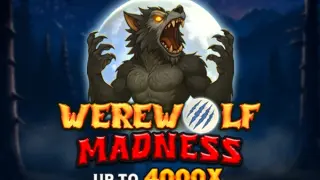
Werewolf Madness Demo
Table of Contents
Werewolf Madness Online Slot Review Overview
Werewolf Madness is a horror‑themed online slot built around full moons, hunted villagers, and sudden, teeth‑bared transformations. It leans into its theme visually and sonically, while keeping the core mechanics clear enough for most players to understand within a few spins.
This title suits horror fans and anyone who likes a bit of tension in their slots. The atmosphere sits somewhere between classic creature feature and comic‑book horror, so it’s not outright disturbing, but it definitely isn’t cute. High‑risk players who enjoy chasing bigger payouts from volatile games are likely to feel at home here, while more casual spinners may appreciate the visuals but need to be comfortable with swings in the balance.
At its core, Werewolf Madness uses a 5‑reel, 4‑row layout with 40 fixed paylines. Wins pay left to right, starting from the first reel. The headline mechanics revolve around wild transformations and a free spins round where the werewolf side of the game really takes over, with extra wilds, symbol upgrades, or other modifiers in play. Volatility is on the higher side, and the top win potential sits firmly in the “dream big but expect a grind” category, very much in line with many modern horror slots.
This review walks through the theme and presentation, explains the symbols and paytable, and breaks down the math model: RTP, volatility, and hit frequency. It then looks at the base game, the special features of Werewolf Madness, and the practical side of bankroll management and session planning. The goal is simple: by the end, you should have a clear sense of whether this is the kind of slot you want to sit with for an evening, or whether your bankroll would be better used elsewhere.
Theme, Atmosphere, and Visuals in Werewolf Madness
Horror Concept and Story Setup
The concept feels like something from a late‑night horror channel: a quiet small town under a full moon, with something hungry moving in the shadows. The reels sit in front of a narrow main street scene with crooked lamp posts, shuttered shopfronts, and a sky cut by clouds and a piercing moon. There’s no long cinematic intro, but the loading screen and first launch hint at a simple narrative: villagers on edge, rumours of a beast, and a long, restless night ahead.
Story details come mostly through the symbols and background. Villagers appear in varying states of fear or suspicion, there’s a mysterious stranger who may or may not be the werewolf, and the reels are dotted with tools and talismans that could have been pulled straight from a hunter’s kit. The werewolf itself usually shows up as a premium symbol and as a presence tied to the bonus mechanics, almost like the “real” character who only reveals itself when the moon feature kicks in.
The mood leans toward tension rather than gore. The colour palette is dark but not pitch black, so the action on the reels stays readable. There are hints of playful horror too: exaggerated expressions, a slightly comic‑book look to some characters, and light visual exaggeration during win animations. It feels more like a Halloween horror movie watched with friends than a brutal creature feature.
Graphics Quality and Animation Style
Visually, Werewolf Madness uses a detailed, semi‑cartoon style. It avoids hyper‑realism, but it also steers clear of the overly bubbly look that some light‑hearted slots fall into. Character symbols have sharp outlines and clear facial expressions, while the werewolf art shows glowing eyes, sharp teeth, and plenty of fur texture without going full splatter.
Most of the screen is dressed in deep blues, greys, and muted purples, with warm yellows and oranges reserved for lanterns, lit windows, and the occasional blood‑red accent. During the base game, the moon in the background is a constant presence. In this type of slot, the moon sometimes cycles through phases tied to features; here, you’ll notice it brightening or pulsing slightly when special symbols land, which builds anticipation without needing a tutorial.
The reels sit within a slightly ornate frame with iron filigree and claw‑like corners. When the reels spin, symbols slide quickly but with a bit of weight, more like shuffling solid tiles than flickering icons. On a winning spin, premium symbols may lunge forward slightly, and the werewolf symbol is sometimes accompanied by a quick flash of claws or a short transformation animation.
Small touches keep the screen from feeling static:
- Street lamps may flicker during near‑miss events.
- A faint fog effect drifts at the bottom of the screen.
- Windows in the background occasionally light up, as if someone is peeking out to see what’s happening.
During bonus rounds, the scene can shift. The sky darkens further, the moon grows larger, or the background takes on a reddish or sickly green cast. Those changes give the sense that the night has moved into a more dangerous phase.
Sound Design and Immersion
Audio is one of the stronger parts of Werewolf Madness. The background music is a slow, suspenseful track built around low strings, occasional piano notes, and soft choral pads. It’s more about atmosphere than melody, which works well for longer sessions. The tempo stays calm, but the music swells slightly whenever special symbols land or a feature teases, adding that “something’s coming” feeling.
Spin sounds are crisp and restrained. There’s a soft mechanical clack as the reels start, followed by a muted swoosh as symbols settle. Small wins trigger quick, eerie stingers: a few notes of organ, a short violin flourish, or a low chime. Bigger hits call up a more dramatic cue, often paired with a rising sound that feels like the werewolf closing in.
Special events are where the sound design stands out:
- Werewolf appearances are accompanied by distant howls or growls.
- Thunder rumbles quietly during bonus triggers or near‑miss animations.
- Transformations or symbol upgrades use a “ripping” or “shifting” sound that fits the theme without being harsh on the ears.
Over long sessions, the ambient loop can start to feel repetitive, which is common for themed slots. The game usually includes separate toggles for music and sound effects in the settings menu, so you can mute the background track while keeping the satisfying howls and win sounds, or switch everything off and spin in silence if that’s more comfortable.
Paytable and Symbols in Werewolf Madness
Low‑Paying Symbols
The low‑paying symbols are standard card ranks reworked to fit the horror setting. Instead of plain letters, you get stylized 10, J, Q, K, and A icons carved into wooden planks or etched onto cracked stone, splashed with shadowy blue or faded red paint. They stay distinct without drawing attention away from the more important character symbols.
In payout terms, these low symbols cover the small, frequent wins that keep the reels ticking over. On a typical 40‑line setup, a 3‑of‑a‑kind line of a low symbol might pay just over your line bet, with 4‑ and 5‑of‑a‑kind nudging your overall spin back toward breakeven or giving a modest profit. They land often enough that you’ll see them form lines regularly, but on their own, they don’t move the balance much.
Over time, the low‑pay symbols define the baseline of the base game: lots of small hits, often overlapping across multiple lines. In a volatile slot like Werewolf Madness, those hits are more important than they look. They won’t deliver the big thrills, but they help offset long stretches of dead spins and make it feel like the game is at least responding to your bets while you wait for the heavier features.
High‑Paying Symbols
The high‑paying symbols carry most of the story. These typically include:
- Villagers: a frightened woman clutching a lantern, a grizzled hunter, a suspicious mayor, or a mysterious traveller with a hood pulled low.
- Tools: silver bullets, a revolver, a crossbow, or a silver knife.
- Protective items: talismans, charms, or a book of folklore.
- The werewolf: usually the top symbol, showing either a fully transformed beast or a mid‑transformation face.
There is usually a clear split between mid‑tier and top‑tier symbols. Mid‑tier icons, such as tools or talismans, pay decently for 4‑ and 5‑of‑a‑kind, often enough to give a spin a noticeable boost. Top‑tier character symbols, especially the werewolf, can deliver much more dramatic returns when they line up across several reels.
Some high symbols may appear stacked, covering multiple positions on a reel. When a stack of villagers or werewolves lands in sync across multiple reels, it opens the door to powerful line combos. It also increases the chance that a single spin can deliver several paylines with the same symbol, which is how many medium to large wins are built.
In some interpretations of this concept, character symbols can “upgrade” during specific features, turning lower characters into a single premium symbol for the duration of free spins. If that mechanic is present here, it targets the high‑pay symbols directly and can turn an average‑looking trigger into a serious payout sequence.
Special Symbols (Wilds, Scatters, Bonus Icons)
Special symbols are where the werewolf theme really connects with the mechanics.
The wild symbol usually appears as the werewolf’s eyes, a claw mark across the moon, or a transformed version of the main character. Wilds substitute for most regular symbols, helping complete or extend winning lines. They typically show up on the middle reels, but some setups allow wilds on all reels, especially during bonus features.
In the base game, wilds might land as single icons or small stacks. During features, they may expand to cover full reels, move across the grid, or “infect” neighbouring symbols, turning them wild as well. These transformations are often tied to the moon or madness aspect: as the full moon rises, more of the grid becomes wild.
Scatter symbols are usually represented by the full moon itself or a special emblem tied to the curse. Landing 3 or more scatters in any position triggers the free spins bonus round. Some versions add a payout for scatters on top of triggering the feature, which softens the blow of a near‑miss if you land 2 or 3 without getting the full trigger.
There may also be unique symbols such as:
- Moon tokens that fill a meter toward a special feature.
- Blood drops that accumulate and then unleash a frenzy spin.
- Mystery symbols that reveal the same random symbol after the reels stop.
These icons add a layer of anticipation. Seeing a moon token appear on reel 1, for example, can make you instinctively watch for more on the remaining reels, even if you’re not consciously tracking the meter. Since their exact role can vary slightly by casino version, it’s worth opening the in‑game paytable before raising your stakes.
Math Model: RTP, Volatility, and Hit Frequency
Return to Player (RTP) Details
Werewolf Madness generally sits around a mid‑to‑high RTP, often near the 96% mark. In theory and over a very long span of spins, that means the game is designed to return roughly 96 cents for every dollar wagered. It’s important to remember that this number is an average over millions of spins, not a prediction for any single evening’s play.
Many online slots in Canadian casinos now come with adjustable RTP settings that operators can choose from within a predefined range. So while the “default” figure might be around 96%, some sites may offer slightly lower or higher versions. This isn’t usually highlighted in large print, so if the game’s info panel lists an exact percentage, it’s worth checking it once before settling in.
Compared to typical online slots, Werewolf Madness is neither an ultra‑low RTP trap nor a standout super‑generous game. It sits near the industry standard, which shifts the main question away from pure return and toward how the volatility and features distribute that return across wins and losses.
Volatility and Game Rhythm
The volatility of Werewolf Madness is on the higher side. In practice, that means the game can go through stretches where notable wins are rare, followed by periods where the balance jumps significantly in a short run of spins.
In the base game, many spins either return nothing or just a small fraction of the bet via low‑pay symbol lines. Medium hits appear less often, and the really exciting outcomes tend to be tied to:
- Multiple premium symbols lining up across the grid, often with wild support.
- Bonus rounds where modifiers stack (extra wilds, symbol upgrades, multipliers).
This kind of volatility creates a rhythm that suits players who enjoy risk and the chase. The game can feel quiet for stretches, then suddenly spike when a bonus hits or the reels align in your favour. It’s not ideal for someone looking for steady, low‑variance entertainment on a tight budget, but it can be engaging if you’re comfortable with swings and like the idea of a session turning around in a single feature.
Most of the slot’s theoretical value is usually concentrated in the bonus features, particularly the free spins. A few strong base game hits can carry a session, but the math often leans toward the bonuses as the main source of bigger payouts.
Hit Frequency and Average Win Size
Hit frequency, if disclosed, typically lands in the moderate range. You’ll see some kind of win reasonably often, but many of those wins will be small, often returning less than your total bet. This is common with 40‑line games, where even one or two lines of low‑pay symbols count as a “win” in the statistics.
The relationship between hit frequency and volatility is key. A decent hit rate can make the game feel lively, but high volatility means the distribution of big wins is uneven. Expect:
- Plenty of small wins that keep you spinning but don’t significantly boost your balance.
- Occasional mid‑range wins, often from mid‑tier symbols or multiple lines hitting at once.
- Rare, larger hits, usually driven by wilds or bonus features.
For risk‑averse players who value slow, predictable play, this structure can feel frustrating when bonuses are slow to arrive. For those more tolerant of variance, the same structure is part of the appeal: the sense that the next feature might be the one that defines the session.
Core Gameplay: Reels, Paylines, and Base Game Flow
Reels, Rows, and Payline Structure
Werewolf Madness uses a standard 5‑reel, 4‑row layout, which will feel familiar if you’ve played other modern video slots. The 40 paylines are fixed, so you usually can’t adjust the number of active lines. Instead, you set your total bet per spin, which is then divided across all lines.
Wins pay from left to right, starting from the first reel. To get a line win, you need at least 3 matching symbols on consecutive reels along a payline, though some premium symbols may pay for just 2 of a kind. The paytable typically lists all 40 line patterns, but most players quickly rely on the game’s visual highlight system, which shows which lines have hit and how much they’ve paid.
There are no cluster pays or both‑ways wins here. The structure is traditional, which keeps the focus on the theme and features rather than on learning an unusual grid system.
Base Game Mechanics and Pace
The base game pace is brisk without feeling rushed. Spins resolve quickly, with just enough time between the reels stopping and the win animation starting for your eyes to scan the grid. Many Canadian‑facing casinos now limit or remove classic autoplay, but where it is available, the game handles continuous spins smoothly.
Random events in the base game help keep things engaging:
- Wilds can land in stacks, teasing potential big hits even when they don’t fully line up.
- Tease animations sometimes occur when 2 scatters land and the third reel slows noticeably.
- In some builds, a random feature may trigger on non‑winning spins, adding wilds or upgrading symbols for a single “frenzy” spin.
Even without bonuses, the game doesn’t feel completely bare. However, if you go dozens of spins without a notable win or teaser, the high volatility becomes obvious. Players who prefer a more relaxed rhythm may want to lower their bet size and treat the base game as a slow build toward the next bonus trigger, rather than expecting constant mid‑sized hits.
Werewolf Madness Features and Bonus Rounds
Free Spins Under the Full Moon
The main feature in Werewolf Madness is a free spins bonus triggered by scatter symbols, usually represented by the full moon. Landing 3 or more scatters anywhere on the reels in a single spin activates the round, with more scatters often granting extra spins or a small upfront payout.
Once triggered, the atmosphere shifts. The background darkens, the moon grows more intense, and the music ramps up with a stronger, more urgent theme. During free spins, several enhancements typically come into play:
- Extra Wilds: Wild symbols appear more frequently, particularly on the middle reels. In some versions, certain reels are more likely to spawn stacked wilds.
- Sticky or Locking Wilds: Wilds that land during free spins may remain in place for the rest of the feature or for a limited number of spins, making each subsequent spin potentially more valuable.
- Symbol Upgrades: Lower‑tier character symbols might transform into higher‑pay versions, or all villagers may upgrade to one premium symbol, increasing the chance of landing big line hits.
The combination of these mechanics makes free spins extremely swingy. A bonus with few wilds and poor symbol alignment might feel flat, returning only a modest multiple of your bet. A bonus where wilds land early and stick, or where upgrades kick in strongly, can generate large, memorable wins.
Free spins can sometimes be retriggered by landing more scatters during the feature, adding extra spins on top of your remaining total. Retriggers are usually less common than the initial trigger, but when they happen with a strong grid already in place, the potential steps up noticeably.
Werewolf Transformation Features
Beyond traditional free spins, Werewolf Madness often includes at least one transformation mechanic that brings the “madness” into the base game. This feature is typically tied to a special symbol or a random trigger and can occur on any spin.
Common forms this can take include:
- Random Werewolf Spin: On a losing spin, the game may randomly convert one or more reels into full wild reels, creating an instant second chance for a big hit.
- Symbol Infection: A werewolf symbol lands and then “infects” adjacent symbols, turning them into wilds or the same premium symbol for that spin.
- Moon Meter: Collecting moon tokens over several spins gradually fills a meter. Once full, it triggers a special frenzy spin where multiple modifiers are active at once.
These transformation features are crucial to the feel of the game. They break up long dry spells and give you something to look forward to even when scatters aren’t appearing. When a transformation hits at the right time, with good premium symbol placement, it can deliver some of the best wins outside of the main bonus round.
On the other hand, transformation features are often highly variable. Sometimes they’ll trigger and still miss any major lineups, which can feel like a missed opportunity. That’s part of the high‑variance design and something to keep in mind when planning your stake levels.
Mystery and Special Symbols
Depending on the specific implementation at your chosen casino, Werewolf Madness may also include:
- Mystery Symbols: These appear as closed books, fog clouds, or question‑marked icons. After the reels stop, all mystery symbols on screen reveal the same random symbol (usually not scatters), boosting your chances of a decent hit.
- Cash Symbols or Instant Prizes: Some versions use coin or blood drop icons that carry fixed values. Landing several of these along with a special collector symbol can trigger an instant prize payout feature, separate from regular line wins.
- Multiplier Wilds: On certain spins or in specific modes, wilds may come with multipliers attached, such as x2 or x3, which apply to any line wins they help create.
These extra features are not always front‑and‑centre in the game’s promotion, but they can noticeably affect how the slot feels. Mystery symbols, for example, create a satisfying reveal moment that keeps eyes on the screen even when it’s clear the spin won’t trigger free spins. Multipliers can turn a fairly ordinary line‑up into something you remember.
Betting Options and Session Management
Bet Size Range and Controls
Werewolf Madness typically supports a wide betting range, covering low‑stakes casual play and more serious bankrolls. You adjust your stake via simple plus/minus buttons or a bet selection panel, with your total bet per spin clearly displayed.
Since the 40 paylines are usually fixed, changing your bet adjusts the total stake rather than the number of lines. That simplifies planning: once you pick a bet level, you always know how much you’re risking per spin.
For Canadian players, stakes are normally shown in CAD by default, matching your casino account currency. It’s worth double‑checking that the displayed bet aligns with your expectations, especially if you switch devices or return to the game after a break, as some platforms remember your last stake level.
Bankroll Strategy for a Volatile Horror Slot
With high volatility, bankroll management becomes more important than usual. A few practical guidelines that fit Werewolf Madness:
- Bring enough for a longer session. If your budget is, for example, $100, betting $1 per spin gives you 100 spins on paper, but variance can chew through a chunk of that quickly. Dropping to $0.40 or $0.60 per spin extends your time and raises your chance of actually seeing the main features.
- Expect swings. The game is built around streaks. There will be patches of small wins and dead spins, then sudden bursts during bonuses or transformation features.
- Pre‑set your stop points. Decide ahead of time what profit level would make you comfortable cashing out, and what loss limit means it’s time to walk away. It’s much easier to stick to those numbers if you set them before you start spinning.
For those who enjoy chasing big hits but dislike long dry runs, pairing a lower bet size with a clear time limit (say, one hour of play) can be a decent compromise. You still experience the game’s potential without taking outsized risks on each spin.
Mobile Experience and Performance
Werewolf Madness is built with modern devices in mind. On mobile, the reels fit comfortably into portrait or landscape mode, depending on your preference and the casino platform. The control panel is condensed, with spin, bet, and menu buttons tucked around the frame so they don’t block the view.
Graphics hold up well on smaller screens. Character symbols remain easy to read, and the darker palette actually looks quite good on high‑contrast smartphone displays. Animations are slightly simplified to maintain performance, but the key effects — howls, transformations, and wild expansions — remain intact.
Sound quality is often best on headphones, where the low rumble of the background music and the sharper effects feel more immersive. For those playing in public or shared spaces, quick access to the mute controls is handy, since horror soundscapes aren’t everyone’s favourite background noise.
In terms of performance, the game generally runs smoothly on modern phones and tablets, though older devices may occasionally show slower transitions, especially during heavy animation sequences in the bonus rounds. If you notice lag, closing other background apps can help stabilize things.
Who Will Enjoy Werewolf Madness?
Werewolf Madness is likely to appeal to players who enjoy darker themes, are comfortable with higher volatility, and like the feeling of chasing powerful bonus rounds rather than relying on steady base game payouts. The horror styling is atmospheric without being extreme, which makes it accessible to a fairly wide audience that enjoys spooky visuals.
If you prefer low‑risk, low‑variance slots where your balance hovers gently around the starting point, this game may feel too streaky. If, on the other hand, you’re happy to accept dry spells in exchange for the chance at more explosive features under the full moon, Werewolf Madness can be a fitting choice for a focused session.
More Slots from Dragon Gaming





| Provider | Dragon Gaming |
|---|---|
| Layout | N/A |
| Betways | N/A |
| Max win | x4000.00 |
| Min bet | N/A |
| Max bet | N/A |
| Hit frequency | N/A |
| Volatility | N/A |