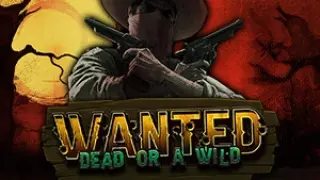
Wanted Dead or a Wild Demo
Table of Contents
Wanted Dead or a Wild Slot Review Overview
Quick snapshot for Canadian players
Wanted Dead or a Wild is a high-volatility Wild West slot from Hacksaw Gaming that leans hard into the darker side of the frontier. Think grim wanted posters, desert dust, and a blood-red sky rather than a friendly cartoon saloon. It runs on a 5x5 grid with ways-style wins and a strong focus on multipliers and feature-trigger symbols.
The game is best suited to:
- High-risk players who don’t mind long stretches of quiet spins in exchange for the chance at explosive hits
- Bonus hunters who like chasing volatile free spin modes
- Feature-buy fans (where feature buying is allowed), since this slot offers several distinct bonus buys with very different risk levels
Gameplay is unapologetically swingy. Wanted Dead or a Wild is one of those “all or nothing” slots, with aggressive multipliers and bonus rounds that can either pay next to nothing or jump straight into huge-win territory in seconds.
What this review covers
This review walks through everything that matters before you risk real cash on Wanted Dead or a Wild:
- Theme, art, and overall atmosphere
- Symbols and paytable structure
- RTP settings and volatility behaviour
- Reel format and ways to win
- Key bonus features and how they really play
- Max win potential and how realistic it is
- Practical tips for bankroll management and session style
- Where the slot shines and where it can feel brutal
The idea is simple: help you decide whether to try Wanted Dead or a Wild with real money at a Canadian online casino, or keep it in demo mode for a bit of high-octane fun without the financial sting. By the end, you should have a clear sense of how the game behaves, what the main bonus rounds can realistically do, and whether this kind of high-volatility Western fits your playing style.
Theme, Atmosphere, and Visual Experience
Wild West setting and narrative feel
This slot leans into a harsh, outlaw-driven version of the Wild West. The backdrop is a barren frontier town under a red, almost apocalyptic sky. Wooden shacks fade into the distance, and the horizon is stained with a dusk that never quite turns into night. The tone is more “desperate bandit standoff” than “cowboy adventure”.
The “wanted” vibe is built straight into the interface. The logo and many of the symbols resemble old, weathered posters nailed to a saloon wall, with faded ink, rough edges, and splashes of dark red. The colour palette leans on browns, deep reds, and dirty yellows, which gives the whole game a gritty, slightly menacing mood.
There’s no literal story told through cutscenes, but the narrative flavour is strong. You’re parked in a town that’s clearly past its prime, where every spin feels like something bad (or very profitable) could happen. Compared to light-hearted Western slots with goofy cowboys and cartoon horses, Wanted Dead or a Wild sits firmly on the darker, more adult end of the spectrum.
Graphics quality and art style
The game runs on a 5x5 reel grid, which sits squarely in the centre of the screen like a giant wanted board. Each reel position is framed like a piece of poster paper pinned to rough wood. The layout is simple, but it ties neatly into the theme.
The artwork leans toward a gritty comic-book style. Lines are sharp, shadows are heavy, and many symbols have that stained-ink look, as if they were printed on rough paper. There’s nothing glossy or polished here; everything feels worn and slightly dangerous.
You’ll notice:
- Low symbols designed as stylized card ranks that look spray-painted or inked onto old posters
- Premium symbols featuring skulls, liquor bottles, bandit gear, and outlaw imagery with stronger colour and more detailed shading
- Special VS symbols and bonus icons that stand out with bold typography and striking graphics
Background details are mostly static in the base game, but the colour grading and lighting subtly shift in different bonus features. In some free spin modes, reds and shadows deepen, giving a more claustrophobic feel. In others, the focus tightens around the reels so your eye is locked on multipliers and VS symbols, not the distant landscape.
The overall impression is consistent and deliberate. It feels like a stylized Western comic about bounty hunters and outlaws, rather than a generic cowboy backdrop pasted behind a typical slot.
Animations, pacing, and feedback
Animations in Wanted Dead or a Wild are relatively restrained but well-timed. Symbols drop into place with a solid, slightly weighty feel, like slapping physical cards or posters down on a table. When you hit a win, the paying symbols pulse and glow lightly, with small splashes of colour or crackling effects.
The visuals really wake up around the special symbols:
- When a VS symbol lands, it often stretches or flashes to signal its importance. In the duel feature, the VS expands and triggers a head-to-head reveal of two outlaw multipliers.
- During key moments, such as big multiplier reveals, animations speed up slightly to build tension, then pause for half a beat when the numbers stop rolling so the impact can sink in.
Base game pacing is fairly punchy, especially if you use the quick spin option (when offered by the casino). Spins are snappy, and there isn’t much dead time between one result and the next. In the bonuses, timing becomes a bit more dramatic, particularly when multipliers stack or when you’re on the final few free spins.
The game rarely floods the screen with over-the-top effects. It saves most of the visual drama for the duels, sticky multipliers, and big win sequences, which keeps regular spins from feeling cluttered.
Sound design and overall immersion
The soundtrack is one of the strongest parts of the atmosphere. It mixes tense, minimal Western guitar phrases with low, humming drones that give the sense of a dust storm building in the distance. There are subtle echoes, as if you’re standing on an empty street between two abandoned saloons.
Spin sounds are clipped and percussive, more like the rustle of cards and a faint metallic clink than the usual slot whoosh. Wins cue slightly distorted chimes and brief guitar licks. Nothing too cheerful. Even the win sounds keep a rough edge.
When multipliers or VS symbols land, the audio ramps up: harsher guitar twangs, sharper stabs, and sometimes a rising tone as the game calculates stacked multipliers. In free spin features, the soundtrack deepens, with more pronounced bass and a more urgent rhythm that raises the tension as spins tick down.
With the volume up even a little, the audio does a lot of heavy lifting to maintain that gritty, high-stakes feel, especially in the more volatile bonus rounds.
Symbols and Paytable Breakdown
Low-paying symbols
The low-paying symbols are stylized card ranks: 10, J, Q, K, and A. Each one is drawn with a rough, graffiti-like stroke, as if spray-painted onto a faded poster. Colours tend to be muted reds, greens, and blues, so they don’t pull attention away from the more important icons.
These symbols show up frequently and form the backbone of small, routine wins. On their own, even a full line of a low symbol typically pays a modest amount relative to your stake, especially given the slot’s overall volatility. In practice, they mostly matter when they connect with wilds or get boosted during features that add multipliers across the grid.
In regular spins, expect most of your hits to feature these card ranks, often in mixed combinations that barely cover a portion of your bet. They’re there to maintain some flow of wins, not to drive the big payouts.
Premium symbols and character icons
The premium symbols carry the game’s identity. These usually include:
- A green bottle of liquor
- A bandit’s hat and gun or similar outlaw gear
- Money bags or stacks of cash
- Skull or menacing outlaw-themed images
Exact paytable values can vary slightly by version, but the pattern stays similar: a five-of-a-kind premium can pay several times more than a comparable line of low symbols. That gap matters, because in a high-volatility slot like this, premiums are where real base game potential sits, especially when paired with wilds or multipliers.
Visually, premiums are darker, more detailed, and often framed with extra ornamentation. They have sharper contrast and stronger outlines, which makes them easy to spot at a glance when reels stop. When multiple premiums line up in a win, the reels feel heavier and more impactful than when it’s just a cluster of card ranks.
The paytable makes it clear that to get meaningful returns in the base game, you’ll generally want either:
- Long connections of the top-tier premiums
- Or multiple premium hits enhanced by wilds or VS multipliers
Without those, base game hits will often look small compared to your stake.
Wilds, scatters, and special symbols
Wilds are straightforward in terms of basic function: they substitute for regular symbols to help create or extend winning combinations. Their design usually fits the outlaw theme, using bold typography or a clear icon so they stand out on the grid.
The real twist comes from the special symbols:
- VS symbols: These are the stars of the show in certain features. When they land, they can expand vertically across the reel, triggering a “duel” between two outlaw multipliers. The game then picks one side, and the winning multiplier applies to all symbols in the reel (or across the win in some modes), dramatically boosting payouts.
- Bonus symbols: Different bonus icons trigger different free spin modes (such as duel-focused spins or multiplier buildup rounds). They typically appear as branded posters or logos that match the mode’s title, and you’ll need a certain number in view to launch that feature.
In the base game, VS symbols can already be potent, but they feel relatively rare. When they connect with multiple premiums or several win lines, the impact can be dramatic. In bonuses, their behaviour often changes: appearing more frequently, stacking, or combining with persistent multipliers. That’s where the slot’s more extreme outcomes are hiding.
Paytable usability and information access
The paytable and info panel are easy enough to reach from the game interface, usually via a small “i” or menu icon near the bottom of the screen. On both desktop and mobile, the information is broken into pages or tabs that you can swipe or click through.
Inside, you’ll find:
- Clear visuals of each symbol with prize values for different hit counts
- Explanations of how the VS duels work, including examples of expanding symbols and multiplier ranges
- Descriptions of each bonus mode, with the number of spins awarded and key special mechanics
One quirk: because this game leans heavily on multipliers, the raw paytable values can look modest on their own. The documentation often clarifies that real potential comes from stacking multipliers and extended wild reels, not just from base symbol pays.
Win calculations on-screen are generally clear. When a big hit lands, the game counts up with a running total and shows the multiplier effect so you can see where the bulk of the payout came from. This is particularly helpful in duel features, where multiple multipliers can overlap and it might otherwise be hard to track what just happened.
Math Model: RTP, Volatility, and Hit Frequency
Theoretical RTP ranges
Wanted Dead or a Wild typically runs with a default theoretical RTP in the mid-96% range (around 96.38% for the most common version). However, like many modern online slots, multiple RTP builds exist. Some casinos may offer lower settings, for example in the 94–95% region.
For Canadian players, this means two things:
- The game you see at one online casino may not have exactly the same RTP as the same title at another site.
- It’s worth checking the in-game info panel or the casino’s help section to confirm the specific return-to-player for that instance.
The RTP number represents the long-term statistical payback over a huge number of spins, not the result of your individual session. A version with slightly lower RTP won’t feel radically different spin-to-spin, but over time, that small difference can matter, especially for frequent or higher-stake players.
Volatility profile
Wanted Dead or a Wild is a textbook example of a high-volatility slot. In practical terms, that means:
- You’ll often see long stretches of spins where returns are tiny or non-existent
- Bonus rounds can feel elusive, and when they do arrive, they might still pay very little
- On the other hand, the game is capable of producing extremely large wins in a short burst, mainly through stacked multipliers and premium symbol connections
This kind of volatility affects bankroll behaviour significantly. A small budget can vanish quickly if you hit a cold run with no bonuses. At the same time, even a modest stake can balloon rapidly if a duel or multiplier feature lines up just right.
Players who enjoy consistent, modest wins or low-stress sessions will likely find this slot frustrating. It suits those who are comfortable with a “go big or go home” dynamic and understand that most sessions will not end in a huge payout.
Hit frequency and average win size
The hit frequency in Wanted Dead or a Wild tends to feel middling to low. You probably won’t go dozens of spins without any win at all, but many results will be very small, sometimes paying back only a fraction of your stake.
Base game patterns often look like:
- Several non-winning spins in a row
- A cluster of low-symbol hits that return 10–40% of your bet
- An occasional hit with one or two premium symbols that might bring a spin into the break-even or slightly profitable zone
The bonus modes shift this balance. Once you’re in a free spin feature, the game usually:
- Hits more frequently, but with a wide spread of outcomes
- Pays a lot of very small wins mixed with rare, enormous spikes when multipliers line up
It’s worth noting that the “average” win size, especially in the bonus rounds, can be misleading. There are many low-value bonuses and a small number of huge ones, which skew the average. That’s a classic hallmark of a highly volatile math model.
Long-term behaviour vs short sessions
RTP is calculated over millions or even billions of simulated spins. In a real session of 100–200 spins, outcomes can deviate wildly from that figure. In Wanted Dead or a Wild, this deviation is magnified by the presence of very high multipliers and rare but massive win potentials.
In a typical short session you might experience:
- A dry streak of 50–100 spins with only a few modest hits
- One bonus that fizzles out with a low multiple of your stake
- Or, in a lucky run, a duel or bonus that suddenly shoots your balance up with a hit worth hundreds of times your bet
The big multiplier mechanics are the main reason for this volatility. When multiple VS symbols or stacked multipliers hit at once, the game can leap from “down a big chunk of the balance” to “well above starting bankroll” in a single spin.
Because of this, players need to approach the slot with realistic expectations. Any given session can be brutal or brilliant, and neither outcome says much about the underlying RTP. It’s simply how these high-volatility, multiplier-driven games behave.
Reel Setup, Ways to Win, and Core Mechanics
Grid format and paylines/ways
Wanted Dead or a Wild uses a 5x5 reel grid, meaning five reels with five rows each. Wins are formed left to right, typically using a ways-style system rather than fixed, traditional paylines. Matching symbols on consecutive reels from the left will pay, regardless of their specific row position, as long as enough reels are involved.
The result is a relatively open, grid-like layout that lets VS symbols and multipliers have wide influence when they expand or apply to whole reels. The 5x5 format also creates more visual density than a standard 5x3, making clusters of premiums and special symbols feel more dramatic.
Behind the scenes, the ways-to-win system simplifies things for the player. You don’t need to memorize line patterns. The game automatically checks all possible left-to-right combinations and calculates your total win from there.
Base game mechanics and flow
In the base game, you’re mostly spinning for:
- Standard symbol hits across the 5x5 grid
- Occasional wilds that complete or extend wins
- Rare but significant VS symbol appearances that can create large spikes
The core loop is simple: choose your stake, spin, watch for VS or bonus symbols, and hope that premiums land in the right spots. Without any feature active, big hits tend to require combinations of:
- Stacks of premium symbols across several reels
- Wilds in useful positions
- One or more VS multipliers boosting the payout
There are no complicated cluster mechanics or cascades to track. Once the reels stop, the game evaluates wins, shows the payout, and you move on. That simplicity keeps the focus on the tension of “will a bonus or VS appear” rather than on complex grid logic.
Special reel events and symbol behaviour
The most distinctive reel event is the duel triggered by VS symbols. When they land in certain modes, they can:
- Expand to cover the full height of a reel
- Reveal two multipliers (one at the top, one at the bottom)
- Choose a winner, then apply that winning multiplier to all relevant symbols on that reel or within the win area
In practice, a single VS can turn a modest line of premiums into a serious hit. Multiple VS symbols on the same spin can interact in explosive ways, especially if they cover several reels with high multipliers.
Some bonus features modify how often these symbols appear or how they behave. For example, a free spin mode might introduce:
- Higher chances of VS symbols dropping
- Persistent or accumulating multipliers that stick for the duration of the bonus
- Special reels that contain more of the higher-value symbols
These tweaks change the rhythm of the reels. Spins become more about chasing one or two specific symbol types, rather than generally hoping for any premium combination.
Bonus Features and Free Spin Modes
(Note: exact feature names and minor details can vary slightly by version, but the core ideas remain consistent.)
Overview of the main bonus modes
Wanted Dead or a Wild is built around a set of distinct bonus features, each with its own flavour and risk profile. Typically, you’ll encounter three main types of bonuses:
- A duel-focused free spin mode centred on VS symbols
- A multiplier buildup mode where multipliers accumulate over the course of the feature
- A more traditional free spin or “train” style mode with stacked modifiers
These modes are usually triggered by collecting specific bonus symbols in the base game. In some jurisdictions and at some casinos, you may also be able to buy direct entry into them for a fixed multiple of your stake.
What all of these features share is a strong reliance on multipliers and the possibility of very large payouts paired with a high chance of underwhelming results.
Duel-based free spins (VS-focused)
This is the mode most players associate with Wanted Dead or a Wild. In the duel-style bonus, the reels are loaded with more VS symbols, and the primary goal is to land as many of them as possible in profitable positions.
Key characteristics:
- A fixed number of free spins, often relatively low
- Increased frequency of VS symbols compared to the base game
- VS symbols that expand and trigger duels, revealing multipliers that apply to all wins on their reel
On a weak bonus, you might see only a couple of VS symbols, or they’ll land with low multipliers that do little more than create medium-sized wins. On a strong bonus, multiple reels can be covered by VS multipliers at once, sometimes stacking to create massive payouts.
The emotional arc of this feature is very sharp. Every spin feels like a coin flip between “nothing much” and “this could be huge”.
Multiplier buildup free spins
Another feature type in Wanted Dead or a Wild focuses less on immediate duels and more on building a global multiplier over the course of the bonus. During this mode:
- Special symbols add to a persistent multiplier that applies to wins
- Spins that don’t pay much early on can still be valuable, because they grow the multiplier
- Later spins, especially if they connect with premiums, can suddenly leap in value
In practice, this mode often plays out as a slow burn. The first half of the bonus might be all about collecting multiplier boosts with barely any noteworthy hits. Then, if a big premium combination lands after the multiplier has grown, the feature can flip from disappointing to spectacular in a single spin.
Of course, there’s also the scenario where the multiplier never grows enough, or big wins never show up to use it, leaving the bonus feeling flat. That’s part of the volatility here.
Traditional free spins / “train” style feature
The third main feature has a more traditional free spin feel, with its own twist. It might involve:
- A set number of spins on modified reels
- Extra wilds or higher premium symbol density
- A chance to land VS symbols or other modifiers within the free spins
This mode often sits in the middle ground, volatility-wise, compared to the other two. It can still pay very well, but it tends to produce a more balanced spread of outcomes, with fewer “absolute zero” bonuses and fewer sky-high payouts compared to the most extreme duel rounds.
For many players, this is the mode that feels most like a standard free spin feature, where a mix of smaller and medium wins builds up over the duration of the bonus. That said, given the overall design of the slot, it is still far from low risk.
Bonus buy options for Canadian players
In some markets, Wanted Dead or a Wild includes several bonus buy options, letting you pay an upfront cost to trigger a specific feature immediately. These buys often range from moderate to very high multiples of your base bet, reflecting the volatility and potential of each mode.
For Canadian players, whether you see these buy buttons at all depends on:
- The specific online casino you’re using
- The version of the game integrated into that casino’s platform
- Local or operator-level policies around bonus buys
Where allowed, bonus buys can be appealing to players who dislike waiting for natural triggers. They also magnify risk, because you’re paying a large chunk of your bankroll upfront for one volatile shot. It’s entirely possible to buy a feature and end up with a return far below the cost.
Anyone considering bonus buys on this slot should:
- Use smaller stakes than they would in the base game
- Treat each buy as a high-risk wager rather than a shortcut to big wins
Maximum Win Potential and Realistic Outcomes
Advertised max win
Wanted Dead or a Wild is known for a very high advertised maximum win, often quoted in the tens of thousands of times your stake (for example, around 12,500x or higher, depending on the version). This ceiling is made possible by:
- Stacked multipliers across multiple reels
- High-value premiums aligning at the same time
- Bonus rounds that can chain several powerful effects together
On paper, that places the game firmly in the “extreme potential” category. It’s the kind of slot that can theoretically turn a small bet into a very large payout, especially at higher stakes.
How often big wins actually happen
While that top number is eye-catching, it’s important to stay grounded. Hitting anywhere close to the theoretical max win is incredibly rare. Even landing wins in the thousands-of-times-your-bet range is uncommon, and usually requires:
- A top-tier bonus trigger
- Multiple high multipliers landing in the right places
- A generous spread of premiums connecting across the grid
Most sizeable outcomes will be much lower than the headline figure, often in the tens or low hundreds of times your stake. Those are still notable hits, but they come at the cost of many quiet or losing spins along the way.
For players who enjoy the chase and understand the risk, the maximum win potential adds tension to every duel and every multiplier reveal. For those who prefer steady, predictable returns, it’s more of a theoretical number than something to actively aim for.
More Slots from Hacksaw Gaming




| Provider | Hacksaw Gaming |
|---|---|
| RTP | 94.55% [ i ] |
| Layout | 5-5 |
| Betways | 15 |
| Max win | x12500.00 |
| Min bet | 0.2 |
| Max bet | 100 |
| Hit frequency | 19.36 |
| Volatility | High |