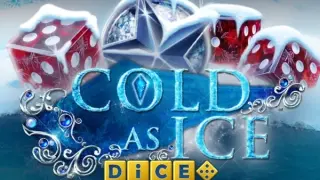
Cold As Ice Dice Demo
Table of Contents
Who actually clicks with Cold As Ice Dice, and who won’t?
Cold As Ice Dice shows its priorities right away: clean dice icons, sparse effects, and a paytable that reads more like a chart than a comic book. If you like tracking symbol ladders and understanding where every dollar is going, that’s a good sign. If you’re opening a game expecting animated characters and five nested bonus modes, this one is going to feel grounded to the point of being plain.
The whole experience leans into clear symbol hierarchy and fast spin resolution. You’re meant to look at the reels, clock the dice pips and colours, and know roughly where the spin landed on the value scale. No long transition sequences, no camera pans, very few “look over here” distractions.
Some players thrive on that. Others will check out after ten minutes.
Cold As Ice Dice tends to suit people who:
- Like to understand symbol ladders and spot value without digging through menus
- Prefer quick sessions where a lot of spins fit into a short time window
- Don’t need elaborate bonus journeys to feel engaged
- Are comfortable with a game where most of the interest lives in the base symbol spread
If your favourite moments in slots are huge feature entries with custom music, or long build-up mechanics with meters and side-collects, this game is probably a mismatch. The most you’ll get in terms of theatre is the way certain premium dice flash when they land and the brief shimmer on wilds when they complete a line.
This is a slot for people who enjoy reading reels like a spreadsheet in motion. If that sounds dull, there are better choices.
The appeal: pattern‑seekers and paytable tinkerers
Cold As Ice Dice leans heavily into that “numbers on screen” feeling. Each dice symbol is crisp, with pip counts that match its place on the ladder. You quickly map “small blue 1–3 pips” to the low band, then graduate to the heavier, colder-toned dice in the middle, and finally the chunkier, brighter top dice that you catch in your peripheral vision even when you’re half-focused on something else.
For players who like to pick apart paytables, this clarity is satisfying. The difference between a line of small blue 2‑pip dice and a line of mid-tier icy teal 4‑pip dice is obvious both visually and numerically. You’re not guessing which abstract rune is better; your brain is doing the math on the fly. After a few dozen spins, you see combinations land and you already have a rough value range in your head before the win amount settles.
Pattern‑seekers also get something out of how consistent the reels feel. You’ll notice recurring symbol clusters: columns that favour mid-tier dice, reels that often drop single premium symbols on the same two rows. There’s nothing mystical about it, but your brain latches on and starts spotting “routes” to decent hits. If you enjoy that quiet, analytical engagement rather than pure spectacle, the game fits.
The turn‑offs: spectacle hunters and bonus‑chasers
For anyone who loads a slot to chase big set‑piece moments, Cold As Ice Dice is going to feel pretty bare. The most dramatic visual twist is when wilds or enhanced dice glow with a cold highlight and snap into wins. There’s no sense of building towards a huge climatic event, no multi-stage feature journey where you “progress” in a narrative way.
Bonus‑driven players tend to want:
- Regular feature entries with distinct, memorable animations
- Side mechanics, like meters or collections, that build over time
- Noticeable tempo shifts when a special round is close
Cold As Ice Dice largely sidesteps that wish list. The pacing barely changes from spin to spin. The soundtrack doesn’t swell when two special symbols land. Teaser behaviour is muted; you might see key icons appear, but the camera doesn’t zoom and the audio doesn’t go into siren mode.
For someone hoping every few minutes brings a big “event”, the slot can feel flat. The interest lives in how symbol outcomes step up or down your personal expectation ladder, not in big cinematic sequences. If that sounds too subdued, you’re better off with one of the studio’s flashier titles.
Reading the dice: how Cold As Ice Dice structures its symbol ladder
Cold As Ice Dice treats its symbol ecosystem as the main attraction. There’s no mascot dragging attention away from the reels. The dice themselves, their colours, and their pip counts are the content. Once that clicks, the game is surprisingly legible.
Within a short session, most players can distinguish three clear tiers of regular symbols and a couple of special ones. You look at the screen, you see which clusters landed where, and you instantly know whether the spin is a near‑miss, a “keep you treading water” result, or something actually meaningful. That kind of fast comprehension is rare in more cluttered slots.
Core symbol tiers: low, mid, and premium dice
The regular symbol set in Cold As Ice Dice falls into three functional bands: low, mid, and premium dice. The art team reinforces that with a consistent visual vocabulary:
- Low-tier dice sit in the 1–3 pip range, usually in light, cool blues and greys. They’re small, neat, and almost disappear into the background on quick spins.
- Mid-tier dice ramp up to 4–5 pips, shifting into slightly richer ice tones, often with a soft shine on the edges. They look more substantial without stealing the spotlight.
- Premium dice are the boldest: higher pip counts, deeper colour saturation, and heavier outlines. Some carry a faint internal glow that makes them pop as the reels stop.
The low-tier band shows up constantly. On many base spins you’ll see carpets of small blue dice with a few mid-tier and maybe one or two premiums peeking through. That’s intentional. Those low symbols anchor your hit rate, forming small, frequent lines that refund a fraction of your bet. They rarely move your balance much, but they smooth the graph.
Mid-tier dice sit in a more interesting space. They don’t feel rare, but you don’t see full rows of them that often. When three or more line up, the payout is usually enough to keep you hovering near break-even for that spin, especially when combined with a stray low-tier line. Over a longer session, mid-tier results are what stop long periods of pure drain.
Premium dice are visually separated for a reason. Even when one lands off to the side, your eyes go straight to it. They tend to appear less frequently and often in partial patterns: two in a line with a gap, or stacked on a reel that doesn’t quite connect across. When they do land in a solid formation, the payout jump is obvious. You don’t have to check a number; you can feel the value difference in the way the win count-up lingers for a second longer and the animation gives just a bit more emphasis.
The net effect is a symbol ladder that feels rational. You understand why a sea of low dice barely moves the needle, why a couple of mid-tier connections make the spin feel “okay”, and why a strong premium layout is immediately notable. That clarity helps when you’re deciding whether the game is worth your time that particular day.
Special symbols: wilds, multipliers, and icy accents
Cold As Ice Dice uses special symbols sparingly, but the ones it has materially change how the regular dice behave. The wild symbol, for example, isn’t just a generic logo; it’s a frosted cube with a distinct rim of icy white around the edges. When it lands, it briefly frosts surrounding dice as it evaluates wins, making its impact very clear even to casual observers.
Wilds act as flexible dice, stepping in for regular symbols to complete lines. Because the base ladder is so tight, even a single wild in the right spot can turn a cluster of “almost” mid-tier connections into a proper payout. On some spins, you’ll see two mid-tier dice and a wild land in a row, and the visual logic is so straightforward that you know it’s a payout before the numbers roll.
In some versions of the game, there are also enhanced dice that act as multipliers or boosted symbols. They’re usually marked with a subtle overlay (such as a faint ice crack pattern or a small numeric tag) rather than loud, animated flares. When they connect, the win panel hints at the boosted calculation, but the reels themselves stay tidy. It’s worth verifying with your chosen casino what exact special symbols are active, as operators sometimes host different configuration builds.
These special icons change the emotional weight of a spin. A base spin with no wilds or enhanced dice and only scattered low-tier symbols feels forgettable. Drop a single wild that bridges two premium dice, and suddenly that same layout becomes one of the better hits of the session. You gradually start measuring spin quality not just by the presence of premiums, but by whether the special symbols landed in high‑leverage spots.
Line structure and symbol counting
Win formation in Cold As Ice Dice reinforces the emphasis on symbol clarity. The game typically uses a conventional left‑to‑right line system across a fixed set of paylines, rather than a “ways” approach. Lines snake across the grid in familiar patterns: straight across, mild diagonals, and a few zigzags. Once you’ve played a handful of spins, you start recognizing which line routes matter most for premium dice.
Because payouts are line‑based, the exact reel positions of dice matter more than in all‑ways slots. A premium die in the wrong row can’t leverage another one two reels later if the line path doesn’t connect them. This makes wild placement especially critical, since one wild on the correct row can “pull” a scattered layout into a valid line.
The practical outcome is that mid-tier symbols gain importance. In all‑ways structures, scattered premiums can generate decent returns even without perfect alignment. Here, you need enough mid-tier support along the stronger lines to keep results from collapsing into low‑value noise between premium hits. In sessions where premiums aren’t behaving, that mid-tier density is what lets you stay in the game.
You also become very good at spotting whether a spin has real promise the moment the third reel stops. If you see a premium die on reel one and two lining up on one of the straight or lightly diagonal paths, the fourth and fifth reels suddenly matter a lot. On the other hand, if those first two reels drop premiums in different rows or disconnected columns, you can mentally write off the spin quickly and move on.
That quick read of “live” versus “almost certainly done” spins is part of the appeal for more analytical players. You spend less time in ambiguity and more time assessing whether the game is delivering the kind of patterns you want to see.
Paytable gradients: small steps or steep jumps?
Where Cold As Ice Dice gets interesting for bankroll‑conscious players is in how its payouts climb from low to mid to premium symbols. The ladder isn’t flat. The move from the lowest blue dice to the middling icy tones is noticeable but modest. You might see a three‑of‑a‑kind low-tier line barely register, while a mid-tier line at the same length gives you back a distinctly larger share of the stake.
The real slope starts when you compare mid-tier to premium dice. A full line of mid-tier might feel “fine”, something that steadies the session. Replace those with premium dice and suddenly the win window pauses longer, the count‑up adds an extra beat or two, and you find yourself paying closer attention. Those are the moments that quietly define your impression of the game’s volatility, even without any explicit numbers.
To illustrate, imagine a spin where you land:
- A couple of low-tier lines for a small combined return
- One three‑symbol mid-tier line straight across the middle
- No premiums at all
That spin feels like a patch job. You lost some, recovered some, and carry on. Now swap the mid-tier line for a four‑symbol premium line along one of the cleaner routes. Even if the total amount isn’t huge, the difference in impact is clear: you’ve actually moved the balance, not just slowed the bleed.
The gradient is tuned so that you’re always aware of where on the ladder a given spin has landed. Low-tier floods feel cheap. Mid-tier patches feel serviceable. Premium alignments are the ones you actually remember after the session. That gives the game a distinctive rhythm of “minor nudges” and “occasional steps up”, rather than a blur of indistinguishable mid‑value hits.
Symbol frequency vs reward: where attention naturally goes
Over time, you’ll notice your attention drifting towards a few specific dice. The low-tier ones almost become noise; you see them, but you don’t really register them unless they arrange themselves into an unusually dense cluster. Mid-tier dice hold your gaze in the early part of a session, especially when they drop in repeating patterns across the central reels.
Premiums, though, are where your eyes snap. Even a single high‑value die appearing on reel one changes how you watch the rest of the spin. You start tracking the potential routes across the grid, waiting to see whether the next reels echo that symbol on a compatible row. When two premiums appear on different reels but on the same horizontal line, you feel a brief spike of interest, even if the connection fails.
Cold As Ice Dice leans on that behaviour. Premium dice show up often enough to feel present, but rarely in perfect alignment. You’ll see a lot of “two in sight, one off by a row” layouts. That can be slightly fatiguing for players who dislike constant partial patterns, but for those who enjoy reading near‑misses as information about how the session is flowing, it’s useful data.
The result is a mental split:
- If you’re outcome‑oriented, you’ll focus on those rare, tidy premium alignments and treat everything else as background noise.
- If you’re more pattern‑oriented, you’ll pay attention to where premiums are landing, how often wilds bridge gaps, and whether mid-tier density shifts between reels.
In either case, the symbol ladder dictates where your attention and expectations sit far more than any feature graphic or side mechanic.
Cold As Ice Dice in the provider’s line‑up: a quieter outlier or a natural next step?
Within its studio’s catalogue, Cold As Ice Dice feels like a restrained, math‑forward cousin to more ornate releases. The team that built it clearly knows how to do flashier games: elsewhere in the lobby you’ll find titles with animated characters, layered backgrounds, and several bonus modes stacked on top of each other. Here, they’ve pared things back to a frozen grid of dice and a narrow set of core behaviours.
That makes it stand out during a quick scroll. Where other thumbnails lean on mascots and busy logos, Cold As Ice Dice sits there with a simple, frosted cube icon. You can almost tell from the loading screen that this one is going to prioritise symbol clarity over theatrics. For players who already respect the provider’s underlying math models but find some of the art direction noisy, this is a welcome alternative.
The game feels like a deliberate attempt to offer a “clean room” variant of the studio’s dice experiments: fewer distractions, more focus on how symbols interact on each spin.
Shared DNA: what carries over from earlier dice or grid games
Anyone familiar with the studio’s previous dice‑style slots will recognize a few habits immediately. The most obvious is the commitment to legible symbols. Dice faces are crisp, with high contrast between pips and surfaces, and no cluttering overlays that make it hard to distinguish tiers at a glance. That same readability has shown up in the provider’s earlier grid games, where simple shapes carried most of the informational weight.
The UX pacing also feels familiar. Spin speed is snappy even on default settings. There’s minimal delay between tapping spin and the reels settling, unless there’s a notable hit that triggers a slightly longer count‑up. The settings menus stay compact, offering the usual options for sound levels and quick spins but not much in the way of gimmicks. That’s consistent with the studio’s general approach: a few well‑placed toggles rather than pages of niche customisation.
On the audio side, you can hear a shared palette: soft, percussive clicks as reels stop, a subdued “glass on glass” sound when dice land, and a restrained win chime that gets lightly layered for bigger payouts. It’s the same philosophy seen in their leaner titles, where sound design supports reel reading instead of shouting over it.
Session length tuning feels in line with the studio’s other mid‑tempo games too. You can fit a lot of spins into fifteen minutes without the experience turning into a blur. That’s partly due to spin speed, partly due to the lack of long interstitial animations. Players who enjoy their other practical, numbers‑forward slots will recognise that pacing immediately.
What Cold As Ice Dice does differently from the studio’s usual comfort zone
In contrast to many of the provider’s more popular titles, Cold As Ice Dice is willing to sacrifice theatrical elements to keep focus on the grid. In those louder games, there’s usually at least one marquee visual trick: animated characters reacting to big hits, changing backdrops as you move into different modes, or accumulating visual clutter that signals progress. Here, the background stays largely static, with only subtle shifts in lighting when special symbols hit.
Feature density is slimmer than the studio often delivers. There’s no sense that the designers were trying to cram every idea into one package. Instead, the emphasis is on the relationship between the dice tiers, wild behaviour, and line structure. That “spreadsheet‑friendly” framework is unusual in a catalogue where even simple games usually carry at least one extra side mechanic.
The animation budget is clearly pointed almost entirely at symbol effects: a faint frost overlay when wilds expand coverage, a small glint on premium dice when they finish a line, a quick freeze‑and‑crack vignette on certain stronger wins. These touches make the grid feel alive without distracting from the math. It’s quieter, but more focused.
For players who felt previous releases from the studio leaned too heavily on banners and mascots, Cold As Ice Dice feels like a corrective. It’s the same house style, just stripped down to the essentials.
Why the studio likely built Cold As Ice Dice this way
Looking at the choices on display, it’s not hard to guess what audience the studio had in mind. There’s a growing niche of players who care less about narrative framing and more about fast‑read outcomes and clean balance swings. Cold As Ice Dice looks tailored to that group.
By anchoring everything to a tidy dice ladder, the designers reduce ambiguity. You don’t have to remember whether a certain animal symbol is mid or high value. You don’t need to track multiple feature meters in the corner. You watch the pips, the colours, and the way wilds bridge gaps. That’s it. For someone running pragmatic sessions, possibly across several tabs or on a phone while doing something else, this clarity is useful.
The game also aligns with a broader trend within the provider’s recent output: revisiting simple mechanical formats with modern polish. There’s a sense that they’re experimenting with how far they can push engagement using just symbol hierarchy and a tight paytable gradient, without leaning on showpiece bonuses. Cold As Ice Dice sits near the extreme end of that attempt.
It feels like a deliberate test case: strip away most spectacle and see whether a slot built around a well‑tuned dice ladder and efficient UX still holds a certain kind of player’s attention. For many Canadian players who value utility over fireworks, the answer is often yes.
If you like X from this studio, how will Cold As Ice Dice land?
Reactions to this slot depend heavily on what else from the studio you already play. If you’re into their more restrained releases (the ones with simple shapes, limited colour palettes, and one or two core mechanics), Cold As Ice Dice will feel like a natural extension. You’ll recognise the quick spin cadence, the modest but readable win cues, and the sense that the reel math, not the animations, is doing the heavy lifting.
If your favourites from this provider are the loud, multi‑feature ones, Cold As Ice Dice may register as a stripped‑back “side project”. You might appreciate it for short, focused sessions where you don’t want to keep track of several features at once, but it probably won’t become your mainstay. The lack of a headline bonus means those who play specifically to chase that one big event will likely rotate back to more theatrical titles after trying it.
For analytically minded fans of the studio, it’s worth a look purely as a showcase of how their symbol design and paytable thinking operates when you peel away the extra layers.
Mobile vs desktop: how Cold As Ice Dice actually feels to use
On desktop, Cold As Ice Dice presents itself as a centred grid of dice with wide margins, minimal UI chrome, and large enough symbols that you can lean back and still read the pips. The spin button sits in the standard lower‑right position, while bet controls and basic settings occupy a compact strip along the bottom. It’s hard to misclick anything, which is not always the case in busier slots.
The mobile layout tightens everything up without cramping it. On a typical Canadian smartphone, the grid fills most of the vertical space, with control buttons nudged to the corners to avoid thumb overlap. The dice faces remain clean, with pips large enough that you don’t have to squint, even on smaller screens. That matters, because the whole game depends on your ability to distinguish symbol tiers at a glance.
Responsive behaviour is comfortably tuned:
- Buttons are chunky enough to avoid accidental presses on crowded transit or in one‑handed use.
- The paytable and info screens are scrollable panels rather than awkward pop‑ups, which is helpful in portrait mode.
- Spin response remains snappy even over middling connections, since there’s little heavy animation or background motion to load.
The one minor friction point on mobile is that, in some casinos, the top bar with balance and session stats can be a bit small. You may find yourself tilting the phone closer if you like to track exact numbers mid‑session. But the actual reel area is handled with care, prioritising symbol clarity over decorative framing.
For players who bounce between desktop at home and mobile while out, Cold As Ice Dice travels well. The experience feels nearly identical other than screen real estate, which is exactly what a numbers‑forward slot should aim for.
Sound in the icebox: audio cues and how they shape attention
Sound in Cold As Ice Dice stays out of the way but still does a job. There’s a faint, glassy ambience under the gameplay, like soft wind over a frozen surface. It never swells into full‑blown music, which some players will appreciate in longer sessions.
Key audio cues help you parse what matters:
- Each reel stop comes with a muted click, pacing your expectations as you watch for key dice.
- Low-tier wins trigger a short, light chime that’s over in a heartbeat.
- Mid-tier and premium wins add extra layers to that chime, with slightly longer tails so you register the difference.
- Wilds landing are marked by a sharper, icy tick and a brief whoosh as they frost nearby dice.
The volume curve is conservative. You won’t get sudden, jarring spikes that blast your headphones when a decent line hits. Instead, the audio ramps gently with win size, which suits people who run sessions while listening to something else in the background.
Silence between spins is also handled reasonably. There’s just enough ambient noise that the game doesn’t feel dead, but not so much that you feel pressured to keep spinning to “match” the soundtrack energy. For a slot that expects you to read the reels like data, that restraint makes sense.
Tempo on thin ice: session pacing and rhythm
Cold As Ice Dice runs at a brisk, almost metronomic pace. Spin speed is quick, with most rounds resolving in a couple of seconds unless you hit something that justifies a slightly longer count‑up. There are no extended “celebration” cutscenes to break the flow.
That creates a rhythm where you can fit a lot of spins into a short window, which appeals to players who like to gather a meaningful sample of results without committing to a long sitting. The flip side is that, without many built‑in pauses, it’s easy to let spins blur together if you’re not consciously checking in on your balance now and then.
Short, focused sessions tend to suit this game best. Ten to twenty minutes gives you enough time to see how the symbol ladder is behaving without drifting into autopilot.
Neighbouring titles: how Cold As Ice Dice stacks up against similar games
Compared with other dice‑themed slots and stripped‑back grid games, Cold As Ice Dice leans further into clarity and a narrower feature set. Many adjacent titles use dice faces but then layer in side collections, escalating multipliers, or mini‑games that sit off to the side of the main reels. Here, almost everything that matters happens in the primary grid.
If you’re used to dice slots where the theme is mostly cosmetic and the real action lives in repeated bonus entries, this one will feel more like a pure symbol‑ladder exercise. The trade‑off is simple: fewer spikes of spectacle, more consistent reel reading.
Players who already enjoy pragmatic, numbers‑driven games from other studios will recognise the appeal. Those who rely on big feature swings to break up sessions may find themselves drifting back to more layered alternatives after a while.
Where this slot quietly shines
Cold As Ice Dice doesn’t shout about its strengths, but a few details stand out once you’ve put some time into it:
- Instant symbol legibility – The way pip counts, colours, and outlines are coordinated means you can scan a stopped grid and immediately know which tier dominated the spin.
- Consistent audio feedback – Win sounds scale in a predictable way, which makes it easy to gauge hit quality without staring at the numbers every time.
- Minimal UI clutter – Both on desktop and mobile, almost every pixel on screen either belongs to the reels or to a control you actually use.
- Honest pacing – The game doesn’t slow down or dress up middling hits as major events, so you get a realistic sense of how your balance is moving.
- Symbol‑centric focus – With few side mechanics competing for attention, you can genuinely study how the dice distribution behaves across a session.
For players who value that kind of quiet craft over fireworks, those details make a difference.
Common mistakes & traps
A slot this straightforward looks hard to misread, but there are still a few ways Canadian players trip themselves up:
- Letting the fast pace run you – The quick spin speed makes it easy to click through long stretches without noticing how much time or balance has passed.
- Chasing a “hidden” big moment – Some players keep expecting a dramatic feature to unlock after a certain number of spins, even though the game is largely about the base symbol ladder.
- Overvaluing low-tier floods – Seeing a screen covered in dice feels good visually, but if most of them are low tier, the payout impact is usually modest.
- Ignoring wild positioning – A wild that lands off the key lines can look exciting but do very little; the ones that actually bridge mid or premium dice are the ones to mentally note.
- Playing on tiny mobile displays without checking readability – On very
More Slots from BF games








| Provider | BF games |
|---|---|
| RTP | 96.00% [ i ] |
| Layout | 5-3 |
| Betways | 5 |
| Max win | x1200.00 |
| Min bet | 0.05 |
| Max bet | 50 |
| Hit frequency | 9 |
| Volatility | High |
| Release Date | 2026-08-25 |