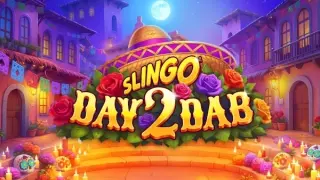
Slingo Day 2 Dab Demo
Table of Contents
Opening the card: how Slingo Day 2 Dab’s look hints at its rhythm
Slingo Day 2 Dab greets you with a familiar bingo‑hall mood: numbered balls, dab stamps, and a grid that looks more like a card than a slot. Anyone who has ever glanced at a 75‑ball or 90‑ball ticket will recognize the layout immediately. That instant recognition does more than set the tone; it quietly frames how you expect the game to behave over time.
You do not get a spinning‑reels blur here. You get small pauses, quick checks of the card, and a stop‑start flow that feels closer to waiting for the next ball call. Even when you trigger a flurry of dabs across the grid, the pace never becomes chaotic. The interface keeps you in this steady rhythm of “spin, scan, assess, maybe dab upgrade, repeat”.
The interesting part is how the visuals nudge your brain into treating each round as a “card” rather than a continuous slot session. That has a big impact on how the math model feels, especially when you’re deciding whether to extend a round with extra spins.
Visual cadence: how the bingo hall aesthetic mirrors the stop‑start gameplay
Look at the main grid in Slingo Day 2 Dab and you’ll see something quite restrained: numbered squares, clear dab marks, and line highlights that pulse gently instead of blasting your eyes. On each spin, the number reel (or ball draw zone, depending on how your casino skins it) does its thing, then the game takes a brief beat to stamp any matches on the card.
That short beat matters more than it first appears. It creates a micro‑pause where your eyes track the new dabs and your brain evaluates line progress. You’re not just passively watching symbols; you’re actively checking rows, columns, and key intersections. The whole thing feels more like ticking off numbers on a physical card than watching a slot tumble.
Because the dab animation is deliberate rather than instant, the game encourages a slower scan pattern. Your gaze tends to sweep along potential line routes, especially in the last few spins of the round when one missing number is glowing on your mental radar. That scanning behaviour will shape how “streaky” or “cold” a session feels to you, often more than the raw stats.
Art choices that hint at volatility: numbers, dabs, and how they “feel” in motion
Watch how Slingo Day 2 Dab handles its weightier pattern completions and you’ll notice a subtle hierarchy. When a crucial dab lands and finishes a strong line, the game leans into it: thicker highlight lines, a slightly longer dwell on the completed pattern, and a more assertive win banner. Low‑tier line completions, by contrast, get a lighter visual touch and quicker transitions.
You start to read that contrast as a rough barometer of risk profile. Many rounds will scatter dabs around the grid, lighting up small or medium patterns with half‑hearted fanfare. Those moments feel like the “keeping you in the game” outcomes. Then once in a while you get a cluster of high‑impact dabs that slam several lines at once and the whole card briefly looks like it’s staging a minor victory parade.
The important psychological effect is that you remember those heavier animations more vividly. They become the emotional anchors of your session, even if they’re rare compared to the modest line completions. That imbalance is exactly how a higher‑volatility Slingo hybrid tends to feel from the player side: lots of motion on the card, but only some of it truly matters.
Reading the grid: what the layout quietly tells you about pace and hit patterns
Before you even spin, the layout already hints at how Slingo Day 2 Dab will play. The spacing of numbers, the pattern of potential lines, and the placement of any special dab‑related mechanics show you that single numbers can be worth dramatically different amounts.
Certain pivot positions sit at intersections where a single dab can complete two or three lines at once. Others live on lonely edges where they only contribute to one weak pattern. Because those pivot spots tend to be visually central or slightly emphasized, your eyes go back to them after almost every spin.
You end up with a mental map of “hot” squares and “filler” squares. When a session gives you early dabs on those pivot spots, it feels promising, even if the round eventually fizzles. When those squares stay stubbornly blank, you experience the whole thing as slow and stingy, even if you’re technically landing a similar number of raw matches.
The card is quietly teaching you where the meaningful action lives. Once you’ve played a few dozen rounds, you’ll find yourself predicting whether a round feels “alive” by glancing at those key positions rather than by counting total dabs.
Comparisons to other Slingo and bingo‑slot hybrids
Slingo Day 2 Dab sits in that busy middle ground between classic Slingo formats and more full‑on video‑slot hybrids. It still respects the bingo card as the core playfield, but the dab mechanic and pattern values lean it closer to a feature‑driven slot than to a laid‑back social bingo game.
Where Slingo Day 2 Dab sits between classic Slingo and full video slots
Traditional Slingo titles often focus on climbing a ladder of Slingo lines, with most of the tension centered on how far up that ladder you manage to reach. The feel is methodical, and the big emotional spike comes from hitting a key line that moves you into a new prize tier.
Slingo Day 2 Dab keeps that backbone, but the dabbing emphasis and pattern weighting make each card feel a bit more “swingy”. A single number can flip multiple strong lines at once, producing spike moments you’d more commonly associate with a bonus‑heavy video slot. You still read the grid like Slingo, but the highs and lows feel more uneven.
On the other side, compared to combo‑heavy slot‑bingo mashups where you barely recognize the original card concept, Day 2 Dab is restrained. You’re not drowning in cascades, power‑ups, and side meters. The dab mechanic is central, not one mini‑feature among sixteen.
Harder‑edged Slingo vs softer bingo‑like cousins
Against more volatile Slingo entries that offer very few small wins and put most of the pay in rare, dramatic grid outcomes, Slingo Day 2 Dab feels slightly more conversational. It does hand out minor line completions with some regularity, just enough to keep the card from feeling empty for long periods.
Compared to softer bingo‑styled games aimed at social‑casino tastes, the edges are sharper. The dab visuals might be cozy, but the pattern of “lots of cheap dabs, then an occasional bruiser line” has more bite than a typical casual bingo slot. If you’re coming from very gentle, low‑swing titles, the dips here may surprise you.
How the dab mechanic shifts expectations
If you’re used to standard line‑making Slingo where each new line is a clear ladder step, the dab focus demands an adjustment. Here, the value of a new dab depends far more on its position and what it unlocks. A card with fifteen scattered dabs can be worth far less than a card with eight tightly clustered around premium patterns.
That dynamic can feel unintuitive until you’ve seen enough rounds. Early on, it’s easy to overvalue “busy” cards that look nearly full but are missing one or two critical pivot numbers. Once you internalize which dabs are truly high leverage, you start judging a round by its shape instead of its raw dab count.
Session pacing: how a typical Slingo Day 2 Dab run actually feels
Session flow is where Slingo Day 2 Dab shows its personality. The numbers and features matter, but what you will remember is the particular stop‑start beat of a dozen or so spins chained into one card, with the game tempting you to keep that card alive a little longer.
A full evening with it does not feel like a blur of identical spins. It feels like a series of “stories” told card by card, with some rounds starting hot and dying, others crawling then suddenly exploding, and many just shuffling you sideways.
Early spins: first impressions, quick hits, and false comfort
Those first few spins on a new card usually land softly. The game tends to feed you a couple of easy dabs early, often on low‑impact numbers that complete weak lines or move you one step closer to a middling pattern. The visual feedback is cheerful enough to make the round feel “off to a good start”.
This is where a lot of players develop a slightly inflated sense of how often cards will pay. Because the opening spins frequently light up a few squares, your brain tags the game as “active”. You see motion and assume value, even when those early dabs barely move the needle on the real prize tiers.
Go in expecting those first hits to guarantee a solid outcome and the back half of the round can feel surprisingly flat, even when the math is behaving exactly as designed.
Mid‑session behaviour: when the game starts to show its true character
Once you’re several cards deep, the rhythm of Slingo Day 2 Dab becomes more obvious. You’ll notice rounds falling into a few recognizable patterns:
- Cards that spike early with a key pivot number, dangle the promise of a bigger pattern, then stall.
- Cards that look useless for half their spins, then suddenly snap into shape when one or two central dabs drop.
- Cards that never quite get going but still drip small lines often enough to feel “not terrible”.
- Cards that hover in a middling zone, constantly one meaningful dab away from justifying their cost.
The mid‑session stretch is where the volatility starts to announce itself. It’s not about whether you see dabs. It’s about how often those dabs conspire to produce multi‑line pops that actually shift your balance in a noticeable way.
You may also start to feel the subtle grind of the base cost per card here. If you’re running through rounds quickly, that steady ticket price can chew through a casual budget in a way that feels slower than high‑speed spins, but not necessarily kinder.
End‑of‑round tension: last spins, dabs, and perceived “clutch” moments
Those final one or two standard spins on a card are where Slingo Day 2 Dab tightens the screws. By that point you usually have one or two very obvious “make or break” numbers on the grid. The game knows it, and it leans into the suspense.
The animations feel like they linger slightly longer, the final dab checks are a touch more dramatic, and every number that misses those crucial squares creates a small gut drop. When a late dab does land on a high‑impact spot, the emotional payoff is disproportionate to the actual prize in many cases.
These endgame beats are also where continuation mechanics, if available at your casino, tend to appear. You’ve just watched a card almost come together, you’re emotionally invested, and the game offers you the chance to buy a few more spins. That’s the point where pacing and bankroll decisions collide.
Streaks, lulls, and momentum: what a choppy session really looks like
A Slingo Day 2 Dab session rarely feels smooth. You’ll see clusters of cards where the dab distribution just refuses to hit your key intersections, and your balance erodes in small, annoying steps. Then, without warning, you get a couple of rounds where central numbers drop early and suddenly your grid lights up like it’s having a good day.
Because each card is self‑contained, you experience these swings not as individual spin variance but as “runs of good cards” and “runs of trash cards”. That framing can be dangerous if you start reading too much meaning into short clusters. The math engine does not track your momentum, but your brain certainly does.
The choppiness is easiest to spot when you look back at a long session. You’ll remember the handful of cards that actually did something impressive, then you’ll realize there were lengthy periods where you were just paying for the privilege of marking off minor lines.
Short bursts vs long grinds: how session length changes your perception
Play Slingo Day 2 Dab in short bursts of five to ten cards and it can feel breezy and reasonably generous, especially if you happen to catch one good grid in that window. The dab animations, the incremental line completions, and the contained nature of each round make for a tidy, “one more card” loop.
Stretch that into a long grind and the tone shifts. The steady ticket cost per card, plus the temptation to buy extra spins on half‑baked grids, can make the game feel more demanding than its easygoing visuals suggest. You start to notice how many rounds end in that grey middle zone where you neither win big nor crash spectacularly; you just bleed slowly.
Long sessions also amplify any tilt tendencies you bring to the table. If you’re already annoyed by watching pivot numbers dodge you card after card, the repeat exposure across dozens of rounds can make every near‑miss feel personal, even though it isn’t.
Slingo Day 2 Dab’s math model as lived on the grid
The technical numbers behind Slingo Day 2 Dab will vary between casinos and specific versions, but the lived experience is consistent enough to describe. You’re looking at a game that wants to appear active through frequent small dab hits while reserving most of its punch for occasional convergences of lines on the grid.
RTP in real terms: what the percentage means over Canadian‑style sessions
Whatever exact return‑to‑player percentage is listed for your version, it represents a long‑term expectation, not a guarantee over a night’s play. On Canadian sites, where many players sit down for 30–90 minute sessions rather than marathon grinds, that means the theoretical value is mostly a background temperature rather than a forecast.
On a dozen or two cards, you can just as easily run well above or well below that published figure. The structure of Slingo Day 2 Dab accentuates this, because a small number of very strong pattern completions accounts for a big chunk of the long‑term return. If you happen to miss those spikes in a session, your personal RTP will feel dismal.
Because the game is packaged as a series of discrete rounds, it’s easy to think “my luck will turn on the next card”. The percentage can subtly encourage that belief if you treat it as a promise instead of a probability spread over thousands of rounds.
Volatility on the ground: swing size, emotional spikes, and bankroll whiplash
Day 2 Dab leans into a moderate‑to‑high volatility feel. You do see frequent activity on the grid, but the gap between a “busy but weak” card and a genuinely strong outcome is wider than many players expect going in.
You’ll encounter many rounds where you claw back a fraction of your stake through low‑tier lines. Those keep things from feeling utterly barren but do very little to push your balance up. Then, rarely, a perfect storm of dabs lights up several strong lines at once and your card actually moves the needle.
That contrast creates emotional whiplash. Ten cards might chip away at your bankroll with small losses, then one card suddenly hands back a sizable chunk. Players who are comfortable with streaky video slots will recognize the pattern quickly; those coming from gentler bingo‑like titles might find the swings jarring.
Hit frequency: lots of small noise or fewer “meaningful” connections?
Slingo Day 2 Dab is quite chatty in terms of raw hits. Dabs appear often, low‑value lines complete fairly regularly, and the game seldom goes more than a couple of spins without some visual acknowledgement of progress. On paper, that translates into a relatively high hit rate.
The catch is that most of those hits are more “noise” than “music”. A single new line that barely covers a fraction of your card cost doesn’t change your situation much, even if it looks and sounds positive. Over time you’ll learn to categorize outcomes into:
- Cosmetic dabs that just fill space.
- Incremental upgrades that move a line into a better tier.
- True converters that fuse several strong patterns in one shot.
- Rare grid‑transformers that trigger your session‑defining payouts.
The last two categories are the scarce ones, and that’s where your meaningful return hides. Once you internalize that, the game’s hit frequency stops feeling as friendly as the surface animations suggest.
Distribution of outcomes: how often rounds feel “dead”, “average”, or “alive”
From a player’s perspective, Slingo Day 2 Dab rounds fall into three experiential buckets:
- Dead cards: Maybe a couple of weak lines, mostly on edge numbers, nothing near your key intersections. These rounds feel like you were never really in contention.
- Average cards: Some action in the centre, a few decent lines, perhaps one close call on a premium pattern. You lose a bit, win a bit, and move on.
- Alive cards: Early central dabs, multiple lines building toward stronger payouts, and at least one spin where you’re sweating a single missing number.
Subjectively, dead and average cards make up the bulk of play. Alive cards stand out because they create a sense of narrative: you watch the grid assemble, you get invested, and the ending (big win or painful miss) sticks in your memory. That skew in emotional weight can make the game feel more “boom or bust” than the raw outcome distribution might show on a spreadsheet.
Tilt risks: how the math profile nudges you toward chasing one more round
The combination of frequent low‑impact hits and rare, dramatic card spikes is fertile ground for tilt. You see just enough progress card after card to believe you’re “due” for one of the better outcomes. When it doesn’t arrive on schedule, frustration creeps in.
Slingo Day 2 Dab amplifies this if your casino version offers extra spins at the end of a card. You’ve already invested in that card’s story, you’re one or two numbers shy of a strong pattern, and you’ve seen enough alive cards to know that turnarounds are possible. The predictable thought is: “I’ve come this far; one more spin might do it.”
That’s the math profile steering you towards extending losing or mediocre rounds in search of a rescue. If you’re prone to chasing, this structure rewards having a clear stopping approach before you start rather than improvising under emotional pressure.
Betting range and bankroll sizing for a dab‑heavy grid
Betting options on Slingo Day 2 Dab depend on the site and jurisdiction, but the typical structure gives you a straightforward per‑card stake selector. There are no coin values or line counts to fiddle with; you’re choosing how much each card costs, plus any extra spins you decide to buy.
Typical bet levels and how they interact with swinginess
On Canadian‑facing sites, you’ll usually see a range that starts low enough for casual play and stretches into stakes that can chew through a solid balance if you’re not paying attention. Because each card consists of a fixed batch of spins, the per‑round cost is quite transparent compared to multi‑line slot betting.
The swinginess of the game means your chosen card price has an outsized impact on your risk of ruin. A card that costs a few dollars feels harmless until you’ve played twenty or thirty of them, with most of them returning only part of the outlay. If you’re used to slowly grinding at low‑denomination slots, it’s easy to underestimate how quickly mid‑price cards will add up.
Practical staking frameworks for different bankrolls
A simple way to think about sizing in Slingo Day 2 Dab is in terms of how many full cards your balance can comfortably absorb.
For small, casual balances (say $20–$40), it’s sensible to:
- Stick to the lower end of the card price range.
- Aim for 20–40 full cards without relying on big hits to keep you afloat.
- Treat extra spins as rare indulgences, not a default purchase.
For medium “evening‑session” budgets, perhaps $50–$150:
- Choose a stake where 40–80 cards are feasible.
- Allow yourself the occasional extra spin on truly premium setups, but only after a cool‑headed look at the potential gain.
- Be prepared for stretches where your balance trends down before a better card bails you out.
For larger, more experimental bankrolls:
- You have room to explore higher card prices, but the game’s streaky nature still punishes overconfidence.
- Consider setting a rough cap on what percentage of your starting balance you’re willing to risk on one extended card, extra spins included.
- If you’re testing different stakes, rotate them between short blocks of cards rather than jumping erratically after each round.
How extra spins and continuation options can quietly blow up a budget
Continuation is the silent multiplier on Slingo Day 2 Dab. A card that starts with a modest base cost can become expensive once you’ve bought several extra spins to chase one stubborn number. Because each extra feels like “just one more shot”, it rarely registers as a major spending decision in the moment.
The trap is that you almost always chase these spins on cards that are already behind expectation. You’re not buying extra value; you’re paying a premium for a small chance to salvage a round that’s gone sideways. Over a full session, those micro‑decisions can easily dwarf your original budget plan.
Treat the extra spin price and the potential upgrade realistically. If the added win from finishing a line barely exceeds the cost of another spin, the math is not on your side, regardless of how satisfying it would be to see that missing dab finally land.
Number ladders and dabs: symbol hierarchy and how the paytable really works
On the surface, Slingo Day 2 Dab is just numbers and dabs, but the grid hides a clear hierarchy of value. Where a number sits on the card matters more than what it is, and the dab mechanic elevates certain positions into quiet VIPs.
Core symbol tiers: low‑utility numbers vs key pattern completers
Most numbers on the card exist to support one or two basic lines. When they get dabbed, you’re happy enough, but they rarely transform the state of the grid. These are your low‑utility squares, usually out on the edges or corners of the card, contributing to simple horizontal or vertical lines.
Then there are the pattern completers. These live at intersections of multiple high‑value routes, where a single dab can finalize two or three lines at once. Their presence turns a disorganized scatter of numbers into something coherent and lucrative. A card with several of these already dabbed early feels like it’s humming.
Finally, you have “enablers” that don’t complete lines themselves but unlock the potential for future combos. They sit one step away from those pivot numbers, turning future dabs into disproportionately potent events. You start to recognize these once you’ve watched a few grids develop.
Special icons and their true impact on value
Depending on version, you may see special symbols associated with extra dabs, wild‑like behaviour, or enhancements to existing patterns. Visually they stand out from ordinary numbers, but their actual impact on your balance can be subtler.
Many players fixate on these icons, assuming that every time one appears the card is now “hot”. In reality, their power is highly context‑dependent. A wild‑style dab that lands on a number already surrounded by completed lines may add very little, while the same effect on a neglected pivot square can remake the entire grid.
The key is to judge specials not by their label but by where they apply pressure on the card. A flashy icon that hits a dead corner is less valuable than a plain number that locks in several mid‑tier lines.
Why some near‑miss patterns feel more “expensive” than the paytable suggests
Slingo Day 2 Dab is full of patterns that stop one dab short of doing something memorable. You’ll see half‑finished shapes where landing a specific number would complete multiple strong lines, bump you into a noticeably higher prize tier, or both. When that number refuses to drop, the miss feels huge.
Part of that is emotional; your brain counts the “almost” as if the win briefly belonged to you. Part of it is structural. The paytable tends to concentrate value in those multi‑line junctions, so missing them really does separate a forgettable card from one that could have defined your session.
Once you’ve seen a few of these slips, you start mentally pricing them higher than the printed payout suggests, which makes the next similar setup even more tempting to chase.
Slingo Day 2 Dab on phone vs desktop: same card, different tempo
Most Canadian casinos offer Slingo Day 2 Dab in both desktop and mobile formats, and the game translates reasonably well between them. The core mechanics are identical, but the feel shifts slightly depending on screen size and input method.
On desktop, the grid has room to breathe. Numbering is clear, dab animations are easier to follow in peripheral vision, and tracking those central pivot squares feels natural. Mouse clicks or trackpad taps make the pace feel methodical, almost like working through a digital bingo sheet.
On a phone, the interface usually tightens up. Buttons are larger, the card may zoom slightly, and some casinos tweak the layout so the spin control sits comfortably under your thumb. The upside is a more tactile, tap‑driven flow; the downside is that long sessions can feel a bit more compressed, with less visual space for your eyes to roam.
If you’re the type who likes to scan the entire card before every spin, desktop or tablet will probably feel kinder. If you prefer quick hits on the couch or in short breaks, the mobile version’s condensed layout suits that stop‑start style.
How this version differs from the original
Slingo titles tend to spawn multiple versions, and Slingo Day 2 Dab is no exception. Different casinos and jurisdictions may host slightly tweaked builds that alter the feel without shouting about it on the front end.
Treat it like a checklist when you open the info panel or demo:
- Max win figure: Check whether the advertised top payout matches what you remember from earlier versions. Some variants tone this down or bump it slightly.
- Feature triggers and dab behaviour: Look at how special dabs or wild‑style effects are described. The frequency or exact rules can shift from one release to another.
- Multiplier or ladder structure: Pay close attention to how line upgrades or prize ladders are laid out. Even small adjustments in tier spacing can change how “spiky” the game feels.
- Extra spin pricing: Compare the cost of continuation spins relative to your base card price. Certain builds are noticeably more aggressive here.
- Hit rate hints: Some versions include notes about volatility or “win frequency”. Treat these as broad signals, but use your first few demo cards to see whether the grid feels busier or tighter than you expect.
If you’re moving from an older Slingo Day 2 Dab you enjoyed, a quick side‑by‑side check of those elements helps you avoid assuming the new build behaves exactly like the one you remember.
Common mistakes & traps
Even experienced players fall into similar habits with Slingo Day 2 Dab. A few patterns show up again and again:
- Judging cards by how “busy” they look rather than by which key intersections are dabbed. A crowded grid can still be low value if the wrong numbers are lit.
- Over‑buying extra spins on cards that were weak right from the start. Chasing a single line upgrade that barely outpaces the spin price is a slow leak.
- Bumping the card price too quickly after one strong round. The game’s volatility makes it easy to give back that highlight win in a handful of pricier cards.
- Ignoring version differences and assuming the RTP or max win matches what you saw on a different site. Small rule changes can shift the long‑term feel.
- Letting near‑miss frustration drive decisions, especially after several cards end one dab short of a big pattern. That’s when the urge to “rescue” the next card is strongest.
- Multi‑tasking on mobile and missing subtle paytable cues or extra spin prices. A thumb tap on autopilot can commit you to a continuation you didn’t really want.
Spotting these behaviours in yourself early usually does more for your balance than any fine‑tuning of stake size.
Slot fingerprint: what makes Slingo
More Slots from Gaming Realms

| Provider | Gaming Realms |
|---|---|
| RTP | 94.84% [ i ] |
| Layout | 5-5 |
| Betways | 12 |
| Max win | x6952.00 |
| Min bet | 0.2 |
| Max bet | 20 |
| Hit frequency | N/A |
| Volatility | Med |