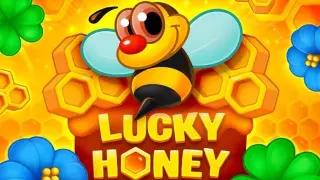
Lucky Honey Demo
Table of Contents
First look at Lucky Honey: bright hive, simple grid, surprising depth
A first glance at Lucky Honey feels almost disarmingly friendly: soft yellows, rounded hexagons, and an uncluttered grid that looks easier than it actually is. Underneath that sunny hive sits a math model and feature set that can be quite unforgiving if you treat it like a pure “cute” slot.
What kind of slot is Lucky Honey and who is it really for?
Lucky Honey works as a mid‑range video slot that blends approachable visuals with a fairly serious feature mix. It is not a kiddie game in disguise. The core experience fits players who like:
- a clear, readable grid without visual chaos,
- steady base‑game activity with bursts of feature‑driven excitement,
- and the feeling that positioning of wilds and scatters actually matters.
Casual spinners who usually stick to low bets tend to appreciate the straightforward controls and the way wins are clearly outlined on the honeycomb. More experienced players, especially those who pay attention to RTP and volatility, are likely to focus on the sticky wild behaviour and free spin potential, then decide whether to stay based on how swingy the payouts feel over 100+ spins.
Anyone expecting ultra‑high‑risk, “one spin to change your bankroll” gameplay will probably find Lucky Honey a bit restrained. It lives in that middle space where a session can stretch for a while if the base game co‑operates, but long dry runs are very possible.
First impressions: colour palette, soundscape, and general feel
The colour palette leans heavily into honey tones: golden yellows, warm oranges, and muted browns for the wooden frame. Instead of neon saturation, the background looks more like late‑afternoon sunlight through a jar of honey. Symbols stand out clearly against a pale honeycomb grid, with a few accent colours (greens for leaves, blues for flowers) keeping the screen readable.
On a spin, the reels slide with a soft, viscous motion, almost as if the symbols are moving through thick syrup. A constant, low “hive hum” sits in the background, occasionally broken by a bee buzz sweeping from left to right when bigger wins land. It is subtle enough not to grate during longer sessions, but noticeable enough that muting the sound makes the game feel oddly flat.
The overall impression is calm and almost methodical. There are no aggressive flashes when you hit something decent, just a slightly brighter glow on winning clusters and a more insistent jingle. That visual restraint makes it easier to track what actually happened on the grid, especially when cascades or sticky wilds start stacking.
How the hive layout and UI guide (or mislead) new players
The grid is framed by a hive wall and small animated bees that hover near the corners. Beneath it, the UI stays stripped down: bet controls on the left, spin and autoplay on the right, balance and win amount in the bottom corners. The paytable and menu icons sit in the top right, small but still legible.
For someone opening the game for the first time, the main guidance comes from how wins are highlighted. Winning symbols shimmer, then the honeycomb behind them glows softly before disappearing if a cascade is triggered. That makes the “win then tumble” flow fairly intuitive, even without reading a rules page.
Where the presentation can mislead is in the perception of safety. The cute bees and rounded fonts hint at a very gentle game. In reality, the variance in win sizes can be sharp. Another small UI quirk: on some casinos, the “total bet” and “coin value” displays sit quite close together, which has led more than a few players to think they are lowering their stake when they are actually just changing the denomination. It is worth double‑checking the total bet number before spinning.
Inside the hive: theme, visuals, and atmosphere
The hive setting leans into a soft, storybook aesthetic rather than a hard cartoon or realistic nature theme. It is the kind of slot that can be left running for a while without your eyes getting tired, which matters more than many players admit.
Bee cartoon vs. semi‑realistic hive: how the art style affects mood
The bees themselves are slightly anthropomorphic but not goofy: big eyes, a gentle smile, tiny arms that sometimes wave when a feature triggers. The hive background, in contrast, carries more texture, with visible wax ridges, tiny cracks, and small pollen dust motes drifting across the screen.
That mix of cartoon characters on a semi‑realistic backdrop creates a light but not childish mood. It feels closer to a calm nature documentary that has been lightly illustrated than to a Saturday morning kids’ show. It also helps the brain identify symbols instantly: flowers and jars of honey are clearly distinct from letter symbols, even in peripheral vision.
Animations, reel motion, and how wins are highlighted on screen
Reel motion is vertical, but each column is segmented into hexagonal cells. During a spin, the cells tilt slightly, giving the impression that the grid is shifting in layers rather than just scrolling. When the reels stop, there is a very short, soft “thud” effect, then a micro‑pause while the game checks for wins.
Wins unfold in two clear steps:
- Winning symbols pulse and get a thin, bright outline.
- The honeycomb cells behind them brighten, then either stay lit (for static wins) or melt away if a cascade is coming.
On multi‑line wins, the slot cycles through each line or cluster with a quick camera nudge instead of trying to show every highlight at once. That makes things easier to read, although it can feel slightly slow if you land several small wins in a single spin. There is usually a small “Skip” button near the bottom right during long win counts; using it speeds up the display while still showing the final win total clearly.
Sound design: base game hum, win jingles, and bonus audio cues
Audio design stays light and airy. The base soundtrack is a gentle, looping melody with soft strings and occasional wind chimes. Underneath, the quiet hive hum runs so low you might miss it on laptop speakers but notice it immediately on headphones.
Small wins trigger a short chime and a single bee buzz. Medium wins add a couple of extra notes and a slightly longer buzz trail. When a sticky wild or special bee feature lands, the audio shifts to a higher‑pitched, swirling effect that feels distinct without being jarring.
Free spins and feature rounds come with a noticeable audio change: the background track deepens slightly, and a melodic “build‑up” plays as the triggering symbols lock into place. That cue matters, because it sometimes fires before you have even processed that the third scatter has hit. Over time, many players start to recognize the sound as quickly as the visuals.
Mobile experience on Canadian devices: portrait feel, tap targets, and performance
On mobile, Lucky Honey holds up well on both iOS and Android. The grid takes up most of the portrait screen, with the bottom bar collapsing into a compact strip. Tap targets for bet +/- and spin are large enough that even on a smaller device like an older iPhone SE, it is hard to mis‑tap.
One slot‑specific detail: on some casinos, switching from portrait to landscape briefly reloads the game, and the background art widens to show more of the hive walls and tree canopy. It looks pleasant, but if your connection is weak, that brief reload can lag or hang for a second. For smoother play, picking one orientation and sticking with it usually works best.
Performance‑wise, the animations are relatively light. Mid‑range Android devices cope fine, though turbo or quick spin mode can help if your phone struggles with frame rate when cascades chain together and multiple effects fire at once.
Reading the reels: how the Lucky Honey grid is actually set up
At first, the grid looks like a classic five‑reel layout with a honeycomb skin. The structure stays simple, but some of the winning patterns and directions can trip up new players who are used to only straight paylines.
Reels, rows, and payline structure
Lucky Honey uses a 5‑reel, 4‑row layout, visually presenting as 20 cells arranged in a slightly staggered honeycomb frame. Under the hood, it behaves like a standard 20‑line slot with fixed lines that pay left to right.
Lines include the usual straight and zig‑zag patterns you expect from a 20‑liner, but the honeycomb art can make diagonal lines look more complex than they really are. The game does not use cluster pays, even though the hexagon grid might suggest that at first glance.
How to see the payline map or win pattern info in the interface
To view the payline map, tap the small “i” or “?” icon usually located in the top right corner. That opens a multi‑page info panel. One of the early pages shows diagrams, each with a line number and a red path overlaid on the honeycomb cells.
A subtle but useful detail: the background dims while the info panel is open, but the grid behind it remains faintly visible. That makes it easier to compare where the lines run relative to the cell positions you see during a spin. Flicking through the pages quickly gives a rough feel for the patterns without needing to memorize every line.
Win direction, tie‑breaking, and edge cases that confuse new players
Wins pay from left to right only, starting from the first reel. There is no right‑to‑left or “both ways” pay, despite the symmetrical hive art. Scatters typically pay anywhere, but only when you land at least three.
A couple of edge cases are worth knowing:
- If you hit the same symbol on multiple lines, the game pays each line separately, then sums them. Some new players feel “shorted” when they see several lines flash but the total win number still looks small. Those are often just overlapping small line wins.
- A four‑of‑a‑kind starting on reel 2 does not pay, even if it visually looks like a strong cluster in the middle of the grid. That symbol must appear on reel 1 for it to count as a line win.
The game does a decent job highlighting exactly which cells form a paying combination. When in doubt, watch the outline path after a spin; if a symbol is not part of that path, it is not contributing to that particular win.
Symbols dripping with honey: paytable and icon hierarchy
The paytable in Lucky Honey is clean and uncluttered, with a clear separation between low, mid, and high‑tier symbols. Each icon has a distinct colour and shape, which helps during fast spins or in quick‑spin mode.
Low‑value “filler” symbols and how often they show up
Low‑value symbols are the usual card ranks, styled as wax stamps: 10, J, Q, K, and A. They sit on pale honey drops with subtle embossed lettering, so they do not visually compete with the premium art.
These fillers appear very frequently, especially on the middle reels. It is common to see several partial lines of 10s and Js on spins that still result in no actual payout. When they do line up, the pays are modest, usually returning a small fraction of the stake unless you land a full screen of one symbol.
Because they are so common, low symbols provide a lot of the game’s “hit frequency”. Many small wins are built around them, often nudged up slightly by a wild. They help keep the balance ticking but rarely move it in a big way.
Premium bee and hive symbols: payouts, stacking, and visual cues
Premium symbols carry the theme:
- A jar of honey with a wooden dipper,
- A honeycomb cluster with dripping golden edges,
- A blooming flower dusted with pollen,
- And the main bee character, usually the top‑pay symbol.
The bee symbol has a subtle glow around it, and when multiple bees land on a line, they sometimes twitch their wings in sync before the win count begins. It is a small but useful cue that you hit something more meaningful than a low‑tier line.
Premiums tend to appear in stacks, especially the honeycomb and flower symbols. A stack of these on the leftmost reels can quickly turn into several lines at once. Combined with a well‑placed wild, this is where mid‑range hits usually emerge.
Wilds, scatters, and special icons: how to recognize them at a glance
The wild symbol is a honey jar with the word “WILD” clearly printed on the label. It often carries a tiny shimmer effect, even when it is not part of a win. That makes it easy to spot on a fast spin. Wilds substitute for regular symbols but usually do not replace scatters.
Scatters are stylized bee hives or a special queen bee emblem, depending on version. They often carry a small “BONUS” ribbon underneath. When two scatters land, the game may add a short anticipation sound on the final reel, which can be both exciting and slightly deceptive when that third scatter misses.
Some versions of Lucky Honey include a special “golden honey drop” symbol that acts as a feature trigger or prize collector during specific bonus rounds. It tends to appear framed with a brighter border, so it stands out clearly against the regular grid.
Paytable readability: how to quickly check what a win is worth
Opening the paytable shows each symbol with its payouts listed for 3, 4, and 5 of a kind. Most Canadian‑facing versions display these amounts in terms of “x bet per line” or “x total bet”. It is worth checking which one your casino uses:
- If values are “per line”, you multiply by your line bet.
- If they are “per spin” / “total bet”, the math is straightforward.
A handy touch: tapping a symbol icon on the paytable often zooms it in and briefly highlights that symbol on the background grid. That helps newer players match what they saw during a spin with the paytable entry they are reading.
Under the honeycomb: math model, RTP, and volatility
Beneath the cute bees and soft colours, Lucky Honey runs on a math model that can be more volatile than it looks. Having a rough idea of what to expect helps avoid nasty surprises.
Published RTP range and what Canadian players should realistically expect
Lucky Honey is usually advertised with an RTP in the mid‑96% range, though operators may offer slightly different settings. In Canada, online casinos often pick the middle or upper configuration, but that is not guaranteed.
Because casinos can choose from several preset RTP versions, it is worth opening the game info panel or checking the help section on the site. The actual RTP figure is often tucked into a line of text under “Game rules” or “Payout information”. If you see anything significantly below 96%, factor that into how long you plan to play.
Volatility profile: how swingy Lucky Honey feels in practice
The volatility sits in the medium‑high neighbourhood. Small wins show up often enough to keep the reels from feeling dead, but it is very common to hit stretches of 20–40 losing spins with only token returns.
When features like sticky wilds or free spins are involved, the slot becomes noticeably more spiky. A big chunk of the RTP is stored in those bonus sequences. Base game alone will rarely deliver the headline wins; it acts more as a staging area where you either slowly leak balance or hold steady until a feature lands.
Hit frequency: how often you see wins vs. how often you feel progress
Hit frequency (any win at all) tends to feel relatively high, thanks to all those low‑tier lines. However, many of those wins are below your total bet. So there is a difference between “seeing a win animation” and feeling like your bankroll is actually moving forward.
A typical session might look something like this:
- Several small wins every 5–8 spins, mostly tied to card symbols.
- Occasional medium hits every 30–60 spins, when premiums line up with wilds.
- Feature rounds spaced more irregularly, sometimes close together, sometimes separated by long dry gaps.
Understanding that pattern helps manage expectations. Lots of visual activity does not always equal profit.
How the math model ties into session length and bankroll planning
For shorter sessions (around 10–20 minutes), it makes sense to stick near the lower end of the bet scale. The volatility means you can burn through a stack of spins without seeing a meaningful feature. A conservative bet lets you ride out those patches.
Longer sessions reward a more deliberate plan. Two practical guidelines:
- Consider a bankroll of at least 150–200 spins at your chosen stake if you genuinely want to see how the free spins behave, not just dabble.
- If your balance dips by around 40–50% without a noteworthy feature, it is reasonable to pause, drop the stake, or step away. Chasing a “due” bonus rarely ends well.
The game’s math is built for variability. Treating it like a slow, low‑variance grinder usually leads to frustration.
Betting with a beekeeper’s budget: stakes, coin sizes, and controls
The betting interface aims to be friendly, but there are a couple of small quirks worth grasping before you start hammering the spin button.
Minimum and maximum bet range and how flexible it really is
Most Canadian casinos host Lucky Honey with a fairly typical range, often starting around a few cents per spin and climbing to a reasonably high cap suitable for larger bankrolls. Exact figures vary by operator.
The key point is that the bet is usually set as a “total bet” across all lines. So when you slide the bet bar or tap the plus/minus arrows, you are changing your per‑spin stake, not the number of lines. Lines are typically fixed at 20, which keeps things simple.
Bet size steps and “sweet spots” for casual vs. higher‑stakes play
Bet increments are usually linear, moving through a ladder of small steps. For casual play, there tend to be nice round figures at the low levels (for example, $0.20, $0.40, $0.60), which makes it easier to track what you are actually spending.
For players with larger bankrolls, the mid‑range steps often feel like natural sweet spots: high enough that medium hits matter, but not so high that a dry stretch wipes you out in minutes. It can help to test spin at a lower stake to get a feel for the feature rhythm, then adjust upwards only if that rhythm suits you.
Autoplay, turbo, and quick spin options (and where they are hidden)
Autoplay is typically accessed via a small circular icon near the main spin button. Tapping it opens a panel where you can choose a number of auto spins and sometimes set simple loss or win limits. On some versions, there is a separate “Quick spin” toggle tucked into the settings menu rather than on the main screen.
Quick spin speeds up the reel stop and shortens win animations. It does not change the RTP or the underlying mathematics; it simply compresses the time per spin. On weaker devices, enabling quick spin can reduce stutter during cascades.
One thing to watch on mobile: autoplay buttons can sit close to the regular spin. It is easy to trigger a batch of auto spins by accident. When that happens, a small “Stop” button usually appears near the bottom of the grid. Hitting it immediately cancels the remaining auto spins.
Currency display, bet per line vs. total bet, and common confusions
By default, Canadian casinos show balances and wins in dollars. Internally, though, the game engine often still thinks in “coins” or “units”. This can lead to moments where the paytable lists a prize as “50x” and the win screen shows a dollar amount that looks smaller than expected. Always check whether the “x” multiplier applies to line bet or total bet.
If your version of Lucky Honey allows switching between “coin value” and “total bet” displays, it is usually simpler to leave it on total bet. That way, when you raise or lower the stake, you immediately see the full per‑spin cost, not just a coin fraction that must be multiplied by lines.
Sticky sweet mechanics: core features in the base game
On the surface, the base game in Lucky Honey feels straightforward. Underneath, it uses a couple of mechanics that influence how your balance moves even before the main bonus triggers.
Cascading / tumbling wins or static spins: how one spin can turn into many
Lucky Honey uses a tumbling (or cascading) mechanic in many versions. When you land a line win, the winning symbols disappear and new ones fall into place from above. Each tumble counts as part of the same paid spin. If fresh wins form, the process repeats.
Visually, the honeycomb cells for removed symbols melt into liquid gold, then refill with new symbols that slide down. There is a short pause between each cascade cycle, accompanied by a slightly higher‑pitched hum, so it is easy to track how many extra tumbles you are getting “for free”.
Tumbles change the feel of the game quite a bit:
- A single paid spin can sometimes deliver several small wins in sequence.
- Wilds that drop in during a cascade may lead to unexpected line completions that were not visible on the initial stop.
If your version does not use cascades, spins behave in a fully static way, with all wins counted at once and then cleared before the next spin. The rules panel will confirm which variant you are playing.
Sticky wild behaviour in Lucky Honey and how long they stay
One of the more engaging aspects of Lucky Honey is its sticky wild behaviour in specific scenarios. In some versions, when a wild contributes to a win during a cascade, it remains on the grid for the next tumble, “sticking” in place while other symbols are replaced.
These sticky wilds are visually distinct: they get a thicker, glowing outline and sometimes a small animated bee hovering nearby. As long as cascades keep forming new wins, the sticky wild stays. Once a tumble produces no new win, the sticky wilds clear.
This mechanic can create those memorable “almost” spins, where a single sticky wild in the right column turns weak low‑symbol cascades into a surprisingly strong chain. It can also create frustration when a promising cluster of sticky wilds fizzles out one symbol short of a big premium combo.
Random modifiers: expanding symbols, added wilds, or bee bonuses
From time to time, the game may trigger small random modifiers in the base game. A couple of examples commonly seen in Lucky Honey variants:
- A bee swoops across the reels and drops 2–5 extra wilds on random cells before the spin result is evaluated.
- A honey splash covers a reel, turning it fully wild for that spin.
These effects are often telegraphed a fraction of a second before they land, with a short camera zoom and a distinct audio sting. They are not frequent, but they add some unpredictability to otherwise quiet stretches.
How often base game features trigger and what they realistically pay
Base game modifiers and sticky wild cascades are not constant companions. Over a medium session, you might see some sort of notable base feature every few dozen spins. Many of those events lead to mid‑sized wins in the range of 5x–30x your stake, with occasional larger spikes when premiums line up.
The key is to treat these features as balance stabilizers rather than jackpot makers. While sizeable hits can come from base game chains, the really eye‑catching results typically involve free spins or special bonus modes layered on top.
Honey rush moments: free spins and main bonus rounds
The main bonus in Lucky Honey revolves around free spins and enhanced wild behaviour. This is where the theme tightens up and the audio/visual package shifts into a more intense pace.
How to trigger the free spins feature
Free spins in Lucky Honey usually trigger by landing three or more scatter symbols anywhere on the reels during a single spin. In most versions, three scatters grant the basic free spin package, while four or five scatters can award extra spins or a small upfront prize on top.
The trigger is clearly signposted. When the second scatter lands, the game often slows slightly on the remaining reels, and the sound ramps into a short anticipation loop. If the third scatter hits, the grid brightens, bees swoop across the screen, and the scatter symbols lock into place before the free spins counter appears.
On some operator setups, free spins can also be retriggered from within the bonus round by landing additional scatters. The number of extra spins and whether there is a cap on retriggers depend on the specific version, so it is worth glancing at the rules page before going hard on longer sessions.
Slot fingerprint
- Honeycomb‑styled 5x4 grid that looks like a cluster slot but actually runs on fixed 20 lines.
- Calm, storybook hive aesthetic that stays readable even in long quick‑spin sessions.
- Medium‑high volatility wrapped in “cute” visuals, leading to sharper swings than the theme suggests.
- Cascading wins with occasional sticky wilds that can stretch a single spin into multi‑step chains.
- Free spins focused on enhanced wild behaviour, where much of the game’s bigger potential is concentrated.
Common mistakes & traps
- Misreading the honeycomb layout and assuming cluster pays, then being confused when central “clumps” do not pay.
- Tweaking coin value instead of total bet and accidentally spinning at a higher stake than intended.
- Treating the cute theme as a sign of low volatility and betting too aggressively early in a session.
- Ignoring the RTP value in the info panel and playing on a lower‑RTP version without realizing it.
- Letting autoplay run through long dry stretches instead of stopping to reassess bet size or session goals.
- Expecting base game modifiers to deliver huge wins regularly, when most of the serious potential sits in free spins.
- Chasing a “due” bonus after a long gap, rather than accepting that the math model can stay cold for extended runs.
More Slots from 1spin4win








| Provider | 1spin4win |
|---|---|
| RTP | 97.20% [ i ] |
| Layout | 4-4 |
| Betways | 256 |
| Max win | x1500.00 |
| Min bet | 0.1 |
| Max bet | 100 |
| Hit frequency | N/A |
| Volatility | High |