Le Prechaun Demo
Table of Contents
Who Will Actually Click With Le Prechaun – And Who Won’t
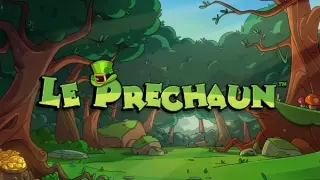
Le Prechaun is one of those slots you clock in half a second: green, clovers, gold, a chirpy mascot, and a grid packed with familiar icons. It is clearly not chasing some grand reinvention. Instead, it leans into a classic Irish setup with a fairly tight symbol ladder and a math model that lets the base game carry most of the load. If you’ve been through dozens of “Lucky” and “Clover” releases already, you’ll spot what’s recycled here, but you’ll also notice a few small refinements that make it more playable than some of its cousins.
The crowd most likely to stick with Le Prechaun are the players who care about how the symbols are structured and how the game behaves over 200 spins, not just the first flashy animation. If you like being able to glance at a screen and instantly know whether you’ve hit a “cost of doing business” combo or something that actually moved your balance, this grid is friendly. The paytable steps are clear, the gap between lows, mids, and premiums is easy to read, and there aren’t fifty different side features cluttering the reels.
Another group that will quietly appreciate it are those who pay more attention to sound than to fireworks. Le Prechaun has a surprisingly deliberate audio layer. The win tones, reel stops, and near‑miss stings are all doing quiet work in the background, nudging your attention towards certain moments without screaming at you. If you’re the kind of player who notices when a slot “sounds sticky” or “sounds cold”, this one gives you fairly honest audio tells more often than many modern releases.
Volatility-wise, it sits in that medium‑to‑high pocket many Canadian regulars will recognise. You don’t get the constant drip of 0.2x returns that low‑variance grinds throw at you, but you do feel the swings. A run of spins can chew through credits quickly, then a cluster of mid‑tier wins suddenly patches most of it back. Sessions feel like short rides with small climbs and dips rather than a flat line. That will appeal to players who enjoy settling in for a while and letting the balance breathe, instead of firing off 30 turbo spins just to see if the feature lands.
Some groups are probably going to bounce off Le Prechaun almost immediately. Feature‑chasers who load a game and head straight for the bonus rules will find relatively little to chew on. The focus here is squarely on the main grid and line hits, with only a light dusting of modern trimmings. If you want progressive metres all over the screen and three different pick‑and‑click rounds, you’ll likely be bored.
Casual players who prefer near‑constant tiny wins may also find the ride a bit choppy. There are stretches where the reels spin, the sound stays polite, and your balance nudges downward faster than a low‑volatility title would allow. Combine that with a bright, very classic Irish palette, and anyone who is already tired of green hats and rainbows will feel done with it long before the math has had a chance to show its shape.
Le Prechaun really lives or dies on three things: how its math model behaves over time, how its sound design steers your attention, and how cleanly its symbol structure tells you what just happened. Everything else is window dressing.
Reading Le Prechaun’s Math Model Through Actual Spins
Seasoned players in Canada tend to treat the stats page as a rough sketch, not a binding contract. The displayed RTP and volatility label give you a starting point, but the real story only appears after a couple of proper sessions. Le Prechaun is one of those games where the advertised numbers line up reasonably well with how it feels on a live balance.
RTP, volatility, and hit rate as table‑time experience
Canadian‑facing casinos that carry Le Prechaun usually list it within the typical modern range for RTP, sometimes with more than one configuration depending on the operator. That already tells you to expect a slot that, over a very long period, doesn’t claw back more than its peers, but you still have to live through the bumps between those theoretical endpoints.
On the volatility side, the game leans into noticeable variance without turning the base game into a wasteland. You can go twenty or thirty spins with almost nothing of note, just the occasional three‑of‑a‑kind low symbol keeping the screen from feeling completely dead. Then a sequence of mid‑tier or premium hits suddenly refills a good chunk of what you’ve lost. That stop‑start feel is typical here.
Mid‑tier symbol combos land often enough to matter. You’ll see four‑symbol hits on the Irish‑style icons (pints, harps, horseshoes, that sort of thing) at a rate that feels reasonable for a medium‑to‑high game, and those hits are usually the ones that rescue a run of bad spins. Top symbols are rare, as you’d expect, but they don’t feel entirely mythical. You do see them land in twos and threes fairly often, with the full lines coming just infrequently enough to stay exciting.
Hit frequency in Le Prechaun feels like a mix of small stabilisers and intermittent jolts. You’re not getting something back on every other spin, but you also don’t spend long runs staring at completely empty grids. Small wins are common enough that you’re regularly shaving off the cost of your last couple of bets, with occasional mid‑level connections that act like mini events. That pattern suits players who like to “ride out” a session, letting the variance play through, rather than those who sit down for ten spins hoping for a single huge, all‑or‑nothing moment.
Where Le Prechaun Sits in Its Studio’s Line‑Up
Once you’ve sampled a few releases from this provider, Le Prechaun feels like a comfortable continuation of their Irish and whimsical streak. The studio has a habit of taking a successful template, repainting it to match a different seasonal or lucky theme, and tweaking the internals just enough to justify the new title. You get that sense here: the grid layout and symbol ladder look very familiar, but the spacing of pays and the timing of audio cues have been polished slightly.
The symbol structure clearly borrows from earlier games in the catalogue. You’ve got a ladder of card‑rank lows, then a tight cluster of Irish‑themed mid symbols, followed by a relatively narrow set of premiums capped by the leprechaun himself. The exact payouts and gaps between tiers feel adjusted compared with earlier titles from the same shop, favouring a bit more weight on the mid‑range hits instead of dumping everything into the single top symbol.
The audio palette also carries the studio’s fingerprints. The background jig, the soft wooden reel clicks, and the way the win chimes layer over each other will sound familiar if you’ve played their other “lucky” games. What’s different here is how restrained the bigger stings are. When a strong win lands, the sound grows brighter and slightly louder, but it doesn’t drown the base track completely. That restraint makes Le Prechaun feel consciously aimed at regulars who already understand how these slots breathe, rather than at fresh sign‑ups who expect a fireworks show on every 10x win.
Climbing the Symbol Ladder in Le Prechaun
If there is one part of Le Prechaun that rewards close attention, it’s the paytable. This slot leans harder on base‑game line hits than many of the modern, feature‑stacked releases. You’ll spend far more time watching regular symbols connect than you will staring at a complicated bonus round, so understanding how the symbol hierarchy is built tells you most of what you need to know about how your balance might move.
You get three clear rungs: the card‑style low symbols, a neat run of Irish‑themed mid‑tiers, and a small set of premium icons with the leprechaun sitting on top. Visually, those tiers are separated cleanly. The cards are flat and simple, the mids are chunkier with more colour and shine, and the premiums grab your eye with gold trims and more detailed art. After a handful of spins, your brain starts spotting each category without effort, which matters a lot when you’re making quick “that was good / that was nothing” judgements spin after spin.
Low symbols – the quiet backbone of the grid
Low‑pay symbols in Le Prechaun follow the classic card rank route: usually 10, J, Q, K, and A in slightly curved, Celtic‑styled fonts. There are five of them, and they occupy a lot of grid space. On any given spin, it’s common to see entire reels plastered with 10s and Js, with the occasional Q or K peeking through. That density is intentional; these symbols are there to create motion, not drama.
In terms of pay behaviour, the lows show up constantly in three‑of‑a‑kind and four‑of‑a‑kind runs. You’ll see little stair‑step patterns of them across the middle of the grid, often mixed with a stray mid symbol at one end that doesn’t quite connect. Payouts for 3‑symbol hits are usually just a small fraction of your bet, almost like a partial refund. Four‑symbol wins climb towards something noticeable, especially when they stack or land on multiple lines, but you still need the occasional five‑symbol run to feel like you’ve actually “won” something on the lows.
These symbols are key to session length. When Le Prechaun is behaving, the card ranks keep nibbling away at your losses. A sequence of spins with mixed small wins, mostly coming from the lows, can hold you roughly flat while you wait for the mid‑tier icons to land properly. When the game cools off, you’ll notice that even these lifesaver wins thin out, leaving more spins with scattered mismatches and no lines at all.
Visually, the lows are easy to parse. The colours are distinct but muted compared with the rest of the set, and the art style keeps them from stealing focus. As soon as the reels stop, you can tell at a glance whether you’ve just hit another “meh” line of Js or if something more meaningful has formed. That clarity is surprisingly important over time; you’re not constantly squinting at the screen to check if that pattern of shapes was a win or just clutter.
There’s also a small psychological detail at work. When a full line of A symbols lands and the win amount barely lifts above your bet, the game accentuates the modesty of it. The win sound is softer, and the numbers count up quickly instead of lingering, which subtly trains you not to overvalue these hits. They’re the scaffolding of the paytable, not the main event.
Mid‑tier icons – where Le Prechaun hides most of its value
The mid‑pay symbols are where Le Prechaun quietly puts a lot of its practical value. You’ll typically see four of them: a foamy pint, a golden horseshoe, a harp, and a pot with a modest pile of coins. Each has a bit more detail and saturation than the card ranks, and they’re often framed with a thin golden border that makes them pop against the green backdrop.
These icons are the ones you end up rooting for without really thinking about it. They appear often enough that landing three of them isn’t rare, yet their payouts for 4‑ and 5‑of‑a‑kind are strong enough to actually change the tone of a session. A four‑symbol run of horseshoes, for example, tends to recoup several spins of losses in a single go, especially if it overlaps multiple paylines or drops in combination with expanded wilds (when those are present in the base‑game variation you’re playing).
Patterns on the mids are quite consistent. On a typical session, you’ll see three‑symbol hits every few spins, usually sitting in the middle three reels. These wins often cover half or more of your stake, chipping away at the cost of a streak. Every so often, a screen will lock in with a 4‑symbol connection across a main payline, and that’s when you feel the math model give a little sigh of relief. Those 4‑symbol results are the bread and butter of Le Prechaun’s return curve.
Five‑symbol mid‑tier lines feel like miniature feature moments. They don’t blow up your balance, but they’re usually enough to push you back above where you started that mini‑run. The game knows it too: the audio ramps up slightly, with an extra shimmer over the standard win sound, and the win count‑up takes a little longer, giving you just enough time to register that this was “one of the good ones”.
An important observation here is the spacing between the top mid symbol and the lowest premium. In some slots, that gap is huge, making the mids feel almost pointless compared with premium hits. Le Prechaun keeps that jump relatively small. The highest mid icon, typically the pot of coins, pays in a way that overlaps with the lower premium symbol on 3‑ and 4‑of‑a‑kind. That makes the mid tier feel legitimately valuable rather than just a filler phase you have to get through.
From a practical player perspective, the game is essentially teaching you that your session health depends on these symbols. When a few spins pass with no pints, no harps, no coins in sight, you know you’re in a rough spell. When you start seeing multiple mids landing even without lining up fully, that usually signals that the slot is waking up a bit, and you might be on the verge of a small recovery.
Premium symbols and top symbol pressure
Premiums in Le Prechaun form a compact but clearly signposted set. You’ll generally find three or four of them: perhaps a pipe, a glittering emerald, a rainbow‑arched hat, and finally the leprechaun character himself as the top symbol. These icons are brighter, more animated, and framed with heavier gold than anything else on the grid. Even if you looked away for a moment, the sudden appearance of multiple leprechauns on the stop frame will snap your attention back.
Premiums don’t flood the reels. You’ll see singletons fairly often, especially the lower ones like the pipe or emerald, but lining up three or more of any premium feels like a moment. When you do land them, their impact on your balance is noticeable. A three‑symbol hit on the lowest premium tends to cover most or all of your stake. Four of them, across a main line, can lift you several bets ahead in one go, particularly if they land back‑to‑back with another mid‑tier win.
The top symbol, the leprechaun himself, carries the usual pressure. He’s not quite as elusive as some “mythic” top icons in other games, but you’re not going to see full lines of him often. Most of your interactions with the top symbol will be in the form of two‑of‑a‑kind teases, or three‑in‑a‑row that pay nicely but leave you wondering what a full five‑symbol hit would have done. That’s intentional; the game wants you to be aware of his presence without building everything around one impossible outcome.
When a strong premium win actually lands, the effect on your balance is immediate. A full line of the second‑highest premium, for example, can swing a session from “slightly underwater” to “comfortably ahead” in one spin. Multiple lines of the top symbol, especially when wilds help bridge gaps, have the potential to define a session on their own. Those moments are rare enough to stay memorable but not so remote that you stop believing they exist.
There’s a subtle question of whether premiums feel “clumped” or “sprinkled” in Le Prechaun. They tend to appear in loose clusters. You’ll have sequences of spins where you barely see a premium, then a short stretch where they show up on three reels at once, sometimes without lining up, sometimes snapping into place. That streaky distribution is typical for this kind of math model: it adds a bit of emotional swing, where you go from “this thing is dead” to “okay, it’s alive again” in half a dozen spins.
A nice touch is how clearly the game communicates premium hits. The reels darken slightly around the winning symbols, the background jig drops in volume for a split second, and the win amount is displayed in a thicker, more embossed font. You don’t need to stare at the numbers to know you’ve just hit a premium line; your ears and eyes do the work before the total even finishes counting up.
How the Soundscape of Le Prechaun Shapes Your Attention
Sound in Le Prechaun is more disciplined than the theme might suggest. Many Irish‑themed slots drown you in constant fiddles and aggressive win jingles. Here, the soundtrack is relatively measured: a looping, mid‑tempo jig with soft percussion, mixed at a level that lets you forget about it between big moments. It only really asserts itself when the math gives it a reason.
Reel spin sounds are wooden and slightly muted, more like carved tokens sliding into place than metal clanks. That choice keeps your ears from getting fatigued over long sessions. There’s just enough variation in the pitch of each reel stop that your brain registers motion without it feeling mechanical. When reels land in quick succession, the staggered clicks act almost like a countdown, and you do start anticipating certain outcomes based on when the more expensive symbols visibly scroll past.
Win sounds are layered in a way that mirrors the paytable. Tiny low‑symbol hits trigger a short, single‑note chime with a soft tail. Your brain quickly learns to treat that noise as “nothing special”. Mid‑tier wins add an extra harp flourish on top, slightly brighter and longer. Premium hits introduce a distinct, rising motif that you only hear on stronger results. That hierarchy of sounds means you can look away from the screen and still have a decent sense of how good a spin was just from your headphones.
Near‑misses get their own treatment, but it’s relatively restrained for a modern slot. When you land two leprechaun scatters or stack four of a premium with a gap on the fifth reel, the game plays a narrow, almost whistling sting as the last reel stops. It’s noticeable, but it doesn’t blast over the base track. That helps you stay aware of the opportunities without feeling like the game is constantly crying wolf.
There’s also a subtle tempo trick. On spins that lead into a significant win, the background music doesn’t actually speed up, but the game lowers the volume of the reel stop sounds slightly, which makes the overall rhythm feel smoother. Then, when the win lands, the music swells for a second, giving the impression that the track just leaned into the moment with you. It’s a small touch, but it keeps big wins from feeling disconnected from the rest of the audio.
Over time, these cues change how you interact with the slot. Many players end up half‑watching the screen and half‑listening to the patterns. If you’ve been hearing only low‑win chimes for twenty spins, you know the session is in that slow, grinding phase. When the mids start chiming in and premium motifs appear more often, you sense the variance swinging upward even before you check your balance. That’s the audio doing real informational work, not just decoration.
On mobile, where a lot of Canadians play during commutes or in short breaks, the mix holds up well at low volume. The important cues (premium hits, stronger wins) are placed in a clearer frequency band that cuts through background noise without needing to be loud. If you’re spinning while watching something else in the background, you’ll still hear when the slot finally does something noteworthy.
One last detail: when you hit the spin button repeatedly in quick succession, the game doesn’t stack the win sounds aggressively. They’re mixed in a way that lets one finish or nearly finish before starting the next. That prevents the messy audio blur some slots fall into when you’re speeding through spins, and it keeps your sense of individual wins intact.
Common Mistakes & Traps in Le Prechaun
Even seasoned players run into a few predictable snags with a slot like Le Prechaun. Most of them come from misreading what the game is actually about.
-
Overvaluing full lines of low symbols
A screen full of Ks looks impressive, but in Le Prechaun those hits rarely justify the emotional reaction they generate. The sound cue is modest for a reason. Treat lows as maintenance wins, not pay‑days, or you’ll constantly feel short‑changed. -
Ignoring how important the mid‑tiers really are
Many players focus on the leprechaun and other premiums, assuming they’re the only things that matter. In reality, your session health usually lives and dies on those pints, harps, and horseshoes. If you’re not seeing mids land regularly, that’s a stronger red flag than a few missing top symbols. -
Chasing “hot” or “cold” patches based purely on near‑miss audio
The understated near‑miss stings make it tempting to believe the game is “building up” to something when you hear several in a row. That’s pattern‑seeking behaviour more than reality. The audio reflects what just happened on that spin; it doesn’t forecast the next one. -
Misreading the volatility as lower than it is
Because the lows hit fairly often, players sometimes walk in expecting a soft, low‑variance float. Then a cold run of twenty spins hits and they’re surprised by how quickly the balance moves. The frequent small wins soften the edges, but they don’t change the broader volatility profile. -
Assuming the paytable gap between mids and premiums is huge
The art makes premiums look dramatically more important than mids, but the top mid icon is not that far behind the lower premium in practical terms. Over‑focusing on premiums can make you underestimate how solid a strong mid‑tier hit really was. -
Letting the relaxed audio lull you into marathon sessions
The chilled, looping jig and muted win sounds create a very easy listening environment. It’s comfortable, which also makes it easy to lose track of time. When the soundscape never grates, you need to be extra conscious about checking in on your session length and balance. -
Expecting a feature‑heavy rescue if the base game runs cold
Because the main game takes centre stage here, there isn’t a giant, flashy bonus waiting to bail out a long cold spell. Players used to feature‑rich titles sometimes sit through a bad stretch assuming a big event is just around the corner. With Le Prechaun, most of your recovery, if it comes, will still be from line hits.
Where It Falls a Little Short
No slot is perfect, and Le Prechaun has a few edges that feel undercooked compared with what experienced players might hope for.
-
A very safe thematic choice
Another Irish leprechaun game in a market already packed with them is always going to struggle to feel distinctive. The visuals are competent but familiar, and if you’ve played a handful of similar titles, this one can blur into the pack. -
Limited sense of progression during long sessions
Because the focus is squarely on the main grid and a fairly static paytable, there’s not much of a progression arc. You don’t fill metres, unlock new symbol sets, or see the game evolve as you play. For some, that stability is welcome; for others, it can make extended sessions feel samey. -
Audio could use more variation over time
The base jig is pleasant enough, but it doesn’t morph much across a long session. A few alternate loops or occasional ambient shifts could have gone a long way towards breaking up that sameness for players who like to sit in a game for a couple hundred spins. -
Premiums can feel slightly under‑supported by visuals alone
The art does signal which symbols are valuable, but the difference between the highest mid and the lowest premium is visually subtle. Newer players may take a while to map “what looks fancy” to “what actually paid well” until they’ve watched the numbers a few times. -
Little to latch onto if you’re already tired of Irish themes
For players who have simply had their fill of clovers, hats, and pots of gold, Le Prechaun doesn’t provide much of a twist. The mechanical refinements are there, but they’re under the hood, and the surface layer may not be strong enough to tempt those players back into this theme family.
Quick Answers: Common Questions About Le Prechaun
Is Le Prechaun available at Canadian online casinos?
Yes, it appears at a range of Canadian‑facing sites, though availability depends on the operator’s deal with the provider. If you do not see it in the lobby, it may simply not be licensed at that particular casino.
How volatile is Le Prechaun compared with other Irish slots?
It sits in the medium‑to‑high band. You’ll see more stretches of no‑win or tiny‑win spins than on a gentle low‑variance game, but not the brutal droughts some extreme high‑volatility titles are known for.
Does Le Prechaun rely more on the base game or on bonuses?
The design leans heavily on base‑game line hits and the way the symbol ladder is tuned. There are feature elements, but they’re not the main show, so expect most of your balance swings to come from regular spins.
Can the sound be turned off without affecting gameplay?
Yes. Muting the audio doesn’t change the odds or outcomes, though you do lose the subtle information carried by the different win and near‑miss cues.
Is there a demo mode for Le Prechaun?
Many Canadian‑facing casinos offer a free‑play version where you can try Le Prechaun with play money first, but this depends on local rules and the specific operator’s policies.
More Slots from Hacksaw Gaming







| Provider | Hacksaw Gaming |
|---|---|
| RTP | 96.28% [ i ] |
| Layout | N/A |
| Betways | Cluster Pays |
| Max win | x15000.00 |
| Min bet | 0.05 |
| Max bet | 50 |
| Hit frequency | 37.8 |
| Volatility | Med |
| Release Date | 2026-07-16 |