Buzz Patrol Demo
Table of Contents
Neon hives and hidden levers in Buzz Patrol
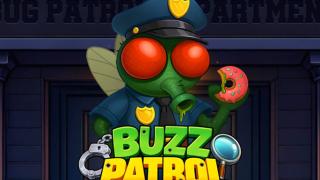
Buzz Patrol arrives with a very particular kind of confidence. The whole screen looks like a neon honeycomb drafted by a comic-book artist who really likes grid layouts and glowing paths. Before you even spin, the way the hive is segmented, lit, and outlined quietly tells you the game is built around zones and routes, not just static reels.
The primary playfield keeps a regular grid structure, but the cell dividers are slightly heavier along a few suggested “lanes”. Every so often, you’ll see a faint pulsing trail run through several connected hexes, almost like a patrol path being traced in advance. Those paths are not just for show. They foreshadow how roaming modifiers and patrol bees will later sweep across the hive, upgrading symbols or adding wilds along their routes.
Low-symbol clusters tend to sit quietly until something begins to stir around them. When the game is edging toward a feature, highlighted cells often start to glow softly in sequence, rather than all at once. A single hex lights up, then another in the same diagonal, then a third in the opposite corner. It feels like the hive is “mapping” where the patrol will go next, and it trains you to pay attention to those travelling lights.
There is also a subtle change in motion when the grid is doing more work in the background. During ordinary low-impact spins, symbols drop into place, bounce once, and stop. When a modifier is about to trigger, the drop animation lingers an extra half-beat, with small dust motes of neon pollen drifting between cells. You start to associate that tiny delay and the extra glow with something more interesting than a single-line hit.
Buzz Patrol’s visual language nudges you toward thinking in clusters and zones rather than straight five-of-a-kind lines. The slightly skewed perspective of the hive, the patrol paths that snake through it, and the way certain cells are outlined in brighter amber all hint at features built around roaming bees, symbol upgrades, and chained modifiers. Even without a rules explanation, the grid teaches you how to read when the machine is winding up for something a bit bigger than a basic payout.
Where Buzz Patrol sits in its studio’s lineup
The studio behind Buzz Patrol has built a reputation for bright, slightly quirky video slots that sit somewhere between classic 5×3 layouts and full-blown puzzle grids. Buzz Patrol feels like a midpoint in that evolution: more structured than their busiest cluster games, but definitely more experimental than their straight-line titles that many Canadian players first discovered them through.
Earlier releases from this provider leaned heavily on simple stacked wilds and fixed-feature free spins. With Buzz Patrol, you can feel the studio pushing into a more systems-driven style. The roaming patrol bees, the way certain cells “store” upgrades for later, and the sense that the grid remembers where modifiers passed on previous spins all give it a more layered feel without becoming opaque.
Visually, it shares that thick-outlined, almost cel-shaded look you might recognize from the studio’s other neon-themed slots. However, the hive background is more restrained. Instead of cluttered side panels and constant pop-ups, Buzz Patrol leaves more negative space around the grid. That choice suits the patrol mechanic: your eyes stay on the cells, where the real information lives, rather than on side meters.
Compared to the studio’s louder bonus-heavy games, Buzz Patrol trims some of the bulk. You do not get half a dozen competing features firing every ten spins. Instead, the design leans into a small handful of patrol effects and upgrades that interact with each other. For players who enjoy seeing a mechanic clearly, rather than buried under five others, this feels like the studio tightening its approach.
Evolution of the patrol mechanic within the studio
Roaming elements are not entirely new for this provider. In earlier titles, wilds would walk across the reels from spin to spin, or special symbols would expand a 3×3 zone when they landed. Those experiments were fun, but they sometimes felt visually noisy. The screen filled with arrows, frames, and timers that could be hard to parse in the moment.
Buzz Patrol looks like a refinement of that wandering idea. Patrol bees trace very deliberate routes through the hive, and their intended path is declared clearly with that faint neon line that appears a split-second before they move. When they travel, you see exactly which cells they touch, and those cells often gain a visible badge: an upgraded frame, a multiplier stamp, or a honeycomb overlay indicating stored potential.
What stands out is how closely the patrol paths are tied to the slot’s higher-end outcomes. In earlier games, walking wilds could feel incidental, dropping small boosts without much influence on big hits. Here, long chained paths that cover key symbol clusters are often involved when larger wins appear. That clearer cause-and-effect loop makes the patrol mechanic feel less like a side flourish and more like the main lever the game is built around.
Ranks in the hive – symbol hierarchy and Buzz Patrol’s paytable
Once you spend a few spins with Buzz Patrol, you can map its symbol pecking order pretty quickly. The low-paying icons are stylized honey tools and signage: fluorescent jars, tiny warning cones, and hazard-striped honey dippers occupying the bottom of the grid. Their art is simpler, flatter, and they tend to appear in wider spreads, which is consistent with their role as filler.
Above that tier sit the worker and drone bees, each kitted out with comic-book armour and tiny patrol visors. These mid-tier symbols usually show up in clusters rather than scattered singles. When a patrol bee passes through their cells, the frames around them get a sharper glow, hinting that upgraded versions of these mid-tier icons can punch much higher than their base values suggest.
At the top of the ladder are the patrol leaders and the queen-like emblem. These symbols have slightly more detailed shading and a different colour palette: deeper purples and electric blues that cut through the amber background. They pay significantly more, particularly when combined with multipliers from patrol paths, and they are visibly rarer. You will often see one or two teased on the grid, but full lines or large clusters of them are infrequent without help from features.
Buzz Patrol follows a hybrid structure that feels closer to grid slots than strict line games. Wins tend to form through adjacent connections or cluster-style groupings rather than rigid payline shapes, which suits the hex layout. Entry-level wins arrive with relatively small groups of symbols, but true standout hits tend to require broader coverage or upgraded cells from patrol passes.
Special symbols are easy to spot because the art team has given them heavier outlines and more saturated hues. Wilds have a glowing honey badge that flickers faintly even when idle, and scatter or feature triggers are framed with a metallic border that looks almost like a comic panel. From a player’s-eye view, wilds seem moderately common in the base game, often accompanying mid-sized wins, whereas the dedicated feature triggers are scarcer and often arrive in clumps, with two in view more often than the full quota needed to actually launch a round.
Patrol perks – how Buzz Patrol’s bonuses actually unfold
The bonus structure in Buzz Patrol revolves around the idea that patrol bees do real work on the grid instead of just serving as moving wilds. In the base game, patrol effects can randomly activate, sending one or more bee units along pre-marked paths. As they travel, they may upgrade symbol tiers, stamp multiplier badges onto specific cells, or drop wild honeycombs that lock in for that spin.
Feature rounds build on that foundation rather than throwing you into a completely different game. Free spins are typically triggered by landing a set number of scatter-style emblems, or by filling a patrol meter that charges as bees move across the grid. When the round begins, the hive often retains some of the upgraded frames from the base game, giving a slight sense of continuity. Those badge-like overlays make it clear which cells are already primed for better returns.
During free spins, patrol activity is more concentrated. You might see more frequent patrol launches, longer routes, or guaranteed modifiers on each spin, but the basic flow remains familiar: symbols drop, potential clusters emerge, and then patrol paths enhance or connect them. That continuity helps avoid the whiplash some players feel when a slot’s bonus mode looks nothing like the base.
In terms of frequency, Buzz Patrol’s main feature round feels neither extremely rare nor constantly intrusive. Sessions often stretch through a noticeable number of base spins between full free-spin rounds, yet smaller patrol modifiers in the base game appear often enough to keep the grid feeling alive. When a bonus finally does land, it feels like a more charged version of what you have already seen, rather than an isolated mini-game.
Stakes, cents, and comfort zones – betting in Buzz Patrol
Most Canadian-facing casinos that carry Buzz Patrol tend to offer a wide bet range, suitable for both low-stakes sessions and more assertive play. It is common to see minimums in the region of a few cents per spin and maximums that reach into tens of dollars, though the exact limits will always depend on the operator’s configuration.
Because the patrol-driven features can produce swings, bankroll comfort becomes less about chasing a single big trigger and more about giving yourself enough spins for the hive’s slower-building sequences to play out. A casual player might consider budgeting for a few hundred base spins at a size that feels manageable if a feature takes its time to arrive. Sessions where you only see the base modifiers and not the full bonus are very possible.
The UI backs this up with fairly standard helpers: quick-bet buttons that nudge you toward round numbers, an autospin panel, and occasionally a turbo option that shortens symbol drop animations. Those tools make it easier to fall into a rhythm, which can be pleasant, but they also make it simpler to chew through spins faster than you expect if you are not watching closely.
Buzz Patrol’s win ceiling and what “good” sessions really look like
Every modern video slot arrives with a headline max win, and Buzz Patrol is no different. Somewhere in the game info, you will see a theoretical top outcome measured in hundreds or even thousands of times your stake. It looks impressive on paper, yet the real experience sits on a much gentler curve.
Buzz Patrol positions itself closer to the mid–high potential tier rather than the extreme, ultra-rare end of the spectrum. The grid layout, roaming patrol multipliers, and symbol upgrades all create a framework where very large results are mathematically possible, but the way those elements collide during real play tends to produce more grounded spikes. The slot feels built to deliver occasional surges of 50x to 200x stake when patrol paths line up nicely, rather than to constantly chase life-changing screens.
There is a clear difference between “ceiling math” and “session rhythm” here. The patrol grid encourages clusters of value rather than single massive symbols. That means your bigger wins usually come from multiple medium hits stacking within one spin or in a small window of spins, helped by multipliers or retained upgrades. Isolated massive-line events are rarer and normally need the patrols, wilds, and premium symbols all participating together.
In day-to-day play, “good” often looks like a session where the hive builds momentum: patrol routes hit the right pockets of the grid, free spins arrive at reasonable intervals, and mid-tier symbol clusters keep replacing each other with a bit of help. You get those satisfying moments where the screen flashes, the camera shakes slightly, and the hive pulses in time with the coin counter, but the amounts are still in the realm of boosted entertainment value rather than jackpot fantasy.
Sometimes a “good” session is simply one where the game keeps feeding you modest but regular boosts instead of long stretches of nothing.
Reading the ceiling – theoretical potential vs day-to-day outcomes
When you imagine the absolute max Buzz Patrol can theoretically reach, you are usually picturing a very specific kind of spin. Premium patrol leaders and queen symbols cover a huge portion of the grid, patrol bees have already laid down high-value multipliers on the key cells, and a free-spin or super-patrol mode is active, extending the effect of each route. Every highlighted path connects clusters that would already be decent wins and then doubles or triples them.
The game is coded to allow such a sequence, but you would need an unlikely combination of steps: early upgrades landing on the right cells, subsequent drops reinforcing those clusters instead of breaking them, and the patrol path algorithm choosing routes that intersect those pockets over and over. It is the kind of thing you might see in a recorded highlight once in a very long while, not something to plan around or expect in a normal evening session.
For regular play, the more believable “high points” live lower down the ladder. Buzz Patrol’s ecosystem of upgrades and patrol paths is well suited to throwing out clusters or networks of wins that, once multipliers are applied, land in the 50x–200x stake zone. Over many sessions, you can expect to see the occasional 30x burst from a base-game patrol sweep, and sometimes something bigger if premium symbols cooperate in a feature.
You can tell when the game is leaning toward one of those higher tiers. The visual cues become more intense: the hive border glows more saturated amber, patrol paths trace through the grid in longer, more elaborate runs, and when a large cluster finishes counting, the usual coin tally animation stretches out, with the camera gently zooming toward the most valuable section of the screen. The art and motion line up fairly honestly with payout tiers: short, snappy flashes for small line hits, thicker beams and screen shakes reserved for genuinely notable results.
Where the real value tends to sit – mid-tier wins and feature spikes
The engine that keeps Buzz Patrol feeling playable over time is not those rare “ceiling” spins; it is the steady presence of mid-tier wins. The grid layout and patrol routes mean that even when you are not landing full premium clusters, you can get stacked value by combining upgraded mid symbols with mild multipliers.
A common pattern looks something like this: a patrol bee runs through a pocket of worker bees, leaving a few multiplier badges behind. On the next spin, fresh symbols drop into those same cells, now higher-ranked or wild. You do not necessarily see a board full of queens, but you might get a long chain of connected mid-tier icons all benefitting from the prior upgrades. The total payout, once everything is tallied, often lands in a satisfying but realistic range, say 20x–70x stake.
Free spins and enhanced patrol modes tend to be where the game’s more interesting spikes live. Because these modes either guarantee patrol activity or extend existing upgrades, they can create sequences where several good-but-not-insane spins arrive in a row. Instead of one dramatic single-spin explosion, you might see three or four consecutive rounds that each pay 15x–40x stake, stacking to something more substantial by the time the feature ends.
From a pacing perspective, those mid-sized hits play a crucial role. They refill enough of the balance that longer stretches of modest returns feel less punishing, and they provide visible feedback that the patrol mechanics are doing work. You get that quiet satisfaction of seeing the hive respond logically: upgrades laid down earlier get cashed in, patrol routes you were quietly hoping for finally appear, and the animations signal “this is a good one” without overpromising.
Pacing map – how Buzz Patrol feels when it’s hot or flat
Buzz Patrol does not rush. It tends to move through distinct phases where the hive either feels active and layered or comparatively still. Knowing how to read those phases helps set expectations for any given session.
Quieter stretches are marked by short, self-contained spins. Symbols drop, a few low or mid clusters form, and the result tallies up quickly with minimal animation. Patrol bees may remain off-screen for several rounds at a time, or they appear but only run very short routes that touch the edges of the grid, away from any interesting clusters. Free-spin scatters might show up singly, often tucked into the corners where they do nothing.
Warmer stretches are usually obvious both visually and rhythmically. You might notice several spins in a row where at least one patrol path appears, sometimes connecting through the centre of the hive rather than skirting the edges. Upgraded frames start accumulating in the same patch of cells instead of being scattered randomly. The game occasionally lets winning symbols linger a fraction longer before clearing, highlighting where value is clustering.
Feature build-up also has its own feel. If the slot is using a meter or progressive trigger, you will see that meter move more frequently, sometimes gaining two or three steps in quick sequence. Even without watching the side panel, the grid hints at momentum: scatters land more often in view, even if they still fall short of a full trigger, and wilds drop into positions that complete or nearly complete multiple connections.
None of this guarantees a big outcome, but it does give you a lived sense of when the session is trending warmer. When patrol paths and upgrades all feel disconnected and brief, you are likely in a flatter phase. When the game seems to be revisiting the same central cells, layering effects and flashing more often, you are at least in the right environment for better-than-average spins to appear.
Common mistakes & traps in Buzz Patrol
Buzz Patrol is straightforward to spin, but the layered hive systems create a few predictable missteps that many players fall into:
-
Overvaluing single premium symbols on their own
The queen and patrol leader icons look important, and they are, but lone appearances or small scattered groups of them rarely pay well without help. Chasing individual premium landings instead of watching how patrol paths might connect several clusters can lead to unrealistic expectations about what a “good” grid actually looks like. -
Ignoring where patrol paths tend to favour
The game’s patrol logic often favours certain lanes through the centre of the hive. Many players miss this pattern and mentally overcommit to edge clusters that the bees rarely visit. You end up cheering for combinations in places that the mechanic does not often reward, while underestimating the value of more central mid-tier groups that are much more likely to be upgraded. -
Ramping the bet too quickly after a feature
Because free spins and enhanced patrol modes sometimes end with a nice payout, there is a temptation to immediately jump up in stakes on the assumption that the hive is “hot”. Buzz Patrol can happily swing the other way right after a strong feature, as the patrol system resets and scatters go quiet for a while. Aggressive bet jumps right there frequently chew through the bump you just earned. -
Treating every patrol animation as a sign of a big hit
Patrol bees appear with a bit of fanfare: glowing paths, energetic movement, sometimes a small camera tilt. Newer players start to associate that motion with big payouts by default. The reality is that many patrol runs only nudge low or mid symbols or hit small corners of the grid, producing modest returns. Expecting each patrol route to deliver a major spike makes normal outcomes feel flatter than they are. -
Using fast modes without adjusting session length
Turbo and autospin options work cleanly in Buzz Patrol, especially since the grid animations compress nicely. The trap is leaving your planned session length or budget unchanged while massively increasing spin speed. Because patrol upgrades and features sometimes require a fair number of spins to build up, shortening the visual downtime without rethinking how long you are comfortable playing can make sessions feel harsher. -
Chasing “almost” scatter patterns
Buzz Patrol has a habit of teasing with two scatters landing in clean sight, accompanied by a slight flare of light around the third reel or column. It is easy to start believing that a bonus round is nearing after a cluster of near-misses. The scatter placement is still random, and a run of teases does not make an actual trigger more likely on the next spin. -
Over-focusing on a single upgraded zone
When one section of the hive collects multiple upgrade frames, it naturally draws the eye. Some players fixate on that pocket, mentally waiting for the perfect cluster to drop there, and overlook decent hits forming elsewhere. The patrol system can and does throw value into other parts of the grid, so it is worth tracking the whole field rather than only the brightest corner.
Short answers to common Buzz Patrol questions
How many patrol features should I expect in a typical session?
In an average-length session, you are likely to see smaller patrol modifiers in the base game relatively often, with longer or more impactful paths appearing less frequently. Full free-spin or enhanced-patrol rounds usually require a noticeable number of spins between each occurrence, though this can swing widely either way.
Is Buzz Patrol more about base game play or about the free spins?
The base game carries a lot of the experience. Patrol paths can deliver respectable hits without any dedicated bonus active, and upgrades often begin before a feature even triggers. Free spins feel like amplified versions of that loop rather than the only moments where the slot really produces its best outcomes.
Are wins mostly from huge clusters or from multipliers?
Decent outcomes usually involve a bit of both. You often need at least a reasonable cluster or network of connected symbols, but the leap from “nice” to “memorable” tends to happen when patrol-laid multipliers or upgraded cells intersect those clusters.
Does the grid layout make the game harder to follow than a 5×3 slot?
It takes a few minutes to acclimatize, especially if you mostly play simple line-based games, but the art team has done a decent job of highlighting active zones and paths. Once you get used to reading the glowing frames and patrol trails, outcomes feel quite readable.
Buzz Patrol leans into its neon hive aesthetic not just as wallpaper but as a map of how the slot behaves. The patrol bees, glowing paths, and layered symbol upgrades all work together to create a grid that feels legible once you learn its cues, with win potential that lives more in grounded spikes and mid-tier surges than in unreachable fantasy ceilings.
More Slots from Bullshark Games






| Provider | Bullshark Games |
|---|---|
| Layout | N/A |
| Betways | N/A |
| Max win | N/A |
| Min bet | N/A |
| Max bet | N/A |
| Hit frequency | N/A |
| Volatility | N/A |