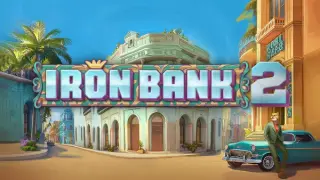


Iron Bank 2 Demo Play
Iron Bank 2 Slot Review – Overview & First Impressions
What Iron Bank 2 Is and Who It’s For
Iron Bank 2 is a high-octane heist sequel from Relax Gaming, following up one of the more cult-loved volatile slots of the last few years. The original Iron Bank built a reputation as a “go big or go home” kind of game with modular free spins and some very sharp swings. This follow-up keeps that DNA but updates pretty much everything: visuals, feature mix, and how the volatility is delivered.
You’re still dealing with a crime caper in a sun-soaked, Latin-flavoured setting, but the sequel leans harder into layered bonus options and different flavours of risk. It’s very clearly designed for:
- High-risk players who like long, tense sessions with sudden explosions of potential.
- Bonus hunters who enjoy picking different free spin modes and testing which one suits their bankroll.
- Feature-buy fans who don’t mind paying a chunk of the balance to get straight to the action.
- Stream viewers or social casino players who want dramatic, swingy gameplay to watch.
The core structure is a 6-reel layout with ways-to-win (rather than strict paylines), giving a more modern “grid” feeling than the classic line structure of older heist slots. Symbols typically pay left to right on adjacent reels, with thousands of ways available per spin depending on row configuration. The headline max win pushes well into the five-figure x bet zone, in line with Relax’s other high-volatility titles, backed up by stacked multipliers and bonus modes that can snowball rapidly when they connect.
Compared to the first Iron Bank, this sequel feels slightly more polished and less “raw”. The original could feel like pure feast or famine: long empty runs, then sudden, brutal swings during a chosen free spins mode. Iron Bank 2 tries to smooth that out with more intermediate hits, more feature variety, and a broader set of modifiers. It still sits in the same family as games like Money Train 4, Dead Riders Trail or Wanted Dead or a Wild in terms of volatility, but it isn’t a pure “grind the base, pray for one insane bonus” experience. Instead, it gives more moving parts and more ways to nudge the balance during a session.
Core Questions Players Usually Have
The main concern with any heist-style, high-volatility slot is always: how aggressive is it really? Iron Bank 2 is definitely on the “very high” side of the spectrum, but the aggression is layered. Base game spins can feel quite dry, yet there are more mid-range hits and side features sprinkled in than in the first game. When the slot does decide to pay, it tends to do it through combinations of stacked symbols, expanding multipliers, or sticky mechanics in a bonus round.
Whether it feels fair or too streaky depends a lot on expectations. It’s not a game that showers the screen with constant small wins. The hit rate leans lower than more casual, medium-volatility titles, and runs of 20–30 dead or near-dead spins are perfectly possible. However, the math is structured so that when a key feature appears, it can often recoup a long stretch of losses in a single sequence. From a practical standpoint, it feels comparable to high-volatility Relax releases: harsh if you’re underbankrolled, but not out of line with what the genre promises.
As for whether the features are interesting enough to justify those swings, that’s where the sequel earns its keep. Rather than a single free spins mode, you’re usually offered a choice between different bonus styles – one focusing on sticky wilds, one on progressive multipliers, one on more frequent but lower-potential hits, for example. The feature-buy options mirror that structure, giving a sense of control over how much variance you want to take on.
In terms of bankroll, this is not a slot that shines with a tiny budget and high expectations. You can absolutely play it casually at very low stakes, but it’s more of a “session slot”: something you sit with for a while, accepting that the real excitement tends to come in bursts. Short dabbling with a small balance can easily end in a quick bust without having seen the slot at its best.
From a practical angle, a few “sweet spots” and quirks stand out:
- The lowest-volatility bonus option often gives the best look at the mechanics for a modest return, even if it’s not the highest max potential.
- The base game can quietly build tension with stacked symbols and teases – if you’re seeing frequent near-misses with special symbols, it usually signals that the game’s core mechanics are active, not that it’s “cold”.
- Buying the middle-tier bonus (if available) often offers a more balanced risk vs cost than the top “super bonus”, which can be brutally swingy.
Overall, this is a slot for players who enjoy that “edge-of-the-seat” feeling and are comfortable with the idea that the majority of value is locked inside the stronger bonus modes rather than in the everyday base game spins.
Theme, Story & Visual Atmosphere
Setting and Narrative Vibe
The setting returns to a warm, Latin American coastal city with a retro crime flavour – think sun-baked stucco walls, palm trees, and a suspiciously relaxed banking district guarded a little too casually. The “iron bank” concept is still centred on a big, audacious heist, but Iron Bank 2 gives it a more cinematic angle, with more emphasis on planning, gadgets, and escalating tension as features trigger.
The base game feels like the scouting and preparation phase. The reels spin in front of a street scene where life goes on almost obliviously: distant traffic hum, the occasional flicker of neon, a vault building looming just out of view. It’s not a heavy narrative in the sense of cutscenes and dialogue, but the visual language is clear – you’re building towards a job. When bonus rounds trigger, the tone shifts to active execution: the camera pulls closer or deeper into the building, the palette darkens or intensifies, and the sense changes from relaxed mischief to high-stakes getaway.
Compared to the first title, which leaned more on quirky characters and a slightly cartoonish bank robbery, this sequel feels more refined. The characters retain that stylised, slightly exaggerated look, but the environment has more depth, with layered backgrounds and more careful lighting. There’s also a stronger separation between “phases” of the heist: base game as reconnaissance, free spins as infiltration, and big win sequences as the chaotic escape with alarms blaring in the distance.
Visual Design and Animation Style
Art direction is where Iron Bank 2 quietly distances itself from older heist-themed slots. The colour palette is rich but controlled: deep turquoise and teal tones for shadows, warm oranges and pinks for sunset light, and gold accents for anything tied to money or vault mechanisms. The reels themselves sit within a solid, metallic frame, with bolts, handles and small glowing indicators selling the industrial bank hardware idea.
During standard spins, the background is relatively calm, allowing the symbols to stand out clearly. When a feature triggers, the environment responds: siren lights streak across the frame, windows in the backdrop flicker with alarm glow, or the camera shifts angle slightly to create a sense of depth. In some bonus modes, the vault door slides closer, filling more of the screen, while other features move the action into interior rooms with stacks of cash and safety deposit boxes.
Symbol motion has that slightly weighty, mechanical snap Relax Gaming is known for. Reels stop with a satisfying clunk rather than a soft fade. Premium symbols often “bounce” subtly when forming part of a win, while special symbols – wilds, scatters, or feature triggers – come with small visual flourishes: sparks of light, a glow, or a short pulse. If the slot uses cascades or additional drops, they tend to be quick and snappy, avoiding that drawn-out feeling some avalanche slots suffer from.
Transitions between the base game and bonus rounds are given a bit of cinematic love. When free spins land, the game doesn’t just fade to a new screen; there’s usually a short sequence: the camera zooms toward the vault, the doors grind open, or the chosen character steps into frame. These are brief enough not to become tiresome for regulars, but they add just enough drama to make each trigger feel like an event.
Soundtrack, Effects & Pacing
The soundtrack leans into a hybrid of funky, jazzy rhythms and light Latin influences. Think muted trumpets, brushed drums, a rolling bassline – the kind of music that suggests planning something you probably shouldn’t be doing, but with a grin. It’s more laid-back than oppressive, which helps during long sessions: the music loops subtly evolve rather than hammering the same phrase repeatedly.
During high-win sequences and bonuses, the music gains urgency. Extra percussion kicks in, the bass tightens, and the melody sharpens into more overt suspense. The escalation feels measured; it ramps up as multipliers stack or big symbol combinations lock in, then gently drops back down after the sequence resolves, avoiding a jarring crash back to silence.
Sound effects are crisp without being overly loud. Standard spins use a soft, metallic whir, while each reel stop has a distinct click that feels physical. Wins are highlighted with chimes and short stingers that vary slightly depending on the size of the payout – small wins get a light, almost playful sound, while big hits trigger fuller, layered audio swells. Scatter symbols often land with a distinct, higher-pitched note, building anticipation when two are already in view and the last reels are stopping.
Pacing-wise, the default spin speed is on the snappier side but not ultra-fast. It’s well-suited to players who like to watch the reels without feeling dragged. Turbo or quick-spin options, where available, cut some of the reel travel time and animations, making it more practical for grinding, but the game still preserves key visual cues for big moments. Over a long session, the rhythm feels neither sluggish nor hyperactive, which is important in a slot where you may be spinning through long stretches waiting for a feature.
Symbols & Paytable Breakdown
Low-Paying Symbols
Low-paying symbols are usually some blend of the standard card ranks (10, J, Q, K, A) stylised to fit the setting, or smaller bank-related icons like coins, chips, or stamped documents. In Iron Bank 2, they’re cleanly drawn with bold outlines and distinct colour coding, which helps them fade into the background visually while still being readable.
Their payouts are modest, as expected. Small line wins of three or four-of-a-kind often just scratch the surface of your stake, with five or six-of-a-kind giving slightly more noticeable returns but rarely transforming a spin on their own. What matters more is their frequency: you’ll see these symbols constantly, and they form the bulk of your minor line hits that keep the balance from freefall between bonuses.
The key question is whether low symbols feel “cluttered” or balanced. Here, the density is tolerable. You don’t get the sense that low symbols are overwhelming the grid to an unfair degree; the game makes room for premiums to show up. It’s still a high-volatility slot, so stretches of low-only screens are common, but visually, there’s a decent separation that stops the reels looking like a wall of identical junk symbols.
Mid and High-Paying Symbols
The mid and high-paying symbols are where the character and story appear: suave thieves, cigar-chomping masterminds, exotic animals in suits, vault doors, bags of cash, rare bottles, or other high-end loot. Iron Bank 2 keeps the slightly tongue-in-cheek style of the first game, with characters that look like they’ve stepped out of an illustrated graphic novel.
There’s a noticeable gap between the mid-tier and true premium symbols. Mid symbols can produce decent hits when stacked across four or more reels, especially if aided by multipliers or wilds, but they’re more about boosting ordinary spins than driving headline wins. The top icons – usually the main character, vault, or heist object – are the ones that can transform a feature into a serious payout when they cover multiple reels.
In typical play, meaningful hits with these premiums aren’t common. You’ll see scattered three-of-a-kind from time to time, enough to keep you engaged, but those full or near-full screen connections that the max win potential depends on are rare events. That’s expected for this volatility level, but it’s something to be aware of if you’re used to more medium-volatility games where premium symbols appear in strong patterns more often.
Wilds, Scatters and Special Symbols
Wild symbols are central to Iron Bank 2’s mechanics. They usually take the form of something iconic to the heist – perhaps a gold “WILD” stamped on a security badge, a masked character, or a special tool. In the base game, wilds substitute for regular pay symbols to complete or improve wins. In some modes, they may come with multipliers, expand to cover a reel, or become sticky for a number of spins, particularly within free spins rounds.
Scatter symbols are your gateway into the main bonuses. They’re often represented by the vault door, bank logo, or a bold “BONUS” emblem. You typically need three or more scatters in view to trigger free spins, regardless of position, although extra scatters can sometimes unlock enhanced versions of the bonus, more spins, or a higher starting multiplier. The game makes it clear when scatters are in play – they usually land with distinctive audio and a visual highlight around the reels they hit.
Beyond wilds and scatters, there can be a few extra special symbols depending on the chosen bonus mode:
- Collect symbols that gather multiplier values or cash amounts on the screen.
- Upgrade icons that improve the behaviour of existing wilds or extend the number of added rows/reels.
- Mystery symbols that transform into matching icons after the reels stop.
None of these are complicated in practice. The info panel does a solid job of explaining each symbol’s behaviour, and the game shows short tooltips or introductory screens before a new mode starts, reinforcing the core idea without overwhelming you with text.
Symbol Design and Readability in Real Play
Readability is generally strong. Low, mid, and high symbols have distinct shapes and colours, so even on a quick-glance spin, it’s easy to see what’s going on. The highest-paying icons are usually drawn with more detail and brighter highlights, making it immediately obvious when something serious is lining up.
On mobile, the artwork holds up well. The lines remain crisp, and key symbols retain their silhouette even when shrunk down. The game UI doesn’t crowd the reels too much, so there’s still breathing room around the action. Touch targets (spin, bet buttons, feature buy) stay a reasonable size.
During features where overlays, sticky elements, or multipliers come into play, there can be a lot on screen, but the layering is usually sensible. For example, a multiplier might appear as a small badge on the corner of a wild rather than an entire separate symbol obscuring the grid. The game tends to use contrasting colours for numbers and frames, which prevents confusion when multiple modifiers stack up.
Math Model: RTP, Volatility & Hit Frequency
RTP Versions and Where to Check Them
Relax Gaming typically publishes a default theoretical RTP in the 96%+ range for its mainline releases, and Iron Bank 2 continues that pattern. However, like almost every modern slot, it’s available in multiple RTP configurations – often somewhere around 96%, 94%, and sometimes even lower versions for certain markets or promotional setups.
The important takeaway is that the RTP you actually play on depends on the casino and jurisdiction. Operators can choose which configuration to run, so the same game can be slightly more or less generous in the long term depending on where you’re playing. It’s not something you’ll feel in a short session, but it matters for serious grinders or anyone who cares about edge.
To confirm the version you’re on, open the in-game menu (usually a small “i” or hamburger icon), and navigate to the help or game rules section. There should be a line stating the “Theoretical Return to Player” or similar phrasing, often expressed as a percentage to one decimal place. If you see a figure below 96%, just be aware that, statistically, you’re giving up a bit more edge to the house over time.
Volatility Profile and Session Behavior
Iron Bank 2 is built as a high or very high volatility slot. In practical terms, that means:
- Long sequences of spins with small returns or complete misses are normal.
- The majority of the game’s expected value is packed into the bonus features rather than the base.
- When you do hit a strong combination, the numbers can jump quickly thanks to stacked symbols and multipliers.
Session behaviour tends to follow the “grind and spike” pattern. You might have 30–50 spins where the balance slowly ticks downward, interrupted by the occasional small or medium hit. Then, a bonus triggers and either:
- Pays modestly, giving back a chunk of what you’ve lost and keeping you in the game.
- Or, if the right mechanics line up, delivers a significant win that more than covers the session and potentially leaves you well ahead.
Streakiness is part of the territory. It’s not unusual to have sessions where you see several mediocre bonuses in a row, followed by one that suddenly connects. Conversely, there are also sessions where you might go a long time without seeing a feature at all. The math is honest about its intentions: this is not a low-risk, drip-feed type of slot.
For bankroll planning, it’s worth thinking in multiples of your stake. A comfortable session on a volatile game like this usually means having at least 150–300 spins worth of budget at your chosen bet size if you want a fair shot at seeing the game’s core features. That doesn’t guarantee anything – nothing does – but it gives the math room to breathe.
Hit Frequency, Feature Trigger Rates & Bonus Potential
Hit frequency in the base game is on the lower side of moderate. You’ll see wins, but many of them will be small – single or low double-digit percentages of your stake. True “standout” base game hits usually require a combination of stacked premiums and wilds or a rare synergy of modifiers, which doesn’t happen often.
Feature trigger rates are, as always, variable. Over a very large sample, you might expect a free spins feature every couple of hundred spins or so, but in reality, you can see two in 50 spins or none in 400. Some side features or mini-modifiers may trigger more often, offering little bursts of excitement that help bridge the gap between main bonuses.
When it comes to potential, the ceiling in Iron Bank 2 is largely driven by:
- The ability of certain bonus modes to build or stack multipliers over multiple spins.
- The possibility of locking in sticky wilds or expanded reels that stay in place.
- The chance of landing multiple premium symbol stacks at the same time.
It’s those rare runs where everything aligns – sticky positions fill, multipliers climb, and premiums line up – that produce the headline win scenarios often shown in highlight reels. Most bonuses will be much more modest, but the engine is clearly built with those high-end outliers in mind.
Bonus Features & Free Spins Modes
How to Trigger Free Spins in Iron Bank 2
The main route into free spins is landing the required number of scatter symbols in the base game, usually three or more anywhere on the reels. The slot will typically signal the tension as the third scatter is about to land: reels slow down a touch, the music shifts pitch, and the scatter sound effect becomes more insistent. When it does connect, the game pauses, counts the scatters, and moves into a bonus selection screen.
In some versions, extra scatters above the minimum can:
- Add more starting spins.
- Unlock a stronger version of one bonus type.
- Offer enhanced starting multipliers or guaranteed wilds.
You don’t usually have to remember every detail beforehand; the selection screen summarises what each option does, with icons representing sticky wilds, multipliers, or mystery symbols depending on the mode.
Bonus Round Types and How They Feel
One of the big selling points of Iron Bank 2 is the ability to choose between different styles of free spins. While the exact names and details can vary, the modes tend to fall into familiar archetypes:
- Sticky Wilds Mode – A relatively steady option where any wild that lands stays locked in place for the remainder of the free spins (or a set number of spins). Over time, you can build a web of wilds across the grid, turning late spins into potentially big hits if premiums show up.
- Progressive Multiplier Mode – A riskier option that starts modestly but can escalate quickly. Each win may increase a reel or global multiplier, making later spins exponentially more valuable. The challenge is surviving long enough and landing enough hits to push the multiplier into exciting territory.
- Mystery/Transform Mode – A more volatile, swingy choice where special symbols transform into matching icons, or certain positions become mystery stacks. When the transformations line up, you can get near-full screens of a high-paying symbol, but many spins will do very little.
Each mode has its own “feel”. Sticky wilds tends to produce more consistent bonuses with fewer complete duds but slightly lower cap. The multiplier mode often has a wide distribution – some bonuses die quickly, others explode. Mystery modes lean more towards feast-or-famine: dull if the transformations miss, thrilling if they connect.
Feature Buy Options & Their Value
Iron Bank 2 typically includes feature buy options, where allowed by regulation. These let you skip the base game and purchase immediate access to a bonus round for a multiple of your stake – for example, 75x, 100x, 150x or more, depending on the strength of the bonus you’re buying.
Usually, you’ll see:
- A cheaper buy for the lowest variance bonus mode.
- A mid-priced buy for a more volatile mode (often with multipliers or mystery symbols).
- A premium buy for a “super” bonus with enhanced setup, extra scatters, or better starting conditions.
Value-wise, the RTP of buy features can sometimes be slightly higher than the base game, but it’s not guaranteed – always check the game info. In terms of practical play, the cheaper buy is often the most sustainable for repeated use, while the super bonus is more like a high-roller gamble: expensive to access, capable of both ugly near-zero outcomes and spectacular results.
For many players, the mid-tier buy strikes the best balance. It gives a decent taste of what the slot can do without requiring an extreme multiple of the stake for each attempt. That said, if you’re primarily a casual player, it can be saner to let bonuses trigger naturally and treat the buy options as an occasional indulgence rather than a constant tool.
Betting Strategy & Bankroll Management
Bet Sizes, Autoplay & Session Planning
Betting in Iron Bank 2 covers a standard range, from very small stakes up to levels aimed at serious or high-roller players. Autoplay (where available) allows you to set a fixed number of spins and, in many jurisdictions, loss and win limits, so you’re not constantly tapping the spin button or losing track of the session pace.
On a game with this volatility, it usually makes sense to lean towards the lower end of your comfort zone for bet size and focus on giving yourself enough spins to see at least a few features. Many players find it more satisfying to run a longer, steadier session at a modest stake than to fire off a short burst at a higher level and never reach a bonus.
Treating Iron Bank 2 as a longer-term “heist plan” rather than a quick smash-and-grab fits both the theme and the underlying math. If the bankroll is tight or the mood is more casual, reducing the stake and aiming for a measured spin count is generally the more forgiving way to approach it.
| RTP | 96.00 |
|---|---|
| Rows | 4 |
| Reels | 6 |
| Max win | 50,000x |
| Hit freq | |
| Volatility | High (10/10) |
| Min max bet | 0.10/20 |